

Photos Courtesy of CBS
CBS and producer and writer Patrick Walsh have gone where angels fear to tread, producing a religious sitcom. No other subject matter is as open to criticism as religion. While there are enough persons of faith to support a show built around living one’s life Biblically, given the increasingly fractured and antagonistic nature of “the faith community” one has to thread an ultra-small needle with an ultra-thin thread in order to appeal to a healthy-sized audience. For many persons of faith, that narrowness is the difference between laughing with and laughing at faith and persons of faith.
In addition to the issue of the faith presentation tightrope, not too deep so as to be boring, not too simplistic so as to be vapid, there was for me the issue of being a film/television snob. Too accessible and it is painted by numbers. Too subtle and it is, well, too subtle.
Not having read the Book, The Year of Living Biblically by A. J. Jacobs, I viewed the three-episode preview package of Living Biblically with no context of what kind of program it was. Needless to say, I was a bit surprised, and initially put off when in the opening seconds it was evident that it was an overly, LOL, track driven situation comedy. (After mentioning the laugh-track was way too loud and noticeable for my taste, I was told the program used a live audience. I can only imagine that a shocking device is connected to the Laugh sign that is flashed almost continually during the show.) Aware of the real possibility, make that probability, of my theological and film critic double bias, I asked some others to preview the episodes on my laptop.
Their response was more generous than my initial reaction. These “civilians” also acknowledged the challenges of doing a sitcom about a “None” one of those who profess “none” when asked about religious preference. But, they came away with a favorable impression. Yes, it is simplistic in many ways. Yes, there are the prerequisite stereotype jokes about faith and clergy, but it does have a place and voice to speak to those who have either drifted away or were never in a faith orbit.
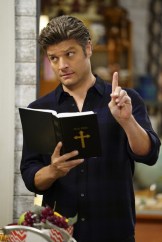 The program stars Dallas native Jay R. Ferguson (Mad Men) as Chip Curry, a film critic who experiences two life-changing events that led him to reconsider his life trajectory. Chip decides he will attempt to live his life as prescribed by the Bible. To help him in this endeavor he develops relationships with a Roman Catholic Priest and a Jewish Rabbi, who meet regularly in a restaurant/bar for interfaith support. This God-Squad helps guide Chip in applying ancient teachings and practices in a modern context.
As anyone who has attempted a significant lifestyle change knows, the change impacts others in the orbit of the individual. In Chip’s case, it includes his non-believing wife as well as nominal or non-believing co-workers. When anyone changes and begins living differently, the one who is changing, as well as the friends and family have to re-orient their relationship. Those who have done this know it is easier said than done. For the sake of retaining characters in the show, this aspect of adjusting their friendship, and making changes in their life, is portrayed much easier than it is in real life.
 Based on the preview shows, it seems each episode will explore an issue of life and faith such as loving thy neighbor and the allure and challenge of modern idols, i.e., cell phones. As with all TV, resolutions come much quicker and easier than real life. Crimes are rarely solved so fast, and trials are never completed in such a timely manner as they are on TV. So it is that theological awareness and discipline are rarely established and accepted so readily as they are on Living Biblically. But the show does address issues of life and faith that may be a first step for persons.
In an interview with producer and writer Patrick Walsh, (2 Broke Girls, and Crashing) I asked about his decision to make the show a situation comedy. Patrick believed, in spite the risks of being perceived as making fun of the Bible or faith, that comedy would be the best vehicle for allowing the ideas and concepts to be presented in a way that would be approachable to most viewers. He was appreciative when I told him of the reactions of those I had asked to view the episodes. I also asked Patrick what type of character and narrative arc he envisioned in subsequent seasons. Did he see the show evolving as M*A*S* H and other situation comedies? He responded that once the show is established, he believes the characters and storyline would change as both the characters and audience grow.
After watching the three preview episodes I was reminded of a sermon I heard Bishop Will Willimon, then Dean at Duke Chapel, preach when I was in seminary. He was taking a road trip and stopped at a service station. The person working at the station found out that Willimon was a “preacher,” and asked if him if he knew the radio evangelist. Willimon admitted to having some unflattering thoughts about that evangelist until the attendant said that the evangelist had changed his life. Because of that preacher, he was a better man, husband, and father. Dr. Willimon doubted he could have had a similar impact on the man.
Living Biblically may or may not be one’s cup of tea. But it likely will be someone’s first sip of thinking theologically that leads to something more substantial and filling.
Living Biblically premieres tonight, 2/26 on CBS at 8:30 CST


 The film would have benefitted from detailing and presenting more of the relationships established between the unit and their allied Afghan forces. After the screening I attended, there was a Q&A with the men Hemsworth’s and Shannon’s characters were based on, Captain, now Major Mark Nutsch and Chief Warrant Officer Bob Pennington. While covered in the film, the full story of the relationship between the members of the unit and the leaders and members of the Alliance group was stirring and added much to the film’s impact. Also, the cultural and political differences that Nutsch, Pennington, and all members of the team had to address and overcome were as vital to the success as any of the weaponry and tactics brought to the mission. As dauntingly impossible as the scope of the mission was, and as dangerous as the combat was as depicted, more details given to these relational and cultural requirements and accomplishments, at the expense of some of the combat sequences, would have reflected better the true and amazingly successful outcome of the mission.
 At their best, faith communities are devoted to one another and care for each other, at times more than they care for themselves. Members of faith communities draw strength from one another, teach and when necessary offer accountability to one another. Another commonality between armed forces units and faith communities is the devotion to the mission. Once given an assignment, the successful completion of the mission becomes the primary if not singular focus for members of a military unit or squad. Such should be the case for faith communities. In units, there is neither room nor patience for thoughts, opinions, habits or other things that distract from completing the mission as assigned. Christian faith communities would do better to follow this example and put the mission of loving and serving Christ by making disciples, above all things.
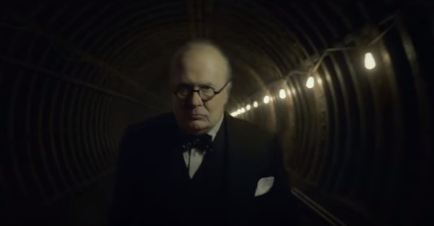 In the midst of this, perhaps the darkest hour in the nation’s history, Winston Churchill, a fiery orator with a reputation for recklessness, replaced Chamberlain. Gary Oldman is rightly receiving Oscar attention for his transformational performance as Winston Churchill. Kristin Scott Thomas also gives a strong performance as Churchill’s wife Clementine, one of the few persons the bulldog PM turned to for strength and counsel.
 Experiencing, even in the slightest way, the feeling of facing such darkness offers viewers a greater understanding of what Churchill, and all of Britain, went through in this pivotal time when Britain was the last dim light in a darkening world. Winston Churchill provided much of the energy and hope for that light through his determination and the power of his oratory. Darkest Hour also reminds viewers living through the current uncertain and dark times of terrorism, aggressive despots, as well as political and social division the necessity and importance of political courage, and placing the welfare of the nation above personal or political party interests.


 All Photos Courtesy of Focus Features
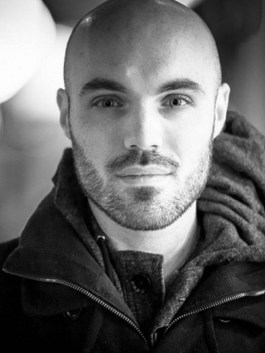 talked of those who may or may not be forgotten and are not really gone.
 had studied the European masters as a youth and young adult and appreciated the minimalist approach to dramatic storytelling of Bergman and Federico Fellini and others. As with the great European cinematic masters, Lowery uses shot selection, silence and the time afforded by extended scenes to allow the thoughts and experiences of the viewers to grow organically rather than presenting ideas to the viewers in prepackaged form through active dialogue and cinema-graphic busyness.
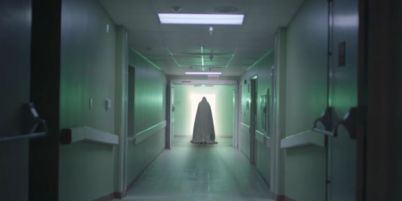 when the Ghost, wearing the sheet that covered the body, begins wandering halls of the hospital. As the Ghost moves unnoticed past people in the hallways a portal of light appears on a wall. As the Ghost halts and lingers, the portal closes. Persons of faith are likely to interpret this as the opening to heaven and everlasting life.
 Though the previous life of the Ghost was not one of suffering and bondage as was that of the Israelites, the Ghost refused to embrace the new life, the new opportunity, and chose to stay in the past. While allowed the choice to remain in the past, the Ghost was not allowed to live in the past. Rather than participating in life, the Ghost could only observe the lives others lived. Such existing is not truly living.
 The choice to present the Ghost as a sheet with blackened eyes not only plays off the iconic image of ghosts, it represents the condition of the deceased, or anyone, when life is ruled by fear rather than lived by faith.
 13 Reasons Why is a story in which a high school junior, Hannah Baker (Katherine Langford) has killed herself, but rather than leaving a note, she left tapes in which she detailed the reasons behind her suicide. The tapes depict the behavior of 11 classmates whose treatment of her resulted directly or indirectly in her becoming the object of shame and ridicule in her school. Two other tapes are for two persons whose inactions prevented her from pulling out of the tunnel in which she saw suicide as the only option to find relief from the pain she was experiencing.
 In the story, each of the 13 persons is directed to listen to all the tapes and then pass them on to the next person on the list. The story begins with her friend, and on again off again object of her affection, Clay Jenson (Dylan Minnette) as he receives and begins listening to the tapes which are presented visually in flashback.
 The program is more effective in informing parents, whose high school experience did not include the realities of cyber bullying, where there is no safe zone nor opportunities to escape the harassment and shame. Unlike the impact of rumors whispered from ear to ear, in the cyber age, unflattering photos, taken casually, with little or no knowledge of the victim, can be distributed to everyone in the victim ’s community and circle of friends and classmates in an instant. Today, one surreptitious snapshot is the basis for digital rumors, the evidence of which is easily retrieved, replayed, and kept in the forefront of thoughts and conversations in a school or other community for days, weeks or even years. Explicit subject matter and instant availability of cyber bullying can lead to predatory actions including sexual assault, two of which are presented in the series.
 13 Reasons Why can offer teachable moments, when adults/parents and teens watch it together. Teens can experience a reality of the devastating impact suicide has on families and communities. Parents can experience the unrelenting social pressure to avoid becoming a target and subject of bullying, and the unimaginable difficulty it is to have a target removed. The program shows the all too common reality that, for many students, the chosen method of not having a target on yourself is to put one on someone else. Where there are these and other benefits of communal viewing , that the program is 13 episodes makes watching the program with youth difficult, something requiring intentionality and, one of the other things around which there is incessant pressure, time.
 The resurrection demonstrates that in God transformation of life and circumstances are possible. Faith in God’s transforming grace and power can be a ray of light that cuts through the darkness that is depression and suicide ideation. This reality can be powerfully communicated when discussed in community or groups, and should be a part of a faith group’s viewing or discussion of the topics of the program. Parents and leaders should watch the entire series prior to deciding whether to watch with their youth or youth groups.
 My thoughts on the Academy Awards Best Picture nominations. At the top of my list is Fences. I thought it was by far the strongest ensemble with two great performances by Denzel and Viola. It is a story that speaks to the degenerating power of anger and frustration and he restorative power of love, grace, and forgiveness. Director Denzel Washington effectively stages and shoots the film to have the intimate and connected feel of the stage play it was based on.
 My second favorite was Lion. While I would have trimmed some from the second half, the first half was truly riveting. At times it was epic and vast, showing the Indian countryside and inner city of Calcutta, and at other times it was profoundly intimate. While Dev Patel gave a strong performance, Sunny Pawar, portraying the 5 year old Saroo who gets separated from his family by 1600 miles is one of the stronger child performance in recent years. The fact that it was a true story adds to the power and celebration of hope and love The film speaks to building awareness that 80,000 children in India go missing every year, most of whom end up in the sex trafficking industry.
 the third film is Hacksaw Ridge, which shows that Mel Gibson is truly a skilled filmmaker. Yes it’s brutal, but it would be a disservice to portray combat in any other way. As with Lion, the fact that it was a true story adds to the poignancy of the film. Showing a man stand up for his faith and belief even in the hell that is war is humbling. It’s not quite up to Saving Private Ryan, but it is close.
 Hell or High Water was an enjoyable and solidly written, directed, and acted film. It had the feel of a Coen brothers film with impressive cinema photography of west Texas via New Mexico. The dialogue was top-notch as were the performances of the down the line cast members. “What don’t you want?”
 Manchester by the Sea took time in letting the story and plot unfold. Some might say too long, but it was effective. The point about not getting stuck in the mourning is important especially as it can be so difficult. Afflect’s subtle and minimalist performance, always a challenge to pull off, shows his wide range as an actor.
 Arrival has solid performances by Amy Adams and Jeremy Renner. The story has interesting nuances regarding the importance of communication and an unexpected ending that speaks to the joy of living life even in the midst or prospects of loss and pain.
 Moonlight has been described as symphonic in telling the story of a life in three chapters. There is power in the understated script and performances. There are certainly powerful and profound moments, but, as with Boyhood, those there was a lack of momentum carried throughout the vignettes resulting in a film where the sum of the parts did not add up to a spectacular whole.
 Hidden Fences was a very good and profound story that did not translate into as profound and special film. While the three leads, Taraji Henson, Octavia Spencer, and Janelle Monae gave strong performances including Octavia’s Oscar nomination, the supporting cast did not provide the necessary intangibles to lift the film to the level of being something truly special.
 Silence is based on the Shusaku Endo, 1966 historical novel of the same name. In the novel and film the main character is the Portuguese, Jesuit priest Fr. Sebastiao Rodrigues ( Andrew Garfield), a character Endo based on the 17th century Italian Jesuit Giuseppe Chiara. After receiving reports that their mentor Fr Cristovao Ferreira (Liam Neeson) had committed apostasy during persecution of Christians in Japan, Fr Rodrigues and Fr Francisco Garupe ( Adam Driver) insist to their superior, Fr. Alessandro Valignano ( Cerian Hinds) they be allowed to travel to Japan to find Fr. Cristovao.
 that of the surviving, “hidden Christiansm” living on the islands of Japan. While the priests have brought tangible reminders of God and the Church, crosses, Scripture, rosaries, and the Mass, in the eyes of the villagers they have brought God.
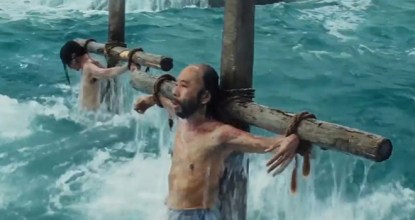 Viewing Silence is a humbling experience. One is humbled by the faith of those depicted on the screen who, we know, represent millions who have suffered beyond measure and chosen martyrdom throughout the ages.
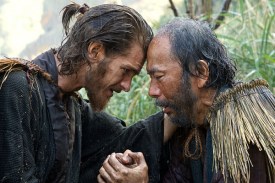 Some viewers may choose not to attend because of the heaviness of the film. It is heavy and while few would describe the film as escapist, if viewed with keen eyes and an open mind and spirit, Silence offers the opportunity for true escape.
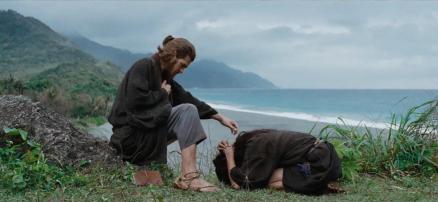 Persons of faith who choose not to see the film will miss an opportunity to reflect upon what faith, suffering and apostasy is, and what they are not. They will also miss out on the reminder that the times they falter, the times they step on Christ by rejecting his teaching and command, or reject God, there is grace to hold them AND for them to hold on to. As the final scene in the film indicates; like faith, grace, even the size of a mustard seed, is all that is needed.
 Photos Courtesy of Paramount Pictures
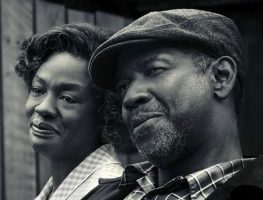
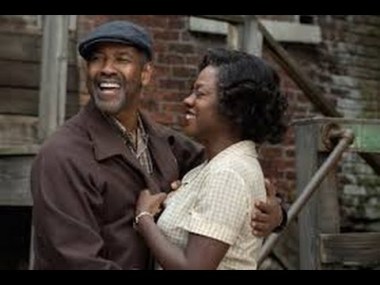 Troy shines the brightest light or casts the darkest shadow to every gathering and conversation. Troy is known for his gift of gab and storytelling as well as his passion for baseball. His good, and perhaps only friend Bono tells Troy he “has some Uncle Remus in him,” as he has the ability and seeming compulsion to mythologize and spin any life event or experience.
 As Troy often says, the finest woman he knows is his wife Rose (Viola Davis) who as a “steel magnolia” requires every ounce of her hardened steel to stand with, and when necessary, up to the force that is Troy. Because of her relationship and proximity to Troy, Rose, more than anyone including Troy himself, must live out Maxson’s maxim for baseball, which provides Troy the setting and secrets to understanding life itself; “you got to take the crookeds with the straights.”
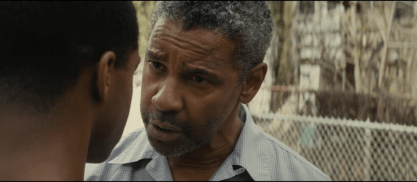 Troy believes it is his “duty” as a father to prepare his younger son Cory for life in the same world in which he grew up. Even though the world in the mid-1950’s to early 1960’s is far from perfect racially, it had changed, and was continuing to change, from Troy’s world in the 1920’s to 1940’s.
 On the other end of the spectrum of choices in response to life’s challenges are Rose’s decisions. Rather than responding to pain and anger by inflicting pain onto others and living off anger, Rose responds with grace and hope.
 the manner and delivery of the dialogue, Fences has the feel of a play rather than a film which suits this material very well.
 One can describe Collateral Beauty as a film that is powerful cubed. It has powerful performances of a powerful subject that can have a powerful impact on viewers. Collateral Beauty is a film about profound loss, pain, and the restorative power of love. Viewers may have the temptation to skip the film so as not to be reminded of the pain that is a part of life. For some, it may take them back to a time and place of loss, or it may speak to those who, as of yet, have not experienced tragedy but realize and fear their vulnerability to being caught in its wake. For those who have been through the tunnel that is tragedy and come out on the other side, the film offers reminders of the struggle as well as the reality that wholeness can be achieved even in the most broken of situations. For those still in the tunnel, the film offers hope that though not the same, a new life with joy and happiness is possible.
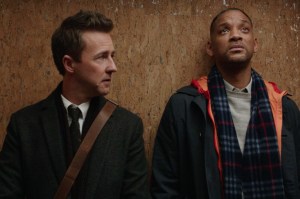 Will Smith stars as Howard, a founder, and CEO of a successful advertising firm who suffers perhaps the most feared and painful loss imaginable. Set three years following his loss, Howard is paralyzed by his mourning and is in danger of now losing his business. In the years since his loss, his only contribution to his firm is his spending days and weeks setting up elaborate domino designs which he then knocks over with but a push. Howard has stopped building and maintaining relationships in a business built on his talent and magnetism. While initially patient, clients are now moving on to other firms and the agency’s only out is a buyout offered by a larger agency.
 The only true connection to life Howard has is through his writing letters to those whom he believes are responsible for his pain, Love, Time, and Death. Howard’s friends and co-workers, Whit (Edward Norton,) Claire (Kate Winslet,) and Simon (Michael Pena) seek to reach Howard before it is too late by employing actors to personify these characters and connect with him so Howard can confront those whom he blames. The hope is that he will either snap out of his condition so he can close on the sale of his company or have him declared incompetent and be able to finish the buyout and avoid everyone losing everything.
 After accepting the gig, Brigitte/Death (Helen Mirren,) Amy/Love (Keira Knightley,) and Raffi/Time (Jacob Latimor) read the letters Howard has written. After further debriefing from one of the friends, each approach Howard allowing him to confront them as well as hear from them about the full nature of the characters they are playing. As it turns out, Howard is not the only character who is experiencing trials of life. Because of some comedic moments and a broadening of focus, Collateral Beauty is not as intense, burdensome, or heavy as other films addressing loss. Will Smith’s 2006 The Pursuit of Happiness was much heavier and more difficult to watch.
 relationships. Howard’s preoccupation with the domino structures is symbolic of his life. With one action, an entire chain reaction of collateral destruction occurs. For Howard, this chain reaction following his loss is now taking down his business and impacting the lives of everyone in his life and business.
 Reversing the concept of collateral damage, damage or destruction that is beyond the intended target, is the complex idea that the film’s title and story lift up in a direct and powerful way.

