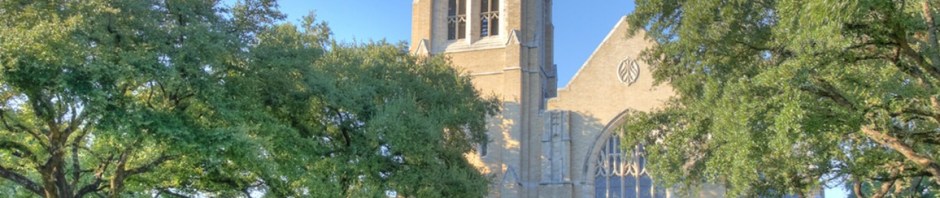
As with many who have a connection to Highland Park UMC or the Horizon Annual Conference, the news about the dispute between the church and the conference has been surprising, saddening and it led me to much reflection. I am not exaggerating when I say that I cannot imagine my life without HPUMC. I truly can’t. I simply would not have had the life I have been so blessed with without Highland Park UMC.
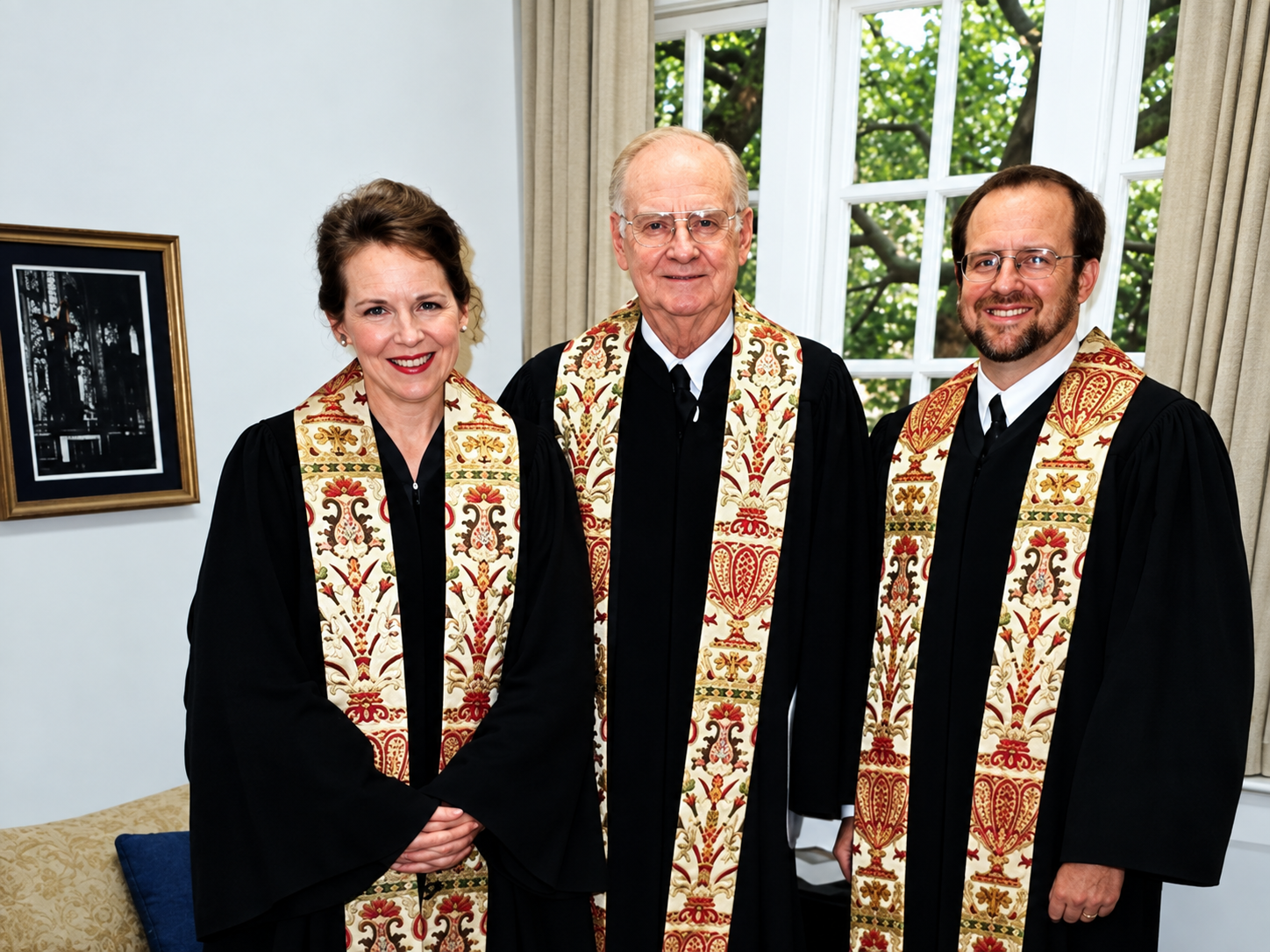
Not only was HPUMC my church home, but it was very much my second home throughout my childhood, youth, college and young professional life. I was baptized in the sanctuary in 1962 by Dr. William H. Dickinson, I first spoke in Church as a second grader reciting the Luke 2 birth narrative on Christmas Day 1969. I was confirmed in 1974 by Dr. Leighton Farrell and my father Dr. Ken Dickson. I was approved for candidacy as a pastor by the HPUMC Charge Conference in 1993. My father and sister Dorothy Dickson Rishel officiated Michelle’s and my wedding in the sanctuary in 1994. My sister and I assisted in worship when our father preached his final sermon after 42 years of ministry at HPUMC where he served as Sr. Associate Pastor and twice was the Interim Sr. Pastor. I conducted my first funeral in Cox Chapel following the death of my grandmother, and I preached at my father’s memorial service in 2019.
Now after over 30 years of ordained ministry in the North Texas and now Horizon Texas Conference I can see the foundation of my faith and love for the Church are firmly rooted in the nurturing, love, and discipleship modeling I witnessed at HP. In my confirmation class I remember learning about the founder of the Methodist movement and church, John Wesley. My first thought, as I remember now, was how funny and stern he looked. I remember being impressed when our teacher Gloria Dykes mentioned he rode over 200,000 miles on horseback during his ministry, and her distinct laugh when someone added how sore he must have been.
What I really did not fully understand in my first 32 years of life, including 4 years on staff of HPUMC was how unusual it was as a UMC congregation. Obviously, there are very few UMC congregations of its size and economic resources. Many of my PK colleagues question whether I can be considered a PK since my father was at one church for 42 years. When I was on staff there was a sense that HP was its own district and very self-sufficient. It did not need many district or Conference resources that are provided for almost all of the other 300+ congregations in the Conference. These resources include among other things, financial support, camps for children and youth, training for lay leaders, and supply preachers. Outside of seminary and the clergy candidacy process, some on the staff or church members may have questioned if we really need the Conference. In seminary and my early years in ministry I would discern that despite its resources; the congregation did need the Conference and denomination as there are aspects of ministry and faith development that Highland Park UMC could not address do to its uniqueness.
My education into Methodism and Wesleyan theology and praxis obviously continued in seminary where we read Wesley’s sermons and other writings, learned of the history of the movement which became a church, and the order and polity of the denomination set up by Wesley and early leaders in the years after the American revolution. While I learned the names, dates, and other X’s and O’s of Methodism in my studies, it was not until I got in the ministry field as an intern, and later as a pastor serving 4 small, town and country churches that my appreciation for the Methodist Church and Wesleyan theology grew another branch. It was here that I truly began to experience, understand, and appreciate a central and essential pillar of Methodism, connection.
In my first pastoral visit as a first-year student intern at Lowes UMC, a congregation outside of the town of Reidsville NC and a church where Frances Asbury visited and preached in 1790, I visited a woman in the congregation who was in ICU. I went in and introduced myself as the intern for the church that Summer. She did not say a word and her eyes were closed. A nurse came in and seeking to gauge her alertness asked her in a loud voice if she knew who I was. I tried to signal to the nurse that she doesn’t know me, when the woman said in a loud voice, “This is my pastor.” At that moment I felt the presence of all the pastors who had ministered with and to her through her life. I was standing on their shoulders and I felt the presence and faithful service. Who was I to be afforded that acceptance? While she didn’t know me from Adam, she did know me from the faithful, dedicated ministry of all the Methodist pastors she had known and the Methodist church where she had learned of grace and experienced Christ’s love, been nurtured and nurtured others, and would soon rest eternally across the road in the church’s cemetary.
My growth in the place and importance of community continued when I received my first solo pastoral appointment to a 4-point charge in Red River County TX. Going from a 10,000-member church in the Park Cities to 4 churches in and around a town of 1400 in one of the poorest counties in the state was as different an experience as one could imagine. Although this was not on my radar of places I would ever serve, I am forever grateful I was sent as it offered me a fullness and texture of worship and faith I could not have received at HP alone. It was here where I experienced that a 5 piece Gospel group and a 100 voice congregation singing Heavenly Highway and Cokesbury Hymns could be as impactful and faith building for me as a large pipe organ and a thousand voices.
Another contributor to this fullness of faith and ministry came from being with this community amid their needs, many of which were different to what I had experienced in my life at home and church. As in many rural areas people there didn’t have as access to institutional or monetary safety nets as many in larger cities and churches have. For most, their faith and community was their safety net. Among many acts of care and love, I remember one night when, in the midst of a drought when everyone was struggling, this community raised over $15,000 auctioning off cakes and pies to assist a family who had a young child with many medical challenges.
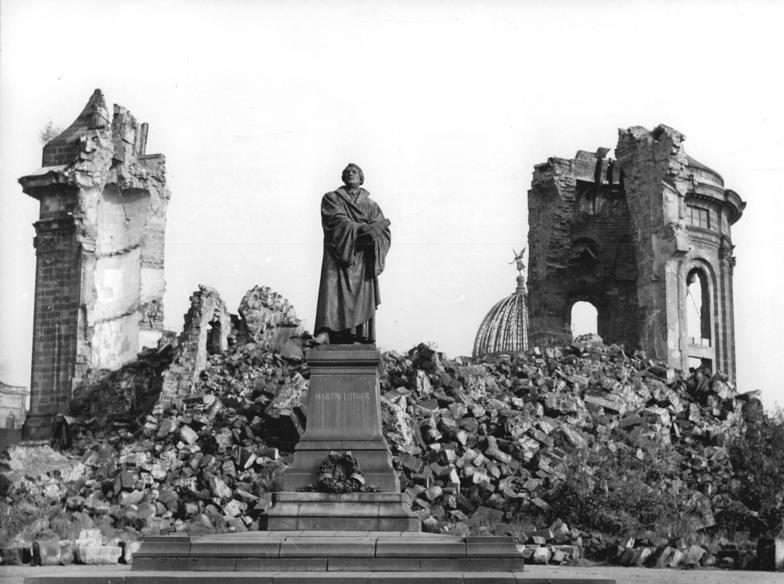
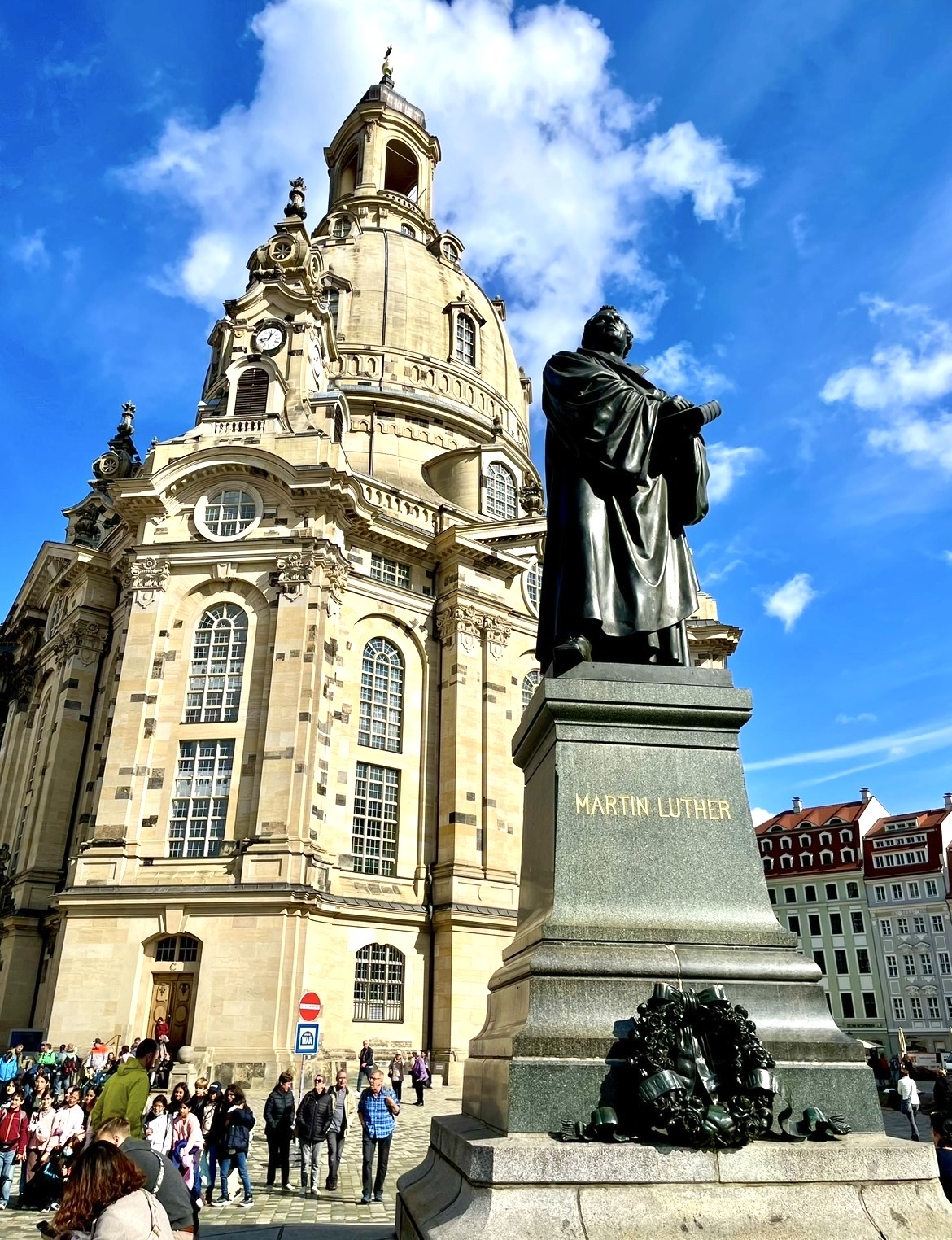
Most recently, my ministry and faith have been tremendously strengthened and blessed by my serving as the Sr. Pastor of King of Glory Lutheran Church in Dallas since 2022. I am serving at King of Glory as a United Methodist pastor because the UMC and ELCA are Communion partners in which pastors of one Church are allowed to serve as pastors with full sacramental authority in the other Church. Experiencing the similarities and nuances of Wesleyan and Lutheran theology, tradition, and living through grace has added such depth and dimension to my faith and ministry that I hate to imagine my life and ministry without it. During my time at KOG, I traveled to Germany and visited Dresden to see the beautiful Frauenkirche, the church that had been destroyed during the fire bombing in 1945. I had wanted to see it since 1993 when, traveling with my Mom and the HPUMC Chancel Choir, we stopped in Dresden for lunch and I saw the rubble that was finally being removed to be reused in the restoration. In my return I took a photo that included a famous statue of Martin Luther. When I was lining up the photo and saw the statue and Luther’s name in front of the beauitful church, I actually felt my heart strangely warmed, (I really did) as it dawned on me in that moment that, through this short season of my ministry in the ELCA, I had a connection to the movement which would give birth to Methodism, my church and home. This profound moment would not have been possible without the traditions and community between of the UMC and ELCA.
The UMC connectional system of congregational and denominational structure, including the power and purpose of the Charge Conference, congregational voting, apportionments, episcopal authority, pastoral appointments and the trust clause is not a means of bureaucratic control or leverage, it reflects and equips us to live out our faith, understanding, and relationship to God. One of the key scriptures in the life and history of HPUMC is John 15:5 “I am the vine; you are the branches.” The verse is carved into several of the panels surrounding the chancel in the sanctuary and the imagery of vine and branches is on the communion table. It also inspired the name of the 75th Anniversary History of the Church, Branches of the Living Vine.
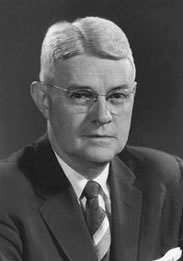
As a part of my reflection, I recently read a sermon of the Rev. Dr. Marshall Steel who was the locally influential and nationally recognized HPMC Sr. Pastor from 1936-1957. Preaching on John 15 Dr. Steel reminded the congregation that individuals and the church are totally dependent on God and our relationship with God, as described by Jesus, “I am the vine, you are the branches.” Dr. Steel preached that this text teaches “if we are really to live, if we are to enter into life, we are not sufficient unto ourselves, we are totally dependent on God…. Keep this fact in mind, ‘the branch cannot bear fruit of itself, and neither can you.’”
Dr Steel continued:
It’s extremely important that we recognize that life finds its fulfillment, not in any of our self -sufficiency, nor in our material or physical resources, but life finds its fulfillment as we are properly related to the vine, drawing on the vitality of our God, entering into His purposes, living His life, the quality of His Spirit flowing through our lives.
While some would say it is Christ that is the vine, not a denomination, Scripture teaches the Church universal is The Body of Christ on earth. The connectional tradition and order of the United Methodist Church calls and allows congregations and members to live out and strengthen their faith by surrendering control to God (the gardener) and Christ (the vine) who is acting through the denomination. The teaching of Jesus in this text is about the relationship between disciples, faith communities, God and Jesus, and that both followers and congregations serve as the branches that are totally reliant on Christ the vine, if they are to be fruitful in ministry and faithful in discipleship. As such the fruits of disciples and congregations are of God and belong to God.
This teaching that we are to surrender control of our lives to God is also reflected in other teachings of Christ including his command to love God with all our heart, soul, mind and might and love others as ourselves. We are not to withhold or keep things to ourselves, but rather live and give ourselves fully to God.
The connectional denominational structure of the Wesleyan tradition and the UMC is reflected in other teachings of the Bible. In the Book of Acts the early Christian church was a communion of persons who shared resources and support of each other. The Apostles also determined questions of church beliefs and practices as the church expanded into other regions, and Paul’s letters also offered leadership and discipline over the churches he established or planning to visit.
Earlier I mentioned the importance and purpose of the Charge Conference, and ability of congregational voting for major decisions for a reason. I recall a tense night in 1969 when the church met to vote on a plan approved by the church trustees and council to tear down the sanctuary and replace it with a 1960’s designed, non-gothic, square building. As I understand the new church governance and structure of 2022, had that structure been in place in 1969, the wonderful sanctuary we all love and that means so much to the church, community and Methodism would have been torn down.
Again, as well-resourced as HPUMC is and historically has been, and as much leadership, ministry, and mission as it has offered the United Methodist Church, it has a need to be connected to and receive from the vine that is Christ working through the United Methodist Church. Seeking to separate from the authority of the Book of Discipline, Bishop, Conference and UMC does make a statement, however it is not a statement of faith but rather a declaration and act of mistrust and desire for self-control rather than faithfully giving control to God.
Through my reflection over these last several weeks I have also been reminded of a HPUMC tradition. In my time there the 8:30 service always concluded with the congregation joining hands and singing the first verse to Bless Be The Ties That Bind. I believe that I have been blessed my entire life by my ties to HPUMC as have many organizations, individuals, and families in the Dallas area, as well as communities throughout the United States, Haiti, Russia and other countries. Likewise, HPUMC has been blessed for 110 years by its ties to the UMC and prior Methodist denominations, which include Christ working through the Holy Spirit and inspiring the ministry, theology, and tradition set forth by John Wesely, Francis Asbury and other denomicational leaders through the centuries. My prayer is that the value of connection will be revealed and the communion, trust, faith, and fellowship can be restored between the congregation and Conference.
Blest be the tie that binds our hearts in Christian love;
the fellowship of kindred minds is like to that above.
Before our Father’s throne we pour our ardent prayers;
our fears, our hopes, our aims are one, our comforts and our cares.
We share each other’s woes, our mutual burdens bear;
and often for each other flows, the sympathizing tear.
When we asunder part, it gives us inward pain;
but we shall still be joined in heart, and hope to meet again.


Well done. Thank you for your reflections of history, love and heart.
Carolyn Johnson
Carolynjean30@gmail.com