

Photos Courtesy of 20th Century Fox
As an Academy Award-winning director (Reds), film actor and auteur, and since it has been 16 years since he made a film, a new film by Warren Beatty is important. Rules Don’t Apply is a good romantic comedy and dramatic film with solid writing and direction by Beatty. Also, there are outstanding performances by a strong cast, with the best-known members, Annette Bening, Martin Sheen, Matthew Broderick, Ed Harris, Oliver Platt, and Alec Baldwin, playing supporting or having cameo roles. In addition to the solid script, direction, and cast, Rules Don’t Apply, as other Beatty films is a multifaceted, nuanced film. Not only does it have layers of meaning supporting the comedic elements, but it presents Beatty’s world view in a semi-fictional, semi-biographical way.
While the first subject layer is the eccentricity of a legendary American industrialist and filmmaker, Howard Hughes, the second is the power the Church, Mainline Protestantism, had over much of American society through the first three-quarters of the Twentieth Century. Presented through the two starring characters who portray young employees of Mr. Hughes’s film company, starlet Marla Mabrey (Lily Collins) and driver Frank Forbes (Alden Ehrenreich), the film explores the place and impact of rules. Specifically, Beatty’s script connects the arbitrary rules Hughes had that strictly forbid fraternization between drivers and starlets, and the Church’s teaching and prohibition against sex outside of marriage.  Both Collins and Ehrenreich give impressive performances that range from vulnerable, wide-eyed young people who suddenly find themselves in the glamor, the hustle and bustle of Hollywood and working for Howard Hughes. Through the film, both characters change subtly as they experience firsthand the cost that comes with such glamor, and must decide whether they will pay it.
Surprisingly to some, the Church plays an important part in the first half of the film. As a Southern Baptist, Marla Mabrey had grown up being taught that sex outside of marriage was sinful and, if not a ticket to hell, was certainly one of the early steps. Having grown up Methodist, Frank Forbes had a slightly more generous understanding that if one had sex before marriage, one was not necessarily going to hell, but one was, in the eyes of God, married to that person. Both the rules of Mr. Hughes and Marla’s and Frank’s reluctant adherence to their faith backgrounds served as a barrier to them acting on their attraction to one another and their developing a relationship. The same also damaged if not prevented a relationship between Mabrey and Hughes.
 A second storyline is the famous eccentricity of Mr. Hughes. While it is not necessary for viewers to know the history of Howard Hughes, some familiarity with his story and his eventual becoming a recluse, helps follow and appreciate the film which is set in the 1950’s and 1960’s. Throughout the film, Hughes’s emotional state seems to falter as he thinks bankers and others are out to take TWA away from him by accusing him of being of unsound mind. The more Hughes seeks to avoid communicating with them, and making himself vulnerable to being judged incompetent, the greater the suspicions about him and the demands that he appear in public grow.
 Warren Beatty is believable as Howard Hughes even though he is considerably younger than Hughes was during the film’s setting. Back is Beatty’s energetic and disarming delivery that seems to speak through other characters and to each audience member.
Beatty’s script shows Hughes’s eccentricities growing through the film; however, there seems to be toward the end, an opening onto another path and life trajectory. Such a change, and perhaps salvation from being a recluse, appears to be possible through relationships that his suspicions and rules worked against. The ending of the film speaks to the redemptive and salvific power of relationships and comments that societal attempts to control behavior can do more harm when relationships are prevented or damaged than the perceived threat the rules are supposed to protect society or individuals from.
Rules Don’t Apply is rated PG-13 for Language
For more information regarding the film’s themes, theological implications, and Warren Beatty’s thoughts and motivations behind the making of the film, please see my interview with Mr. Beatty on this website.
 I spoke with Warren Beatty during a press junket in support of the release of
  chops on Broadway and had a critically acclaimed film,
  his respect for the institution of marriage. He would rather have not married then get married and then get divorced, as so many in his circle did. In short Warren Beatty waited until he knew it was time, and that
  ln the film, relationship is presented as a saving grace and avenue to a fulfilled life. If relationships are such, how can such an instrument of life and grace be denied persons seeking such? These were some of the questions Warren Beatty’s film brought to my mind after my viewing. I think he was surprised when I told him that, in addition to sharing with the audience the impact growing up in the Church had on him, he offered a surprisingly nuanced theological statement into the nature and purpose of God’s Law in light of, and at times in contrast to, Church teaching and expectations.

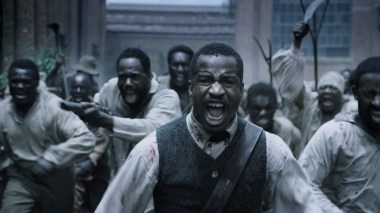 The Nat Turner rebellion lasted 48 hours and resulted in the deaths of between 55 and 65 slave owners, their families, and others in August of 1831. Though the rebellion only lasted 48 hours, it led to panic on the part of slave owners and white citizens throughout the south. In retaliation for the killings, southern militias and mobs killed over 200 slaves in addition to those who participated in the rebellion. Nat Turner was able to elude capture for 2 months before he was finally caught and hung. The rebellion also resulted in greater restrictions on slaves and free blacks including prohibiting education, the ability to assemble, and the possession of firearms.
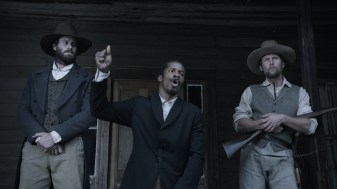 Nat Turner’s owner in leasing him out to other slave owners to preach compliance to and instill the fear of God into, their slaves. It is no secret that Scripture has long been used to justify unrighteous actions of persons and nations toward others. And, although I have known most southern Churches or denominations, including Methodism, allowed or endorsed slavery, seeing the impact such support had on the enslaved individuals, disturbs the soul in addition to informing the mind. That clergy and others so distorted and misused the Gospel of Christ for such gain, or whatever reason, deepens even further the sadness and anger.
 edress the false, racist presentation of African Americans, and the righteously heroic depiction of the Ku Klux Klan by
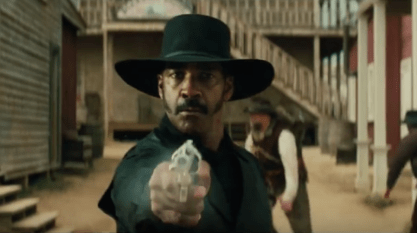
 Bartholomew Bogue and his gang, not unlike the townspeople of Rock Ridge lamenting the demise of their fair town in
  When trying to convince Chisolm to accept their offer and plea, Emma Cullen states why and what she is seeking,” I seek righteousness. But I’ll take revenge.” Whether or not recognized, such is the sentiment of many persons of faith today. Christ calls to love one’s enemy and to resist returning evil for evil. Christ teaches that it is better to suffer than retaliate. Yet such teaching is hard to follow when put to the test in the “real world” as constructed by society.
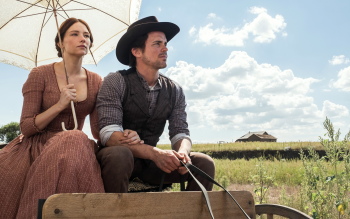 Yet, there are in the film, as in the world and in the community of faith, glimpses of the grace and hope that are central to the life and teaching of Christ. And, as is often the case with the followers of Christ, it is the community where such is often experienced when characters face their crises of faith and character.
 The process and findings of the investigation, though condensed in the film, were similar to the original inquiry. Also, the effect of the event on Sullenberger, though perhaps overly dramatic as presented in the film, does indicate the power of traumatic events even when they are short-lived and have positive outcomes.
 In what is another masterful performance by one of Film’s most accomplished and versatile actors, Tom Hanks quickly disappears into the role of Sully Sullenberger. In playing someone so unassuming and so familiar with the audience, Hanks conveys the subtle complexity of the reserved Sully’s life during the time following the crash when he was being both hailed as a hero as well as investigated for endangering the 155 lives for which he was responsible. Cast into a limelight he does not desire, Sully does what he does best as a pilot, manages the situation, including his emotions and his reticence to accept the notoriety and moniker of hero.
 All of these experiences were called upon during the 200 plus seconds of flight 1549. While considered miraculous, the landing was anything but a miracle. It was instead the product of instinct, training, steady nerves, and decisive action.



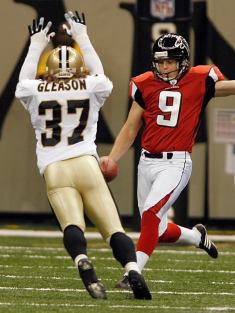 game the Saints played in the Superdome. It is called the most important play in the history of the Saints as it led to them winning the game and was a symbolic turnaround for the entire region.
  In addition to the hundreds of hours of video being a gift of Steve and Michel to Rivers, the film is a gift to all who watch it. Although grief is present like an uncredited character throughout the entire film, joy is also present. While the grief brings a silent weight to the viewer, there is also a joy that sounds a greater hope even in the midst of unimaginable loss revealed repeatedly throughout the film.
 Michel. Their their joy in living their lives brings joy to the viewers. While theirs is not the life they thought they would live when they married, Steve and Michel do not surrender living life to ALS. Rather than focusing on Steve’s limitations, on what ALS has taken, they focus on the lives they can have. As such they travel, they go, and they do as much as they can rather than sitting, grieving and waiting. They live out the challenge presented on the film’s poster. Steve and Michel “live with a purpose, “and they “love with a purpose.”
 As Steve Gleason’s body is as inadequate and challenging as the tents the heroes of Israel lived in, he, and us like them, can see through faith that assured land of promise.

