

Warner Brothers
SPOILERS Included
Hidden in the darkness of themes, setting, and characters, Joker is a film that is both dense and nuanced in symbolism, message and its reflection of our times. Although it can be a challenge at times to watch, (it is a hard R ) for those with eyes to see and ears to hear, Joker has something to say to and about us and presents Christ’s Gospel in a unique way.
The aim of the film, set in 1981 Gotham City, is to “pre-boot” the Joker character and part of the Batman franchise by providing background and insight into how Arthur Fleck became Joker. Joaquin Phoenix’s performance as Arthur is one of both power and  subtlety. Fleck is a down on his luck clown for hire and wannabe comedian struggling against poverty, crime, the cruelty of others, as well as his and his mother’s mental illnesses. Arthur is just on the edge of functioning and his mother (Francis Conroy) is just over the edge. For Arthur and his mother, if past and present are prologues, their future is utterly void of light and hope. As the story develops it is evident the majority of the Gotham’s citizens are “have-nots” also succumbing to the downward pull of the city.
In the face of so many challenges and afflictions, one is tempted to compare Arthur to Job of the Old Testament. But even in this comparison, Arthur loses out as Job, prior to his afflictions, had a fulfilled and happy life, something Arthur has never enjoyed. The only respite Arthur has from his struggles is his fantasy of being a successful comedian and being on the Murray Franklin (Robert De Niro) Show, Gotham’s version of Johnny Carson and the Tonight Show. Because Arthur is in almost every scene of Joker the audience has little respite from the increasing struggles and decline Arthur experiences as he slowly transforms into Joker.
There are two cultural references in Joker that have the effect of characters “breaking the fourth wall” and addressing the audience, the Sinatra song “That’s Life” and Charlie Chaplin’s 1936 film Modern Times. It’s hard to imagine a viewer not leaving the theater without having “That’s Life” as an earworm. Given its repeated use and prominent placement, it is hard not to interpret it as writer/director Todd Phillips’s comment on life both within and beyond the film. This form of social commentary also includes Phillips’s inclusion of Modern Times. Like Arthur Fleck, and many of Gotham’s struggling class who are on the verge of rioting against “the Rich,” Chaplin’s “Tramp” struggled in Modern Times to adapt to life in the machine age. Life in modern times for the “Tramp” saw the loss of his purpose as a laborer and identity as a human being and resulted in a downward social and mental spiral.
 In Joker, Chaplin’s Modern Times is shown as part of a High Society, Gala. The irony is hard to miss as “The Rich” of Gotham City gather in an exquisite theater, their laughter at the “Tramp” literally skating on the verge of disaster is set against the shouting of protestors whose anger is on the verge of boiling over into rage. Through these two references, Todd Phillips is stating “that’s life” in Gotham, as well as our modern time and place.
A major byproduct of our modern times, as well as Gotham, is garbage. Part of the setting for Joker is a garbage strike that has ratcheted up the misery for most of Gotham’s residents. Gotham’s garbage strike symbolizes the refusal of much of society to attend to the emotional refuse that is a consequence of our life in the modern time. Rather than do the necessary work to remove our emotional baggage, it is easier to ignore it by wrapping it up and putting it on the curb outside our consciousness. In Joker, the consequences of garbage piling up in the streets are super-rats. For us, the consequence of internalizing fear, anger, and discontent is dysfunction, whether in the forms of opiate and other drug use, mass shootings, or increasing tribal segregation.
One of the more controversial elements of the film is the depiction of mental illness. Some believe Joker depicts those with mental illness in stereotypical negative lights. While there is a long history of films depicting mental illness in false, harmful lights, Phillip’s portrayal is not of mental illness, but rather a reflection of the shameful way much of society views and treats persons with mental illness. Arthur voices this point when he observes in his journal “the worst part of having a mental illness is the world expects you to act as if you don’t have it.”
 Through Arthur, Todd Phillips is lifting up the tendency in our modern time to blame individuals for their mental illness. Such culpability often results in individuals not seeking treatment, living under the stress of acting as if they do not have their illness and then being judged when their illness is manifest. This stress often magnifies the symptoms and maladaptive behavior resulting in a cycle of stress, flair-ups, judgment, and more stress.
Perhaps the darkest element of Joker is the lack of a hero and suggestion of hope. While it is easy to see Joker as the villain, Arthur’s accountability is more ambiguous, as is that of Gotham society. Arthur did not set out to be Joker, he wanted to be a clown and comedian, but he could not overcome the obstacles of poverty and abuse, physical and emotional, that caused or contributed to his mental illness.
Though he believed himself to be the only person who could save Gotham, Thomas Wayne, (Brett Cullen) the uber-wealthy industrialist and father of Bruce Wayne repeatedly failed Arthur when given the opportunity to intervene. Gotham society  likewise failed to protect Arthur as a child or provide effective care and therapy for him as an adult. During one of his social work meetings Arthur tells his caseworker, “you don’t listen to me” to which his caseworker acknowledges such and then tells him their program has been cut and he is on his own to negotiate his plan of care.
In Chapter 6 of the Gospel of Luke, Jesus teaches the actions or inactions of people lead to blessings or woes. Those who seek to live in, by, and for Christ and the Kingdom of God will receive blessings after their woes. Those who live in, by, and for worldly success will receive woes after their earthly blessings collapse. By offering woes of laughter and  condemnation rather than blessings of concern and care to Arthur and others who are vulnerable and suffering, Wayne and all of Gotham experience the woes of their indifference through the rise of Joker and his disciples. Phillips concludes the film by punctuating this reality of woe with the reprise of “That’s Life.”
Ironically, it is in the presentation of the utterly woeful reality of life in Gotham and modern times where one finds Jesus in Joker. Joker depicts a taste of life without the hope and grace of God offered in Christ. Each year the Christian Faith imagines such a world in the interim between Good Friday and Easter Sunday. Without the resurrection and re-entrance of Christ and God into the world, society would face the same existence as those in Gotham.
What all the money, power, and professed good intentions of the Thomas Waynes and other features of Gotham society cannot do, the humble love, grace, and power of Jesus can do. The Good News in Joker is that in Christ we are not destined for Gotham; rather in Christ we are children of God assured of a place in God’s Kingdom where there are no woes, but only blessings upon blessings.
Joker is rated R for Language, and Violence





 As Elton John struggled with his identity through his early adult through middle age years, “Rocketman” wrestles with its genre and purpose. Is the film a celebration of the music of an iconic artist and pop-culture figure, or is it a story that offers greater insight into the man behind the costumes and eyeglasses. In trying to be both, each part, and the film as w whole is diminished.
 Those who are looking for experiential insight into the music, and men whose partnership created one of pop music’s preeminent catalogues, will likely be more disappointed in the film. Viewers will leave with only a cursory awareness that Reggie Dwight was considered a musical prodigy, that he came from a dysfunctional home where he was emotionally neglected save for love given to him by his grandmother, and he spent much of his life trying to fill that void. For fans and those familiar with Elton’s biography, this is not news.
 After being diagnosed and treated for AIDS, Ryan and his family were shunned by the School district, their church and many residents and businesses in the community. Upon hearing of their struggles Elton reached out to the family and developed a relationship with Ryan and his mother Jeanne. Elton was with Ryan when he died and sung one of his and Taupin’s earliest songs, Skyline Pigeon at Ryan’s 1990 funeral. Elton credits Ryan and Jeanne for helping inspire him to finally achieve and maintain sobriety.
 Taron Egerton (Kingsmen: The Secret Service) resembles John in both look and singing without coming across as trying and for an exact imitation.
 In spite not reaching its intended orbit, watching Rocketman is an enjoyable experience, especially for those who experienced the music, the times, and the celebrated life of the former Reginald Kenneth Dwight.
 To people of the Christian faith, each episode speaks to the nature and differences of the worldly life we were born in to and the Kingdom life to which we are called and into which we are baptized. As is repeated throughout Scripture, those who are considered losers, or that which is considered losing in the judgment of the world, are often winners in God’s criteria and Kingdom. This reality is repeated again and again in the teaching, life, and ministry of Jesus as well as Paul and others.
 For each of the subjects, losing was not what they desired or thought to be good. But in each, losing opened them to experiences ultimately more meaningful and satisfying than the temporary enjoyment and notoriety that winning would have brought them. One example of such is the story of French Golfer Jean van de Velde, who after losing a three-shot lead on the final hole of the 1999 Open Championship (British Open) and along with that the honor of having his name inscribed on the famous Claret Jug. Instead, he ended up having his name inscribed on the hearts of many of the young French golfers he later inspired and coached, as well as the lives of children he impacted through his work with UNICEF. Had he won the Open, it is less likely he would have been able to devote attention and time to these causes.
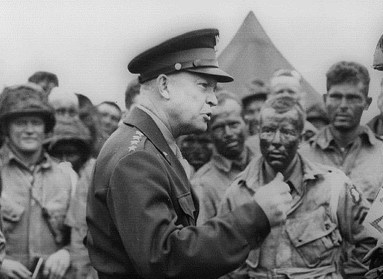 This 16-minute speech is President Dwight Eisenhower’s farewell address to the nation. As supreme allied commander in Europe during World War 2, Dwight Eisenhower bore as heavy a responsibility as anyone in the 20th Century. This, one of his final acts after 50 years of service to the nation is very much worth the time to watch.
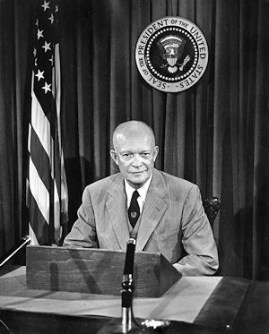 Known as the “Military Industrial Complex” speech, President Eisenhower’s farewell address goes far beyond that issue in addressing the challenges the nation would, and we now face. Central to his call is the place of statesmanship and the need for balanced cooperation between the private and public sphears. He also challenged the nation to resist the temptation to use fear as a tool of governing and put the needs of the nation above personal and partisan benefit. Perhaps he was not in touch with the time of Camelot, but this speech shows Eisenhower was very much in touch with the challenges facing our nation through the ages.
 Won’t You Be My Neighbor offers a contrasting voice and message to what fills the air today. The film is not obvious in pointing out the differences; it doesn’t have to be. There was an audible murmur when they showed tape from the first week of the program in 1968. The video showed the puppet character King Friday the XIII fearing the “Changers” and requiring reluctant subjects to build a wall to keep out people who wanted to bring change to his Kingdom. The clip ended with the human Lady Aberlin sending balloons with “signs” calling for peace and acceptance of others over the wall to the King.
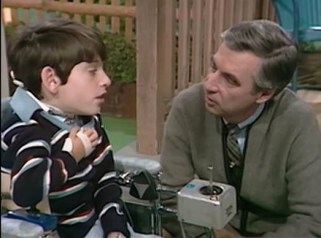 Even though Fred Rogers was an ordained Presbyterian minister, he never mentioned it on the air and rarely in public. Rather than talking about credentials and ministry, Fred presented the face of Christ to children and families throughout the country and ages.
 Fred Rogers also addresses the issue of race. A week after there were news reports and film of a hotel owner chasing African Americans out of the hotel pool by pouring bleach into the water to “clean” it, the neighborhood of Mr. Rogers saw him sharing a footbath with Officer Clemmons, portrayed by Francois Clemmons, an African American member of the cast. There was no mention of the hotel incident. there did not have to be.
 Based on a true story, A Beautiful Day in the Neighborhood depicts Mr. Rogers relationship with, and ministry to a Vanity Fair writer assigned to write an article on him. Tom Hanks as Mr. Rogers in the film which opens on November 22.
 I thought I would review The Shape of Water, the winner of the 2018 Academy Award for Best Picture in a different way, a text log between me and my niece.
 Me: People/govt. afraid of difference in others…other people united, by what makes them different…Allowing what unites them to overcome their difference.
 Me: I thought Sally Hawkins’s performance was extraordinary…
 In addition to the Best Picture Oscar, Guillermo del Toro won the Oscar for Best Direction. The Shape of Water is a beautifully photographed film where the acting is just as impressive, and as with most fantasy films, The Shape of Water allows, if not demands for continued contemplation and application to one’s life and circumstance. It’s not a film everyone will relate to or enjoy, but it was worthy of winning the Best Picture award.
 The program stars Dallas native Jay R. Ferguson (Mad Men) as Chip Curry, a film critic who experiences two life-changing events that led him to reconsider his life trajectory. Chip decides he will attempt to live his life as prescribed by the Bible. To help him in this endeavor he develops relationships with a Roman Catholic Priest and a Jewish Rabbi, who meet regularly in a restaurant/bar for interfaith support. This God-Squad helps guide Chip in applying ancient teachings and practices in a modern context.
 Based on the preview shows, it seems each episode will explore an issue of life and faith such as loving thy neighbor and the allure and challenge of modern idols, i.e., cell phones. As with all TV, resolutions come much quicker and easier than real life. Crimes are rarely solved so fast, and trials are never completed in such a timely manner as they are on TV. So it is that theological awareness and discipline are rarely established and accepted so readily as they are on Living Biblically. But the show does address issues of life and faith that may be a first step for persons.

 The film would have benefitted from detailing and presenting more of the relationships established between the unit and their allied Afghan forces. After the screening I attended, there was a Q&A with the men Hemsworth’s and Shannon’s characters were based on, Captain, now Major Mark Nutsch and Chief Warrant Officer Bob Pennington. While covered in the film, the full story of the relationship between the members of the unit and the leaders and members of the Alliance group was stirring and added much to the film’s impact. Also, the cultural and political differences that Nutsch, Pennington, and all members of the team had to address and overcome were as vital to the success as any of the weaponry and tactics brought to the mission. As dauntingly impossible as the scope of the mission was, and as dangerous as the combat was as depicted, more details given to these relational and cultural requirements and accomplishments, at the expense of some of the combat sequences, would have reflected better the true and amazingly successful outcome of the mission.
 At their best, faith communities are devoted to one another and care for each other, at times more than they care for themselves. Members of faith communities draw strength from one another, teach and when necessary offer accountability to one another. Another commonality between armed forces units and faith communities is the devotion to the mission. Once given an assignment, the successful completion of the mission becomes the primary if not singular focus for members of a military unit or squad. Such should be the case for faith communities. In units, there is neither room nor patience for thoughts, opinions, habits or other things that distract from completing the mission as assigned. Christian faith communities would do better to follow this example and put the mission of loving and serving Christ by making disciples, above all things.
 CrossRoads Faith and Film