Film Reveiw: CALVARY

calvary picCALVARY portrays the travails of a good man trying to be a good priest ministering to challenging people in a difficult time. Any film with this title and subject carried the weight of significant expectations, and CALVARY upholds such dutifully. In discussing the title, writer / director John Michael McDonagh speaks to the dual meaning of the word, that Calvary is both the place where Christ was crucified as well as a burden one must bear or a difficult time one must endure. CALVARY carries such weight and shares the burden of both meanings with the audience. With a cast of quirky, Irish characters offering exceptionally witty dialogue there is a significant comedic component to the film, but it is by no means a comedy.

Calvary is a heavy film that examines life, faith, discipleship, community and the Church in a compelling, thought provoking way. The film pulls the viewer in and shares the weight in the first seconds of the pre-credits opening scene when a Roman Catholic priest, Father James (Brendan Gleeson), calvary pic 2discovers during confession that one of his flock was sexually abused for 5 years by a now diseased priest, and that person will exact revenge by murdering Father James in one week. The voice states that he is killing Father James, not because he is a bad priest but because he is a good priest, and his death will make bigger news.
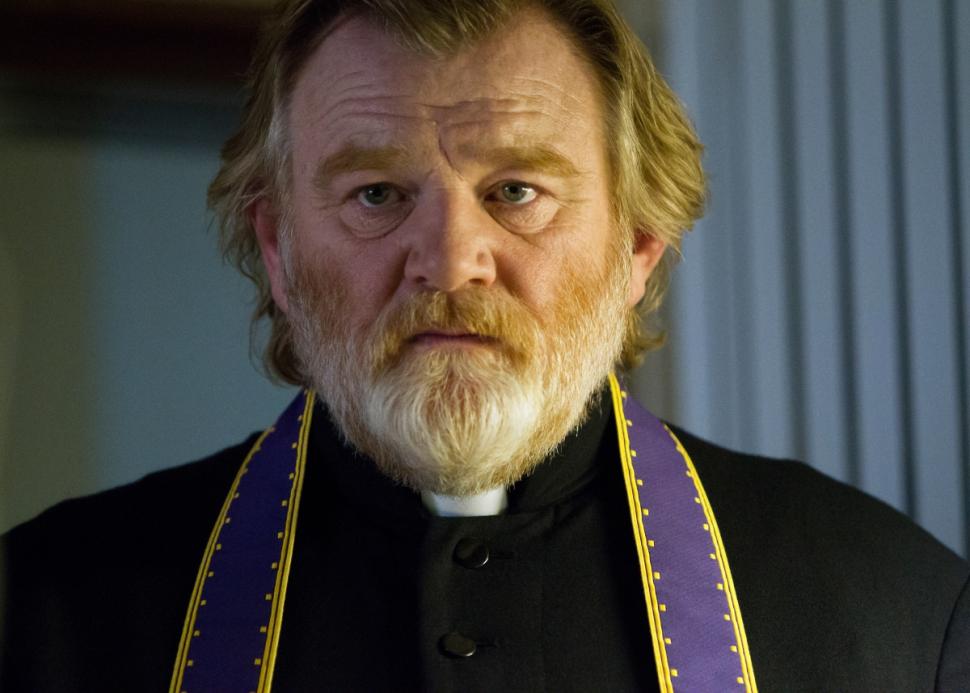
Growing up as a PK, I shared with my father my method of rating sermons was how long one remembered them. Hopefully they were at least parking lot sermons, and preferably lunch or even dinner sermons, meaning one at least got out of the Church or to lunch before they faded from thought. Especially good sermons were overnighters where one thought about them that night or even longer. Because of the weighty subject, hauntingly beautiful photography, a supremely textured script, and impeccable acting performances, Calvary is not only an overnighter, but an all-nighter.

The first of the major themes is the state of the Church. Set in Ireland amidst the sexual abuse scandals that have rocked the Roman Catholic Church, the film projects the impact of the scandal. The Church is seen by many there as feckless at best, and at worst a hypocritical, greedy institution whose sole concern is for increasing its wealth, status, and control of others. This range of attitudes is reflected in the various persons of the small town where the film is set.
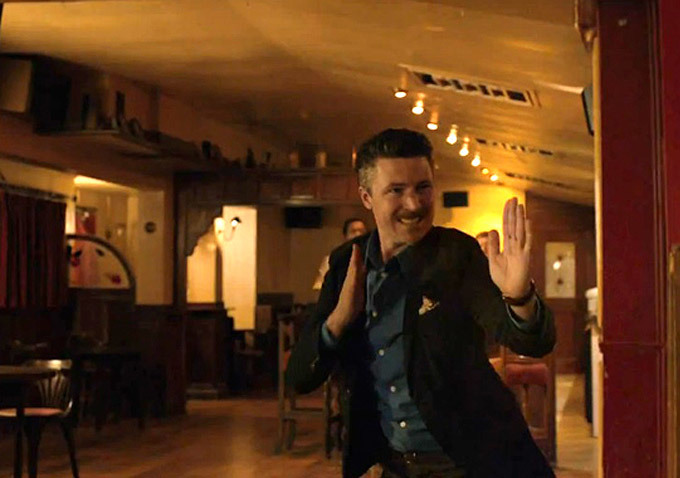
Aiden Gillen as acerbic atheist Dr. Frank Harte Aiden Gillen as acerbic atheist Dr. Frank Harte

All the characters are shown receiving the Eucharist at the beginning of the film, however this scene is used more to introduce the characters rather than indicate a level of faith or religiosity. The true feelings of the people towards both the institution and for many, God, are displayed in their treatment of Father James which range from cynical sparring to the ultimate threat of physical harm depicted in the opening scene.

While CALVARY is set in Ireland during the post-sexual abuse scandal of the Roman Catholic Church, it does not have an anti-Catholic feel, and does have a word to say to the greater Church. Even for the protestant church in another country, CALVARY is a canary in the coalmine, a harbinger of the impact of becoming irrelevant. Whether disconnect comes as the result of scandal, schism, in-fighting or any other sense of detachment, the people whom the church serves will reject and turn against the Church and her mission when there is the perception of systemic hypocrisy, when the walk of the church is misaligned with its Word.

Father James, and through him the audience, realizes in his Gethsemane moment, when he must decide to flee or face the danger, that the worst thing is not the antagonism of those hurt by the failure of a person or the institution; rather it is the complete loss of an awareness of what is right and proper, holy and unholy. It is worse when someone is “un-respectful,” unaware, than those who are purposely disrespectful and combative. If the church surrenders its place and mission, carrying the Criss of Calvary, antagonism and hostility toward it will cease but the individuals and society will suffer more.

Though not a lawyer in the 1930’s American South, Father James walks in the same shoes as Atticus Finch in “To Kill A Mockingbird.” James is caught in the middle of upholding what is right against the onslaught of a community who rejects righteousness and rejects him for striving for righteousness because it holds them accountable for their failure.

Unlike those higher in the church bureaucracy, Fr. James refuses to compromise to those who would buy out his integrity, and their guilt, through significant financial gifts. Instead, like his Christ figure counterpart Atticus Finch, Fr. James sees not just the actions of his antagonists, but the humanity behind their pain fueled actions. Even though they belittle, oppose, and threaten him, he knows they need him and the ministry Christ called him to offer. It is this nature of ordained ministry that is a second major theme.

calvary pic 6Writer/director John Michael McDonagh captures the prophetic weight of ordained ministry. Journeying with people during their difficult times, opening oneself to the suffering of others, is sharing the weight of their brokenness and that of the world. Most clergy know this is part of accepting the call to ordained ministry.

When one must also take on the added weight of anger, fear, resentment people project on the Church and God, as well as the failure of the institutional church to provide support, the weight becomes cavalry, a burden that when not processed grinds and wears the bearer down.

Given the title and subject it is obvious that Fr. James is a figure of Christ, and as the film is set from one Sunday through the next, James’s experiences will reflect some of the experiences of Jesus during his last week. Gleeson’s masterfully nuanced performance reflects the growing weight and burden Fr. James takes on as he carries the cross through the course of the film, his holy week. Joining Gleeson is an exemplary ensemble cast that skillfully portray their character’s protective, outer shells of cynicism, and anger as well as their actual state of fear and vulnerability.

Although a Holy Week Film, CALVARY does point to the hope, healing and community of the resurrection.

Director / Writer John Michael McDonagh Director / Writer John Michael McDonagh

CALVARY is a very good film that captures the realities of a world that is fallen and rejects the very faith it needs and it shows the challenges of faithfully ministering to those burdened by the brokenness of sin.

CALVARY is rated “R” for adult language and content and one instance of graphic violence.

Posted in Faith Shots, Film Shots | Tagged , , , , , , , , , , , , , , | 3 Comments

Carrying the Cross and Dropping the Crowbar

captial punishment 6One of my favorite scenes in the movie “Field of Dreams” is when Ray Kinsella, played by Kevin Costner, is trying to convince Terence Mann, played by James Earl Jones, to go with him to a Boston Red Sox baseball game. When Terence Mann shuts the door in Ray’s face Ray Enters Terence’s apartment uninvited and tries to kidnap Terence at the point of his finger, inside his jacket pocket. Terence responds by threatening Ray with a crowbar. Backing off and stumbling Ray tells Terence “you can’t do this, you’re a pacifist.” Being reminded at the last moment of who he is, Terence grudgingly puts down the crowbar and reluctantly listens to Ray.

When it comes to the death penalty I am often in Terence’s shoes, crowbar or club in my hand or my hand on a switch. I strongly supported the death penalty for the first 18 years of my age of reason. I have now opposed it for 20 years. In fact this was one of the two changes I experienced in seminary, when I studied Christian ethics. In short, when asked to reconcile the death penalty to the life and teachings of Jesus, I couldn’t, as much as I wanted to and tried.

Avoiding the, in my mind, compelling evidence that the death penalty is not a deterrent to capital crimes, and looking at it through the teaching and life example of Jesus, I cannot find a single instance that indicates it to be anything other than incompatible with Christ’s teaching and actions. Yes the eye for and eye practice opened the door to capital punishment in Israel, though the purpose of the law was to limit the practice. As Jesus is the fulfillment of the law however, his practice and teaching indicate the desires of God, and his teaching and practice is contrary to this earlier practice.

When asked which commandments one should follow, Jesus responded, love The Lord with all one’s heart, mind, might, and spirit, and then love your neighbor as yourself. One cannot love God with everything and then kill one of God’s children, even when that child is a brutal murderer. That person, as evil and fallen as they are, is beloved by God and is a neighbor to love as one loves oneself.

When asked how often one should forgive, Jesus said 70 times 7. In the Sermon on the Mount, Jesus preached that those who offer mercy and make peace are blessed as are people who suffer for righteousness sake. Yes showing mercy and forgiving can yield pain and suffering in the short-term, but they ultimately yield blessing if Jesus’s teachings are to be believed. Jesus also preached that disciples are to love enemies and pray for those who persecute them.

When betrayed and arrested, Jesus prevented his followers from using force and told them that when one lives by the sword / violence, one dies by the sword / violence. While some have said Jesus’s halting the execution of the woman who had committed adultery was in response to her not being properly tried, he did not say, let those cast the first stone after a proper trial, he said let one who has no sin, who is not in need of forgiveness, cast the first stone. When on the cross, Jesus modeled the way of the Kingdom and actions of disciples when he prayed for God to forgive those who crucified him. How can we, ourselves guilty of the capital crime of sin, ask Jesus for a release from what we deserve when we are unwilling to give the same to someone else, even if that person has commuted evil acts?

How can a disciple see past the position of one killed by lethal injection?

How can a disciple see past the position of one killed by lethal injection?

For me, the most compelling reason for a follower and disciple of Jesus to deny support of capital punishment is that I cannot endorse the practice that killed the one I claim to love.

Given this sampling of teaching and actions of Jesus, and there is more, I do understand the desire to execute persons guilty of heinous acts. I would say that every fiber in me wants to swing a crowbar, push a button or throw a switch. But every time I have that feeling, I see a cross I am reminded, “I am a disciple of Jesus,” and I reluctantly drop the crowbar and lock away my desire to live by my worldly nature in favor of living by God’s Kingdom standards. In doing so I also trust God that Kingdom standards, Kingdom ways of living and being best cares for the victims of the crime and their families. Not exacting revenge, even when it is deserved, is a part of living in the peace of and from God that we do not understand. Such peace does not make sense because it is not of this world but is of the Kingdom that we receive through faith.

All of this is beyond hard to understand, accept and certainly practice, but as a disciple of Christ, it is what I am called to do. This is not easy. Jesus said following him would be hard because it requires one to deny oneself, pick up and carry a cross. One of the things denied in carrying the cross is the worldly satisfaction of taking an eye for an eye.The reality is that in order to swing a crowbar or throw a stone I have to put down the cross that I am carrying out of my love for and devotion to my Lord. I can do one or the other, I can’t do both.

Posted in Faith Shots | Tagged , , , , , , , , , , | 2 Comments

“Son of God”: Script over Scripture

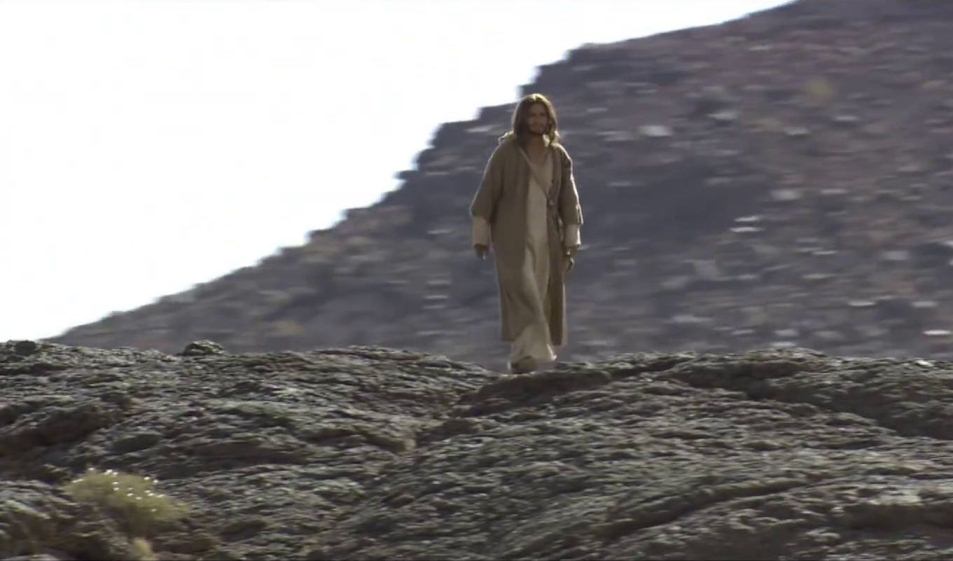
son of god Speaking for their film “Son of God,” producers Roma Downy and Mark Burnett spoke about their desire to update the epic Biblical films of the 1950’s and 60’s to better fit with today’s audiences. With greater technological tools at their disposal, “Son of God” is sharper and crisper than the epic narratives of 50 years ago, but the experience and feeling watching the film is very similar. There is no doubt that “Son of God” has touched many of the millions of persons who have seen it, served as a conversation starter for families and individuals, and friends and led unchurched, or formerly churched viewers to reflect and consider or reconsider faith, all of which are good things.

Though positive, these benefits do not mean that the film offered a complete portrayal of Jesus or accurate presentation of the Gospels. As much as they wanted to update the portrayal of Christ from the presentations of the 1950’s and 60’s, outside of the filmmaking craft, “Son of God” retains much of the feel of the earlier epics where the divinity of Jesus overflows and overshadows the humanity of, and connection with, Jesus. With a weaker presentation of the fully human Jesus, will the responses of individuals to the film, especially the unchurched, lead to transformation or evaporate as the emotion of the moment fades?

At six feet, three inches and combined with his model appearance, Diogo Morgado stands out, literally heads and shoulders above everyone. This casting decision, as well as the directorial decision to repeatedly utilize sweeping helicopter shots of Jesus, and the post production decision to accompany such photography of Jesus with an equally grand musical score creates emotional and physical distance and lessens the intimacy between the viewer and Christ. Such distance is contrary to the intimate Jesus as presented in the Gospels. Intimacy by Jesus with the people, especially those cast out or devalued by the society of the time is one of the most important teachings of the Jesus in The Bible. The prologue to the Gospel of John describes a different Jesus to the overly dramatic Jesus depicted in “Son of God”, “And the Word became flesh and dwelled among us.” The translation of dwell is actually, “pitched his tent” among us. son of god 2

Jesus, the Word made flesh, did not live around us and like us; he lived among us, as us. To depict him in such a soft focus yet grand manner antagonizes the purpose of God’s incarnation and echoes the early church heresy of Docetism, where the humanity of Jesus was denied as he was described as spirit in human form. It is not necessary to depict Jesus as larger than life because as the Word, the creator of all things, Jesus is life. Grand presentations of Christ, while usually done as an effort to respect and honor of his divinity, are in contrast to the purpose of his life and ministry, and ironically echoes the first century misconception of what the Messiah, the Son of God, should look and be like, and was a major factor to the rejection and crucifixion of Jesus.

While these criticisms of “Son of God” may be stylish in nature, the scriptural inaccuracies are substantive and point to the decision of the filmmakers to put the needs of script over the accuracy of scripture. Why did the film show Jesus entering the tomb of Lazarus and kiss his forehead to raise him rather than depict Jesus standing outside the tomb calling for him to come out? Why was Lazarus not wrapped in burial strips and his face not covered? Why was Jesus shown standing, rather than kneeling and writing in the dirt, when presented with the woman accused of adultery? Why was Thomas shown to be in the upper room when Jesus first appeared, rather than outside, and still have doubt? Most importantly, Why did the film depict Peter fully understanding, without the benefit of revelation from Jesus, the nature of the resurrection, and explaining the risen Jesus through the breaking of the bread in the upper room? Had the filmmakers wanted to introduce the Eucharist as a means of recognizing and experiencing the risen Jesus, why did they not depict the powerful Emmaus narrative, where Jesus revealed himself through the breaking of the bread?

Such scriptural differences may seem unimportant, but in scripture, each of these details has meaning and purpose in revealing God and the Kingdom. These alterations of scripture reflect the determination by the film’s producers, and apparently pastoral advisors, that the scriptural narrative was dramatically lacking, and the use of such alterations place the needs of the script, to drive the drama, above the teaching purpose of scripture. Such decisions are more disappointing given that a major purpose for making the film was to reach out to persons unfamiliar with Jesus and the Gospel. These inaccuracies are now a part of their knowledge base and misunderstanding of the life and story of Jesus. As the film community is entering a new era faith or Biblical films, faith-based filmmakers who desire to film Biblical narratives should remember, to truly impact and contribute in the Kingdom, when drama or legend contradict scripture, film the scripture.

Posted in Faith Shots, Film Shots | Tagged , , , , , | Leave a comment

“On The Pulpit Floor: Sermon Points That Time Denied”

Image


In their 1973 song, Doo Doo Doo (Heartbreaker) The Rolling Stones are singing about an “accidental” shooting in New York City. Given the history of that, and subsequent times,  it’s not hard to imagine that the lyrics refer to racial tensions between communities of color and the police.  The other incident is the overdose death of a 10 year old girlwho is basically forgotten and abandoned by society and who “never had a chance.”  These incidents and the cultural components that enabled them, judging persons by how they look or what community they are from or considering people disposable, breaks the heart of Christ. 

The thing which I had to cut out of the sermon due to time, was the part the music played.  Those who know the song, know that the tune is fast paced, with a fun, funk feel and wonderfully driving and upbeat use of horns.  This in the midst of the vocal bridge,” Doo, doo doo doo, doo doo” are in direct contrast to the very heavy, heartbreaking lyrics, and symbolize further the tendancy of society, or in a theological sense, often the Church, to whistle past the cemetery or deprived parts of our cities and world so as not to hear the cries of the suffering. 

My lyrics were written from the view point of Christ. If one hears the original lyrics / story, summerized above, also from the perspective of Christ you can sense the similarities between the pain our denial and betrayal of Christ as disciples causes him today and the heartbreak Jesus felt with the betrayal of Judas and betrayal of Peter.

If you are not familiar with the tune, it might help to download or listen the Stone’s original. 

“Heartbreaker”  to the tune of “Doo Doo Doo (Heartbreaker)  The Rolling Stones

See the struggles in every city, all the pain that is so stark.

Sin has swallowed your identity, my light world seems forever dark, 

Heart breakers with your idolizing you want to tear my world apart.

Heart breakers with your idolizing, You want to tear my world apart.


Your world’s divided tween 2 colors, angry blue and seething red.

People’s problems ping ponged side to side, Only empty words and blame abides,

blame abides.

Heart breaker, heart breaker, you steal my joy from every heart

Heart breaker, pain maker, you drain my love from every heart.

 (Oh yeah) Doo doo doo doo doo


Grace is absent towards each other, though you ask of it from me.

Busy lives drain your faith away,then you ask what’s going on, going wrong.

 Heart breaker, heart breaker, your choices pulling us apart,

Heart Breaker Pain maker, you drain my love from every heart.


Why don’t you take the love I give you? Instead of fighting me in vain.

Only through the love you crucified, can you hope to lose the stain, end the pain.

 Heart maker, pride breaker, you have no hope if we’re apart,

Heart maker, world shaker, my grace can cleanse you back to start.

 Doo doo doo doo doo


Posted in Scattershooting | Tagged , , , , , , , , , | Leave a comment

Film Review: August: Osage County

August-Osage-County
The film adaptation of Tracy Letts’s Pulitzer Prize winning play “August: Osage County” is the intense story of the Weston family in all their pain and unimaginable dysfunction. Receiving her 18th Oscar nomination, Meryl Streep stars as the Weston family matriarch Violet Weston, and Julia Roberts, nominated for best supporting actress, costars as Violet’s distant daughter Barbara. Violet and Barbara, as well as the other two daughters, dutiful, caretaker Ivy (Julianne Nicholson) and flighty baby sister Karen (Juliette Lewis) are brought together along with extended family members in the face of a family crisis, the disappearance of husband and father Beverly Weston (Sam Shepard.) As marketed, many viewers who expected to see a mildly dark comedy about the difficulties inherit in families are shocked instead to find a brutal film that chronicles mean spirited dysfunction at its worst. Viewers unfamiliar with the story will discover the level of vitriol is similar to the levels of violence in Quentin Tarantino films and feel, with justification, that they have been the victim of movie of bait and switch.

The disingenuousness of the marketing is unfortunate on two levels. First it exposes some viewers to content they knowingly would choose not to view. Second, by antagonizing the viewer’s expectation, many had a negative reaction they would not have experienced had they known the film’s true demeanor, and therefore were not fully able to embrace what was a good film with an outstanding ensemble that addressed important issues that negatively impact families.

august-osage county “August: Osage County” lays bare the reality of the ease in which family habits and behaviors, in this case negative, are passed on from generation to generation. Failures and disappointments in one’s life lead to unrealistically high hopes and expectations for offspring. Disappointment sets in when such expectations of the children are not met which then produces guilt felt by the child that then leads to their feelings of failure and disappointment as the dysfunction cycle prepares for the next generation. In this film, three generations of such behavior are on display at various stages and a fourth is brought in via a heart wrenching story.

When not addressed, such dysfunctional habits replicate themselves like a virus. In the film, the Weston family has not addressed such practices, and has done what most families do, left things unsaid, undertaken inappropriate behavior, and moved to separate corners. Viewers watching this familial tragedy unfold learn two hallmarks of family systems theory, one cannot simply outrun one’s family as the power of dysfunction can span across time and space, and one cannot “fix” a member of the system without addressing the system as a whole.

As hard as it is, such dysfunction and broken systems can be repaired but not without intentionality, openness, honesty, and determination. When confronted with change, the system will fight and bite back to keep the status quo. As in many families, the genesis of the Weston’s dysfunction is secrecy. Family secrets are best described as cancerous. They grow silently, feeding usually off the fear of shame. The energy expended, the lies built on top of lies necessary to keep “The Secret,” secret, brings stress and places unsustainable demands that negatively impact everyone in the family and all others who venture into the family’s orbit.

“August: Osage County” is a hard film to watch and worthy of its R rating. There are parts that are laugh out loud funny, and there are parts that are achingly sad and difficult. Many or most viewers will see touch points between their family and the Westons, hopefully these are only points and not a full reflection, and also hopefully they will be motivated to take action where necessary to address and repair, or at least understand, the dysfunction they live(d) with before it does more damage or is passed on to other generations.

Posted in Faith Shots, Film Shots | Tagged , , , , , , , , , , | Leave a comment

Faith Take Film Review: “Philomena”

philomena pic 2

http://unitedmethodistreporter.com/2014/01/09/take-2-philomena/

Posted in Faith Shots, Film Shots | Tagged , , , , , , , , , , , , , | Leave a comment

Sermon Notes: With the Dawn of Redeeming Grace

advent 13 bulletinTonight concludes the Advent sermon series, “Repeat Sounding the Joy, “where we have looked closely at the theological teaching in favored Christmas carols. The first Sunday in Advent we looked at the theme of expectation as taught by Charles Wesley in his Advent hymn “Come Thou Long Expected Jesus.” The second Sunday “O Little Town of Bethlehem” presented the humility of the incarnation of God in Jesus, born to a simple family in modest town. Likewise, we were also called humbly receive Him into our hearts via a meek spirit. The third Sunday we studied “O Come All Ye Faithful” and “Hark The Herald Angels Sing” which both decidedly proclaim the full divinity of Jesus even as he was fully human. The last Sunday “Joy to the World” reminded us that we are to repeat the sounding joy of the birth of Jesus and the Gospel of grace and life.

xmas 13Tonight we conclude with the most popular and famous Christmas Carol, “Silent Night.” Tonight is the 195th anniversary of the first time it was used in worship. The verses were written as a poem in 1816 by Fr. Josef Mohr, an Austrian priest. On December 23rd 1818 Fr. Mohr asked Franz Gruber, the organist at St. Nicholas, the church he served as assistant priest, if he would compose a tune for the poem that they could use in worship the next day. “Silent Night” was first used in worship on Christmas Eve 1818 at St. Nicholas in the Austrian town of Oberndorf. In 1863 American Episcopal priest, Fr. John Freeman Young translated to hymn from German into English and it is this translation that most know as “Silent Night.”

The verse I want to consider is the third verse and the line “with the dawn of redeeming grace.” The birth of Jesus ushers in the dawn of redemption. Now I am no physicist, and I don’t play one on TV or in the pulpit, but as best as I know, dawn is defined as 18 degrees below horizon, before twilight which is the time just before the sun breaks above the horizon and officially rises. I describe dawn as a “weakening of darkness,” where you don’t see rays of light, but notice that the darkness is fading.

The birth of Christ was the dawn of redemption, which is grace, and the initiation of the Kingdom of God. Though such redemption and planting of the Kingdom is, as with dawn, beyond vision, it is perceptible, more felt than seen. Yet, redeeming grace and the Kingdom of God, as with the sunrise, is inevitable and unstoppable. Grace, given undeservedly, restores us to relationship with God, by restoring us to our state as created, the image and likeness of God.

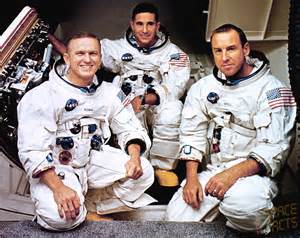
silent night moon 1As tonight is the 195th anniversary of the first singing of “Silent Night,”45 years ago tonight Frank Borman, Jim Lovell, Bill Anders, were 238,000 miles from the earth and 60 nautical miles from the lunar surface in their Apollo 8 capsule. During the third orbit, after rotating the position of the spacecraft so that their windows faced the lunar surface, they became the first humans to see the moon up close and personal. They began working on one of their mission objectives, taking high resolution photographs of the lunar surface in preparation for the Apollo 11 lunar landing 8 months later.

While they were working something caught Bill Anders eye as he looked out the Apollo 8 window. When he turned to look, he became the first person to see the earth from another celestial body as he saw the earth rise over the lunar horizon. Both Anders and Jim Lovell worked hard to find a camera with color film to capture the moment.

silent night moon 6The film and picture of the earth rising above the lunar horizon show the earth as small and floating delicately in the vastness of space. “Earth Rising” became one of the most famous and published photos ever. For those at home,”Earth Rising” became a reminder of the beauty of the earth in the midst of an ugly, tumultuous time, 1968, a tragic year of war, and social conflict, a year of assassinations resulting in the loss of hope and a dream.

Striking was the contrast between the vast, utter desolation of the moon and the delicate beauty of the earth. Jim Lovell described the earth “as a grand oasis in the vastness of space.”

What this image did for much of the world in 1968, grace does for us, allows us to see things from a different, true perspective. Grace allows us to see, allows us to again be, God’s grand creation , even as we exist in, and at times perpetuate the vast desolation of sin.

xmas 13bChristmas gives us perspective and time. In living life, we are too often too busy to notice the beauty not only around us, but in us, that is us. Or, when we are going through desolate times in our lives, when life seems as dead or unfulfilling as the lunar desolation, we are reminded of the reality of our existence in Christ. We see ourselves as God sees us, as God created us and, through Christ, as God redeems us to be again. As we once again look toward the dawn that is God’s incarnation in Christ Jesus, may we receive, accept and embrace God’s redeeming Grace.

Merry Christmas

Posted in Faith Shots, Sermons | Tagged , , , , , , , , , , , , , | Leave a comment

Gunsanity: Change Gonna Come

Posted in Scattershooting | Leave a comment

Review: “12 Years A Slave”

blog 12 years
http://unitedmethodistreporter.com/2013/11/18/take-2-12-years-slave/

Posted in Faith Shots, Film Shots | Tagged , , , , , | Leave a comment

Review: “Dallas Buyers Club”

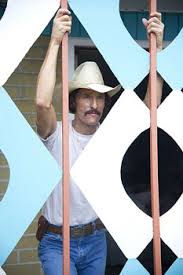
the dallas buyers club 3“Dallas Buyers Club,” starring Matthew McConaughey, is a biopic about Ron Woodroof, a Dallas electrician, part time rodeo cowboy, and fulltime homophobic who is diagnosed with AIDS in 1986 and given 30 days to live. After receiving this apparent life sentence, Ron takes his health care into his own hands to acquire AZT, then the only AIDS medication approved for human trials in the United States. Following a life threatening reaction to the toxic medication Ron seeks alternative treatments in Mexico, and, after responding to the unconventional medications, becomes a self-taught authority in international AIDS treatment options and an AIDS activist.

The film effectively captures the stigma and discrimination that were the fear fueled, social side-effect of AIDS in the early 1980’s. Because so little was initially understood, and as it was seen by many as a “Gay Disease” and for some emblematic of God’s punitive judgment against homosexuals, patients in the early days of the epidemic faced discrimination in treatment options, as well as where they could live and work. For many AIDS patients, isolation became one of the first and most painful conditions of the disease. Watching the hate and malice piled upon those who fell victim to the diagnosis, including Ron by his own “friends,” I was reminded of Ryan White and others who became the targets of merciless cruelty after diagnosed with the disease. Through depicting societal attempts to limit contact and opportunities in life for those impacted by AIDS, I could not help but think of leprosy and leper colonies of earlier unenlightened ages.

“Dallas Buyers Club” is a film about courage, transformation, and the power of purpose. When the viewer is first introduced to Ron, it is difficult to feel any sympathy for him. He is foul-mouthed, and abuses drugs, women, and anyone who is different, especially those with a different sexual orientation. Although he appears to be the leader of his ring in dishing out hateful venom, as with most bullies, his perceived strength is only an indication of his true weakness.

It is not until Ron becomes the bullied, the outsider, the different, the “one of them,” that he develops and demonstrates strength and courage. This transformation is initiated through the most unlikely of relationships, Ron and Rayon, a transgender woman and fellow AIDS patient, played masterfully by Jared Leto. Once Rayon would have been the target of verbal and physical abuse, but after Ron becomes one of “the others” and is rejected by his “friends,” Rayon offers acceptance that Ron has never known, even before his diagnosis.

While Ron is helped by the alternative treatments that he has to go to the greatest lengths to find and acquire, one can argue that the best medicine for him is the purpose he finds in helping other victims procure treatments that offer greater efficacy and less toxicity than those allowed at the time in the United States. Where before, Ron gained strength through bullying those who were weaker and different, now his battle against the heavy handed treatment of the FDA and pharmaceutical companies gives him strength and serves as a balm in his battle against the ravages of his disease.

“Dallas Buyers Club” offers several touch points with faith. Chief among these is the acting out of the “Sermon on the Mount.” Though Ron is not, nor ever becomes pure in heart, he does hunger and thirst for righteousness, and he is filled. Ron is salt who finds his taste in the service of others. He is a light that shines in advocating for those without a voice, and he refuses to hide even before judgmental friends. Ron discovers the fecklessness of storing earthly, physical treasures that can be stolen, or confiscated. In so letting go of the treasures of earth; wealth, envy, and hate, Ron Woodroof discovers the true treasure that is a healing heart.

Matthew McConaughey lost over 50 pounds and offers the most powerful performance of his career and is all but assured of at least an Academy Award nomination. Jared Leto, who lost over 30 pounds, will also assuredly receive a nomination for supporting actor. The film is directed by Jean-Marc Vallée and also co-stars Jennifer Garner.
“Dallas Buyers Club” is rated R for strong language and adult content.

Posted in Faith Shots, Film Shots | Tagged , , , , , , | Leave a comment