Cross+Roads Renewal: Cannes

2015_Cannes_Film_Festival_posterUpon my first full day in the town of Cannes, France, I was reminded of a truth I often forget, sometimes it’s good to get lost. The day following my 29 hour trip to this sublime town, and after a long night of sleep followed by a couple of naps, I set out to explore the area. The first thing I found was of course the Palais Des Festivals, the home of the famous Cannes Film Festival and soon to be my home for ten days.

Next I began exploring the town. Cannes is a wondrous mixture of extreme wealth and hardworking shop owners and workers. It’s also a mix of grand boulevards and tiny streets and alleyways. All along the boulevards are large restaurants and stores with names known around the world. If you stay on the bigger streets, you’re less likely to lose your way, more likely to run into well-known attractions, and certain of a very predictable experience. If, on the other hand, you turn onto a smaller street, or better yet, an alleyway, you’re in for a less predictable, but often more meaningful experience. Here, less often means more.FullSizeRender

I had this choice my first day exploring Cannes. While I was still hung-over from the grind of three flights, two layovers and one train ride, I was tempted to stick to the main streets, but in a breath of fresh energy and channeling my inner Robert Frost, I made a turn onto a less traveled path and was off on a beautiful stroll into the heart and soul of the city and people. I saw modest but beautiful apartments, which were obviously taken care of and beautified by very modest flower boxes and other IMG_5294small, personal touches. I also discovered small, family-owned cafes and ristorantes that were charming and intimate. In these streets I experienced peace, not just from the quiet, but from the genuineness of the area and the people.

I did get a bit lost but I found something special. This charming peace was in direct contrast to the preparations underway at the Palais and along the famous Le Croisette, the promenade that hugs the Cannes beach and is the address for the Ritz, IMG_5317and other famous hotels. Here, cranes were lifting giant cement planters and placing them along the street. One crane was even lifting 15 foot palm trees onto an upper balcony of one of the fancy hotels in order to temporarily give the space that “genuine” Mediterranean look and feel. While those trees will be gone within a fortnight, the real beauty of Cannes will remain in the small streets, paths, and modest apartments hidden from view but easy to find.

Upon reflecting on my choice to get lost, I was reminded of the film Up and Ellie, the wife of Carl Fredricksen, who from her earliest days had a great desire for adventure. In her words, “Adventure is out there!” but it’s usually not found on the path well-traveled. To always stay on the main roads and only see the famous landmarks makes one a tourist. By getting off the beaten path, trying something new and even unknown, one becomes more of an adventurer. I understand that traveling to the south of France is not exactly an adventure into the wilderness, but within this or any locale, one can still get lost and have wonderfully meaningful experiences. I made some wrong turns and had to backtrack a bit from time to time. But it’s that stroll that will stay with me long after the glamour of the landmarks have been packed away and the last grains of Cannes beach sand has been shaken from my sandals.

As it can be good to get lost when we travel, getting lost is also helpful in our spiritual journey. As with travel, faith can be prepackaged with set itineraries, timetables, and expectations. Certainly there is importance in encountering the faith landmarks, but one should resist the temptation to hit only the hotspots of faith, special occasions such as baptism, confirmation, and Christmas and Easter worship. Knowledge of scripture should not only include popular texts and uncritical reception of packaged lesson plans. Rather, one should linger among lesser known texts, contemplate the observations and teachings of others, and learn more about different traditions, both within and between faiths. Being open to and interested in what is not known or familiar–in teaching, traditions, and other experiences–is certainly not the safe way to journey, but it produces longer lasting faith experiences and spiritual growth and development.

Taking time to stroll down these off the beaten spiritual and theological paths adds to the richness of faith experience as well as an understanding of other expressions of faith. As always, learning about the customs and understandings of others builds upon and deepens one’s personal faith and spirituality. As with traveling, there will be times when we get a bit lost. We may not understand, agree with, enjoy, or even appreciate what we learn or encounter. We may not come away with all of our questions answered, but in thinking about these questions and pondering possible answers, we grow in our faith and broaden our spirit. Who wants to be a spiritual or faith tourist, when one can be a spiritual and faith adventurer? As Up reminds us, the spirit of adventure is out there! May we desire and follow such a spirit.

Posted in Faith Shots, Film Shots, Scattershooting | Tagged , , , , , , , | Leave a comment

Cross + Roads Faith and Film Festival Overview

imageAfter King David coveted and took Bathsheba, the wife of Uriah, a loyal soldier fighting the King’s battles, David tried and failed to cover up his offense. When that planned failed he had Uriah killed in a last gasp attempt to hide his sin. Knowing what happened, God sent the Prophet Nathan to pronounce judgement upon David. To do so, Nathan used a story to lift a mirror before King David so the King could see and convict himself of his sin.

Story based art forms such as music, literature, plays and film also serve as a mirror reflecting to society its brokenness and distance from God and God’s desires for humanity and all of creation. In addition film and other story forms offer prophetic words and visions of hope, grace, and new life within the brokenness.

In a macro sense society needs no reminder of its brokenness, but on the micro level film lifts up the specific, often subtle evidence of it’s brokenness as well as the glaring if sometimes underground shards of a humanity at its most depraved. Film also measures the pulse of society by projecting the burdens and fears as well as hopes, needs and dreams humanity and societies live with and express.

An Overview of humanity’s brokenness and longings of those directly victimized by such fracturing has been on display during the first 4 days of the Tribeca festival. Though there have been several themes thus far one that has been evident in multiple films is oppression and the struggle to escape. The Festival has shown oppression in several forms, oppression that is human trafficking: women, captured by false promises, isolated from family, moved between countries and sold repeatedly from one owner to another. There is also oppression that is prostitution: where women, made vulnerable by “life” are exploited by predators who spin webs camouflaged by attention, acceptance, and love that insnares rather than lifts up.

While there has been greater attention in recent years to the reality that human trafficking and slavery exists in first as well as second and third worlds, it is important that the reality of what has been going on under the radar of first world attention continues to be exposed and brought into the light where efforts to reduce or eliminate such tragedy can be launched and continued. Therefore while the reflection of oppression of individuals and groups is tragic and hard to watch, it also fosters a growing awareness of the problem and in so doing the first steps and hope of ending the practice.

image“Hyena,” written and directed by Gerard Johnson and starring Peter Ferdinando is a brutally gritty story of drugs, corrupt police, and East European human trafficking. Named after what is considered by most as the lowest, most vile and opportunistic animal on the African plain “Hyena” is a mixture of the “ultra violence” and disregard for human beings from “A Clockwork Orange” and the grimy 1970’s corrupted cop films such as “Serpico” and “The French Connection.” “Hyena” shows how little regard individuals and groups can have for persons outside their close knit families and communities. Whereas “Clockwork” was set sometime in the future and “Serpico” and “The French Connection” are true, 40 years old stories, “Hyena” shows that the future is now and we have not progressed, and perhaps have regressed, from the crime and corruption of 40 years ago.

image“Sunrise” depicts the plague of children, 100,000 primarily young girls, who go missing each year in India and are forced into prostitution and other forms of exploitation. “Sunrise” was written and directed by Partho Sen-Gupta, and stars Adil Hussain as Laksham Josi. Laksham is a social services police officer whose task is to investigate kidnappings even as his own daughter was kidnapped because he was late in picking her up from school. The film depicts the torturous life he endures as each case reminds him of his daughter’s disappearance. With very limited dialogue, past and present for Lakshman converge as he pursues a shadow through endless rain falling in the deepest dens of Mumbai’s seediest neighborhoods. At the less than happy ending the statistic of the 100,000 children kidnapped each year is captioned as well as a dedication for two children. As dark, literally and figuratively as a film can be, “Sunrise” shines a light on what is a problem of epic proportions and tremendous pain for all the families touched by it.

Paralleling the oppression track have been films with characters that showed bravery and determination to escape or fight for those victimized by oppressors.

image“Bleeding Heart”is directed and written by Diane Bell, and stars Jessica Beal as May, a yoga instructor dedicated to helping others find inner peace through yoga and meditation. “Bleeding Heart”shows the terror and tragedy that is the oppression of domestic abuse and prostitution. May’s peaceful life is disrupted when she searches and finds her lost half sister. As refined and tranquil as May is, Shiva (Zosia Mamet) is raw and revved up, always on guard from her explosively violent boyfriend and pimp. While urged to turn her back on her sister by her well off, adopted mother and her controlling, peacenik, zen boyfriend, May becomes more determined to stay connected to her sister even as her growing presence produces more conflict in her sister’s life and resistance by Shiva and her brutal boyfriend. May refuses to yield to the pressure and finds strength she never knew she had offering love Shiva never knew existed.

Other forms of bondage are those that come through grief, guilt, and the oft turned to remedy, drugs, that like the pimps and human traffickers, offer the hope of escape from pain only to lead to further suffering and helplessness.

image“Franny” stars Richard Gere as a philanthropist who is responsible for the accidental death of his two best friends who are also the parents of his college bound god-daughter Olivia (Dakota Fanning.) Following the accident, the film moves forward in time to portray an unkempt, Franny who has disconnected from most of his past activities and community. Then Olivia calls to tell him about her new husband and asks if Franny could get the fresh physician an interview at the children’s hospital where Franny remains chairman of the board. The call rejuvenates Franny who seems to pop back into his hyperactive positive personality and spontaneous ways of living. Empowered by prescription pain killers, the resurgence is masking Franny’s ongoing struggle with guilt and depression that continue to plagued him. “Franny” demonstrates the oppression guilt and the resulting depression can wield over individuals. While the conditions can be masked for a time they eventually become too much for even the strongest narcotics and are overcome by addressing and confronting the precipitating event(s) and accepting grace and forgiveness from others and oneself.

While these films do not provide the escape from life’s daily grind and problems that comedies and action adventure genres offer, they do offer a glimpse into humanity and the tears in society’s physical, ethical, and spiritual fabric that fosters oppression in all its forms. In so doing such films can echo the prophetic teachings, the lamentations of the Psalms, and the corrective teaching of Christ, by casting light into darkness, naming sins, offering hope,and yielding the first steps to healing the brokenness.

Posted in Scattershooting | Tagged , , , , , , , , , , , , , , | Leave a comment

Cross + Roads: Renewal Tour- Tribeca Film Festival

Cross Roads Faith and Film Renewal: Day 1

After arriving in NYC and settling in my hotel, I ventured out to get my bearings. While here I was hoping to run into a friend I have known for over 25 years. I wasn’t sure my friend would be in town or if I would have time to get together. As this was a free night, I looked up and found my friend in town and available.

It turns out that my friend has aged better than me, gained a new wrinkle or two, but is still wonderfully fresh and profound. Given how familiar we had been in years past, I wondered how the reunion would go, whether there would be new areas of thought and discussion. As it turned out I needed not to have wondered.

After our meeting, it occurred to me that while most others used my friend’s nick name, I have always preferred and used the full name. To me this friend lives light years beyond a nick name. (The same goes for my daughter.)

Yes, to most, my friend is Les Miz, but to me “Les Miserables” is the only appropriate title. I have seen “Les Miserables” several times in Dallas, as well as in London, the movie, and have watched both anniversary concerts countless times. But to see it on Broadway was still a missing jewel in my theater crown.

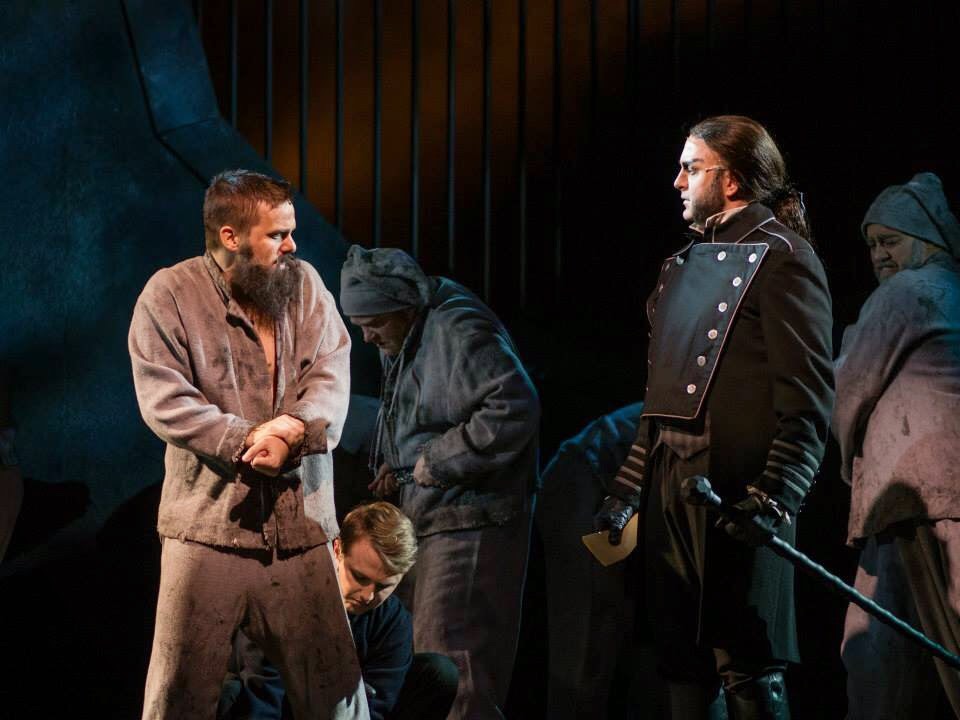
As I had heard, the intimacy of the Broadway theaters added greatly to the connection to the performance. Away from the cavern that is the Dallas venue where I had seen it, and even the nose bleed seats from the London theater, my seats at the Imperial Theater, and the new staging, offered me deeper access into this profound story.  Though I have thought it before, what struck me this meeting, was the contrast, and the implications of such between Jean Valjean and his nemesis Javert.

Prisoner 24601 and Javert

If you don’t know the story, or haven’t seen the show or film, run to see it,or if necessary read the book. Jean Valjean is the protagonist who is released from a pre-revolutionary French jail after serving 19 years for stealing bread for his starving niece. Unable to find work as a paroled felon, Jean steals silver from the only person to show him mercy, a Roman Catholic Bishop. After Jean Valjean is caught with the stolen silver the Bishop backs up Jean’s lie that the silver had been a gift from the Bishop, thus sparing Jean a life sentence wearing chains in the living hell and death that was a French prison. Such grace convicts and converts Jean Valjean, who pledges to use the mercy to change and dedicate his life to something greater.  image

Jean goes on to become a local mayor and successful businessman who employs many people who, without his efforts and leadership, would be among the shows namesakes, the miserable ones. One such employee is a single mother Fantine who was used and abandoned by the father of her daughter Cosette, who is living with the unscrupulous innkeeper, the Master of the house and mistress Thenardier. Fantine is thrown-out of Jean Valjean’s employment because of jealousy by others, and she quickly becomes one of the miserables.

Throughout the show Jean Valjean runs into his former jailer, Inspector Javert who is obsessed with keeping order by enforcing the letter of the law, and capturing the parole breaking prisoner 24601 aka Jean Valjean. Upon finding out the mayor’s true identity, 24601, he relentlessly tracks him down, caring not that Jean Valjean employs hundreds and is seeking to rescue Cosette from the greedy abusive clutches of the Trenardiers.

During the climax of the show’s action, a rebellion led by students seeking political and economic freedom, Javert is captured spying on the students who in turn give him over to Jean Valjean to do with as he wants. Rather than exacting revenge for his behavior during and following his imprisonment, Jean Valjean shows mercy on Javert by allowing him to escape. After his release, Javert becomes even more determined to capture 24601, who’s mercy is something he simply cannot understand.

In Javert’s world God only loves and blesses those who are righteous through complete imageadherence to the law. Javert cannot accept the grace offered from one he considers completely beneath him. To Javert, grace has no place, only righteousness and right action. Once one breaks the law, one is always broken. There is no being made whole, even after serving one’s sentence. Eventually the grace becomes too much of a burden and he ends his life, stunningly in the new staging.

Jean Valjean and Javert echo two other characters from a famous story, Saul and Paul. Saul is the passionately legalistic persecutor of Christians in the earliest days of the Church. As a Pharisee his duty in his eyes is to protect and prosecute the law of Moses with no remorse for those who do not live by the letter of the Law. For Saul, there is no spirit of the Law. Following his encounter with the resurrected Jesus while traveling to Damascus to capture and prosecute followers of the Way of Christ, Saul becomes Paul and refocuses his passion and dedication to proclaiming the truth of the Gospel. This truth is grace, received as a gift from God through faith. As the blindness fell from Paul’s eyes when struck blind by Christ on the Damascus road, he saw that the way of faith and serving God was through receiving Grace, and in response, serving God by being the instrument of love and grace to others.

imageAs Paul taught and lived, and Javert tragically never discovers, the law is impotent in being a mechanism for salvation and life. In contrast, grace, when recognized and received, inspires and empowers one to live increasingly righteous, or as John Wesley preached, sanctified lives. Receiving grace, and in response living righteously, affords life, both now when chained by the brokenness of the world and consequences of one’s failures, and offers the promise to life with the communion of saints “where chains will never bind.”

Posted in Scattershooting | Tagged , , , , , , , , , , , | 1 Comment

Review: Killing Jesus

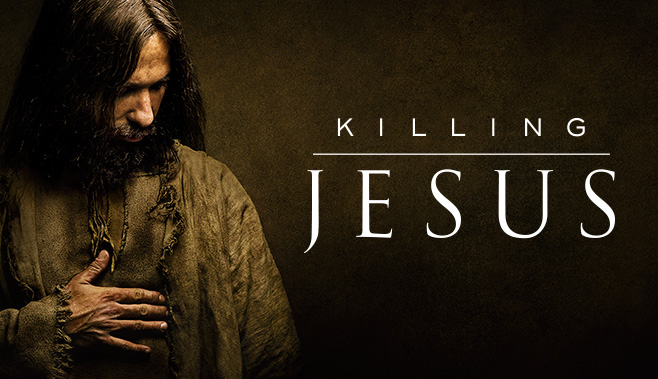
killing jesus 2When considering The National Geographic Channel’s latest offering In “The Killing” series based on the books by Bill O’Reilly, I was reminded of a certain Spaghetti Western film.

The Good: The presentation of Jesus was refreshingly genuine, personal, and ethnic. Rather than the stale, stiff, Eurocentric casting and presentation of Jesus, Haaz Sleiman depicts Jesus as a middle eastern man who exhibits genuine emotions including a sense of humor and a true connection with the people to whom he ministers. In contrast to many other presentations of Jesus as distant and disconnected, Haaz’s Jesus is the Word who truly became flesh, living among us, as us.

The Bad: In contrast to the casting and acting of Haaz, Stephen Moyer’s casting and presentation of Pilate, and Tamsin Egerton’s presentation of Pilate’s wife Claudia, is forced and out of place. Additionally, in stark contrast to most of the scenes and dialogue of Jesus, the scenes depicting life in Pilate’s house and Herod Antipas’s family is cheesy, having more of the feel of a late night offering from Cinemax rather than a serious narrative of the life and death of Christ.

The Ugly: The inaccuracies of scriptural accounts are startling and confusing. While one expects some speculation of non-canonical filler material, what is not expected, nor should it be tolerated, in a project that is presented as “truth revealed,” are changes to events narrated in the Gospels. In Killing Jesus there are too many major changes to Scriptural accounts and actions.

As depicted in Killing Jesus there was no divine expression, no voice or indication of the Holy Spirit to Jesus or those witnessing his baptism. Unlike Gospel accounts the baptism indeed was private, with only Jesus and John participating. In contrast to the presentation in the film, there is no indication in John’s Gospel that the woman accused of adultery had been found guilty by a high court. In the Gospel, she was about to be stoned by a mob without a trial. The Gospels narrate that it was Pilate’s guards who put the crown of thorns on Jesus and mocked him, not Herod’s palace guards as is presented in the film. In Matthew’s Gospel, Judas returned the 30 pieces of silver to the Temple, or in Acts purchased a field. Killing Jesus depicts Judas using the money to purchase the rope from which he hangs himself from a shepherd boy  who then uses the money to purchase a white horse.

At best these and other changes to the Gospel accounts are distracting to people who know the story and, at worst, become the story to people unfamiliar with the texts. Though some may consider such changes as minor and not important, students of Scripture, as well as literature and film, know that there is meaning behind every element, action and word. To make such changes is to alter the meaning of the story.

Overall Killing Jesus is a mixture of mistaken use of scripture and a script that contains many eye rolling, cringe worthy lines and scenes, sprinkled with occasional poignant depictions of a fully fleshed Son of God. Had Mr. O’Reilly reviewed this film at the beginning of his career when he was a movie and entertainment critic, I cannot see that he would have given this film anything but a very poor review.

One final mystery is the fact that this flawed film stands in contrast to the usually stellar, fact based and accurate programming on the National Geographic Channel.

Posted in Film Shots | Tagged , , , , , | Leave a comment

Film Review: “McFarland, USA”

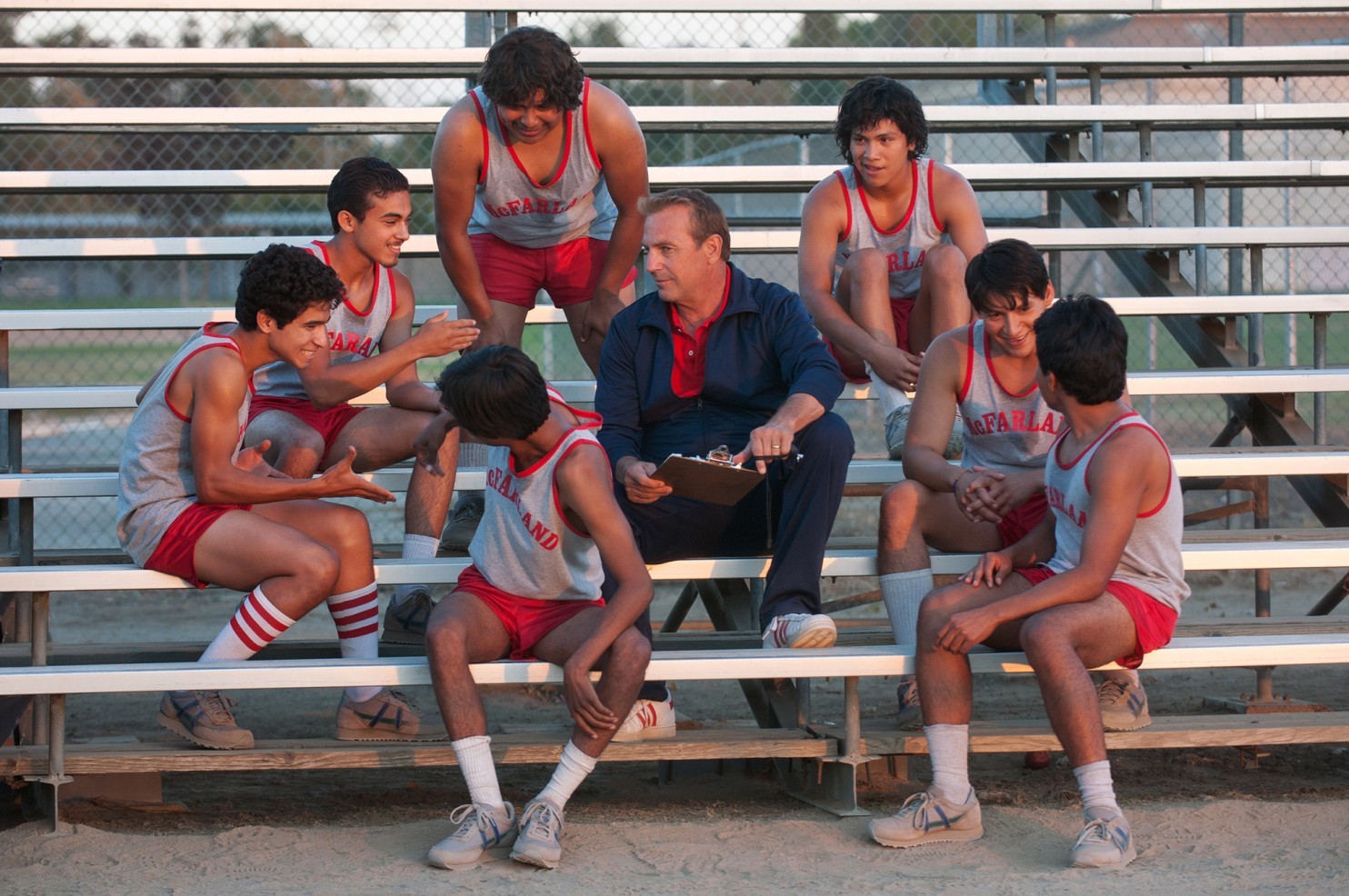
blog mcfarland 3As February is traditionally one of the worst times of the year for movie releases, my expectations were rather low when I attended a screening of “McFarland, USA,” a biopic about a California cross country track coach starring Kevin Costner. At some point during the first half I found myself thinking the film has a chance. By the end of the story I had admitted my surprise and reminded myself that one should never judge a film by its release date. By the very end of the film, following the conclusion of the narrative, it hit me how special “McFarland USA” is.

While it is a good film, it is not necessarily great. There are no truly memorable scenes that will transcend the run of the film. The performances are solid but not standout, as is the direction. But, what stands out, what is special, is the story. Whether by design or lucky chance, the lack of outstanding achievements in typical elements of film, direction, acting, and even writing, allow the superb story to stand out. What one takes away from this film is the powerful teaching and life lessons that is the story of Jim White and the McFarland High School Cross Country Team.

Set in 1987, the film begins with Coach Jim White, (Kevin Costner) taking his Boise Idaho High School football team to the locker room after a very poor performance. Before the halftime is over Coach White would be out of a job, again, as we later learn. In the following scene we learn the family is driving to California, to the only place in the country he could find a job. After White arrives he discovers this is also a place where the only true expectation is just showing up.

McFarland California is a town known as the garden of the country, not because it is a place of beauty, but because it is the place where much of the country’s produce is grown and harvested. In the 1980’s the town was over 90% Hispanic with the vast majority doing the back breaking work of picking the food that others will eat without thinking who went through what to provide it.

Watching the Whites move into one of the many very modest homes, by some of the viewer’s standards, one reads the minds of the family members, that McFarland California might have had glory in the past, but it had little in the present and less coming from the future. blog mcfarland 7Before the first box is unpacked, the game plan is set for the family; Coach White will stay only as long, or as little, as it takes until he can re-launch his coaching and teaching career. At one point, while trying to make his house look a little better, he refuses to buy a shade tree because it will take five years to grow to a suitable height, and Coach White will be long gone by then. Why should he plant and nurture something that someone else will sit under and enjoy.

Coach White soon discovers that the high school is in no better shape than his home, except instead of being bare of furnishings and anything beyond utility, McFarland High is bare of hope and therefore expectations other than to get through the day, the week, the month, and finally the year.

Where Coach White refused to see the point of planting a tree, the coach in him could not help planting the seeds of thinking bigger and beyond the confines of the low place McFarland California had had fallen and seemed destined to remain. blog mcfarland 5After losing the assistant football coaching job of the High School, White was left to teach science, coach P.E., and notice that the community, while not populated with football players, was populated by kids who could run and run and run. They did so not out of desire, but out of necessity. The kids would rise before dawn, pick several hours, and then run to school. For many of the kids in the community, running was a way of life and a way of making ends meet.

As Coach White noticed this, he also heard that cross country was being recognized as a high school sport and the first state championship would be held later that year. Fielding a team, and then pushing them to compete against schools that had competed as club sports became his mission, and eventually would become the hope that much of the community needed. It would not be an easy task. blog mcfarland 2Unlike his previous experiences as a football coach in football crazy communities where Coach White never had to sell his sport to students or parents, in McFarland he had to convince kids and parents that the sport was worth the effort, worth the time away from the fields, and the prospects of a college scholarship worth the dream. To do this Coach White became a part of the community, by going to the kids’ homes, sharing meals with their families, and tasting the work of their world as a picker.

In the Prologue to the Gospel of John the incarnation of God in Christ is described, “and the Word became flesh and dwelled among us.” The Word of God, the Son, took on our flesh and literally “pitched his tent among us.” Jesus did not come into the world to be like us and be near us. He came to be one of us and to live with us, experiencing life as we live it. In counseling terms God did not come in the form of Jesus to sympathize with us, but to empathize with us. Through the incarnation, the Word became real flesh and blood that would bleed, suffer, and die so that we, and all creation, helpless before death, could have the opportunity and the hope, to live.

blog mcfarland 6By choosing to pitch his tent in McFarland rather than just bide his time, Coach White, and the entire “Blanco” family became a part of the community of McFarland, and in so doing, received and instilled the idea to look beyond the very limited expectations of the past and present, and instead, look, dream, and hope for a future beyond. In so doing they served as a spark that helped restore life to a school and community. Go see this film.

Another connection with Scripture is the calling of disciples by Jesus. As with the disciples answering Christ’s call to follow him, there was a financial impact on the students’families when they answered the call to run cross country. As the disciples left homes and families who depended on them, the kids gave up time when they could be picking and earning money for their families. Yet, the kids were called to something bigger and in their answering the call, they, like the disicples, brought hope and new life to others.

Note: McFarland USA” should be required viewing for anyone thinking about ordained ministry in the United Methodist Church. It is an example and challenge to pitch one’s tent wherever one is appointed, and resist the temptation to wonder how long do I need to stay, when an appointment is not one you would not have chosen. Instead, claim the calling to find the ministry that can be, that needs to be offered wherever one is. Actually, the above applies to laity as well and the general ministry all have through baptism.

“McFarland USA” is rated PG.

Posted in Faith Shots, Film Shots | Tagged , , , , , , , , , , , , , , , | Leave a comment

Film Review “Selma”

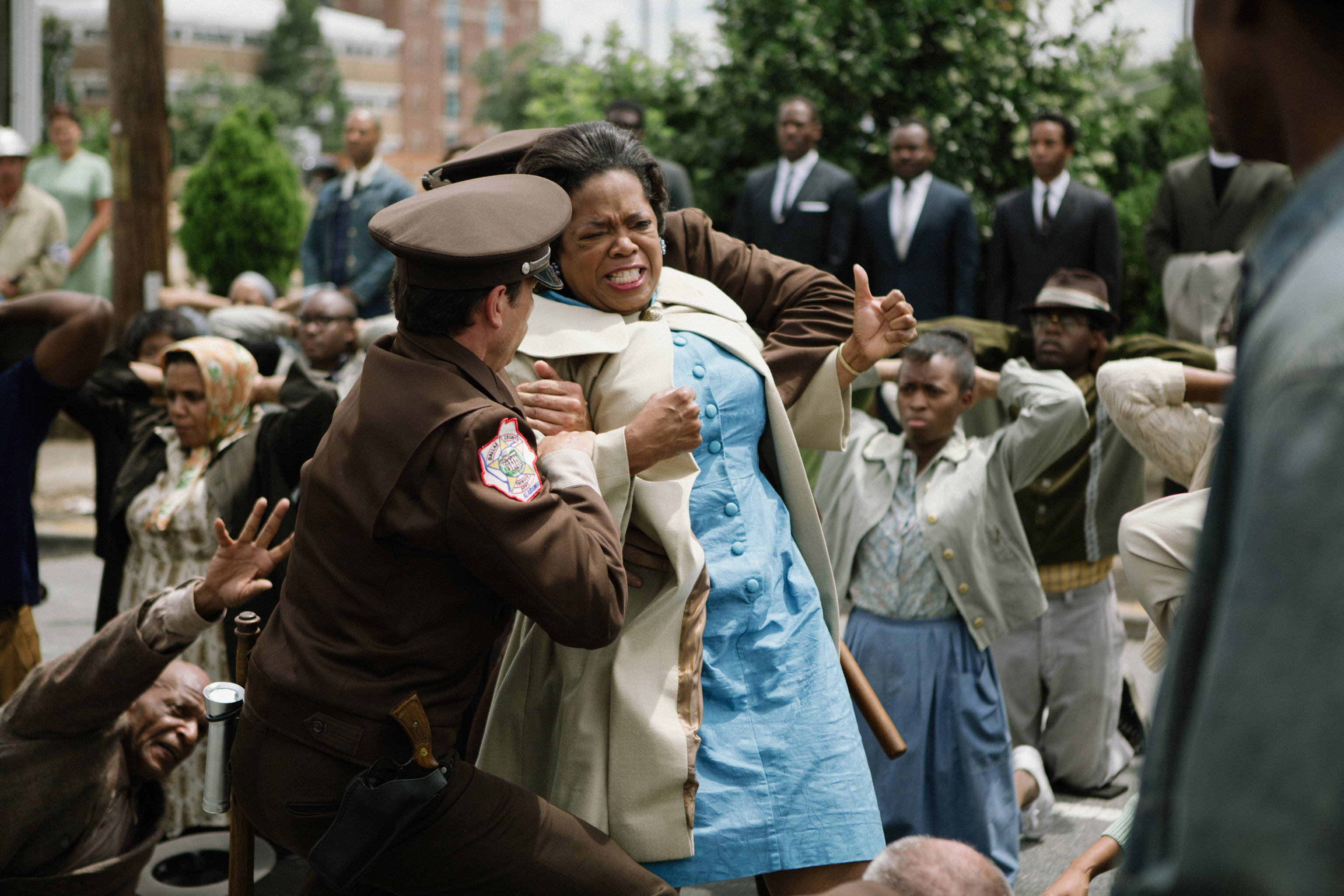
selma blog 2 March 7, 1965 was one of the most historic days in American history. Now known as “Bloody Sunday” March 7 was the day millions of United States citizens and millions more people around the world, witnessed the hate fueled brutality of racism in America as Alabama state troopers, local law officials of Selma and Dallas County Alabama attacked 600 citizens who were peacefully marching from Selma to Montgomery Alabama. The March was protesting the denial of African-American’s the right and access to vote. Coming just days after the killing of an unarmed peaceful African-American protestor at the hands of law enforcement, the march was also a way to call attention to the need for voting rights as a way to establish accountability for those who used violence and murder as a way to intimidate and control individual African-Americans as well as the community as a whole.

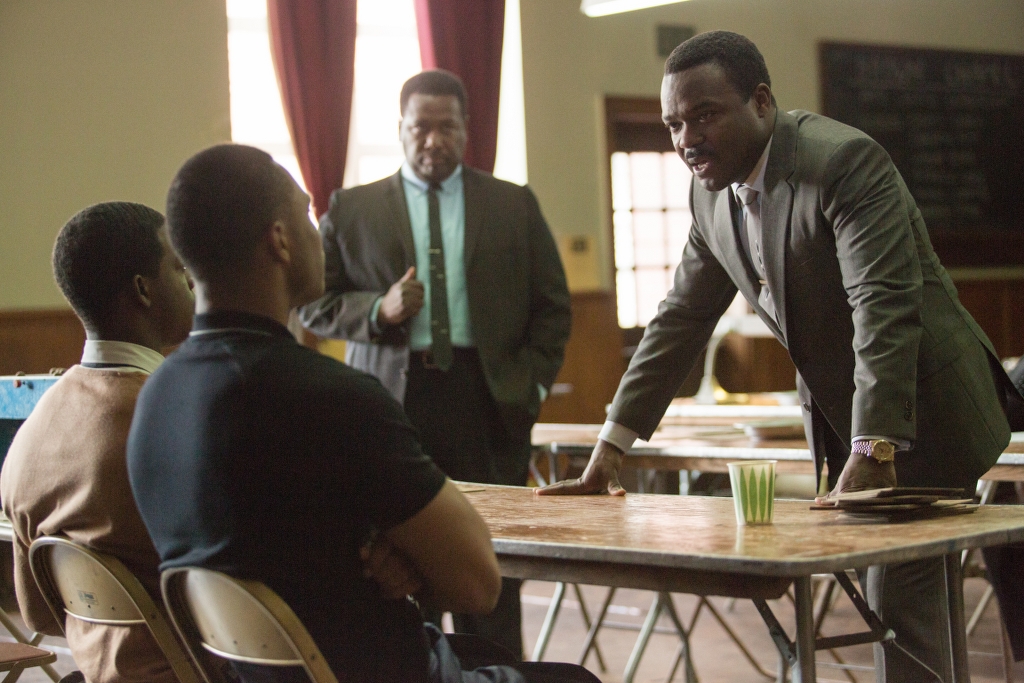
“Selma” forcefully presents the events that led up to and followed this seminal day in American history. While the film is full of powerful drama and soaring rhetoric, it is through intimacy, the small, quiet moments director Ava DuVernay presents where most of the connections between audience, character and story are established and the true power resides. In an Oscar worthy performance, David Oyelowo as Martin Luther King Jr. accomplishes the daunting challenge of effectively re-presenting the very well-known public oratory of MLK. He also pulls back the curtain on the man behind the movement showing humor and the pastoral heart that, though often overlooked or forgotten, was always beating within the transformational leader and politician.

As the civil rights movement was the most important political campaign in American history, there is a lot of politics depicted in the film. While most of the attention has focused on the portrayal of President Lyndon Johnson, how desirous he actually was of the change the movement was calling for, the film also depicts the politics within the movement.selma blog 9 DuVernay presents the division between two of the major civil rights groups, The Southern Christian Leadership Conference, (SCLC) led by King, and the Student Nonviolent Coordinating Committee (SNCC). The film also depicts the animosity MLK had for Malcolm X who earlier had savagely attacked King for his determination to stick to the policy of non-violent protest.

Through the anger King shows toward Coretta when he finds out she met with Malcolm X after MLK had been arrested in Selma, his fear and weariness in the midst of the struggle, his acknowledgement of his infidelity, and his few moments of relaxed happiness “Selma” presents Martin Luther King Jr. as a man rather than a monument or a movement.selma blog 7 By showing King’s strengths and weaknesses, his hopes for true freedom for all Americans and fears that he may fail, and the weight of the responsibility for putting people in harm’s way, “Selma” shows the flesh and blood of the movement’s leader. In addition the film depicts the burdensome pressure as well as the physical threats and violence inflicted on other leaders and common folks participating in the struggle. Most powerful is DuVernay’s portrayalselma blog 6 of the 1963 bombing of the Sixteenth St. Baptist Church in Birmingham that killed 4 girls on their way to Sunday school. Viewers who know the history feel helpless and want to reach out to stop the girls.

More than any other narrative medium, film has the ability, through the power of perspective, to allow viewers to vicariously experience the lives and times of others. As “All’s Quiet on the Western Front” allowed viewers in Allied countries to experience the horror of World War 1 trench warfare from the enemy’s point of view, “Selma” allows individuals from another time, place, and race, to experience even in the slightest degree, the fear, pain, indignity, and frustration that was the everyday life and experience of most African-Americans for most of the 20th Century. SELMA

The power and connection of the film reaches through the decades. One cannot watch “Selma” without being reminded that the struggle continues. Many parts of the Voting Rights Act have been overturned, and too many images in the film are strikingly similar to the protests and images surrounding the recent deaths of African American males at the hands of law enforcement. Such connections are disconcerting and demonstrate that while race relations have advanced considerably, this nation is anything but post-racial. One hope of this film is that while society has not moved as far as we would like to admit, there has been progress, and if we, and other societies, can move this far, we can continue to correct pockets of individual and systemic racism that still stains and limits ours and other societies.

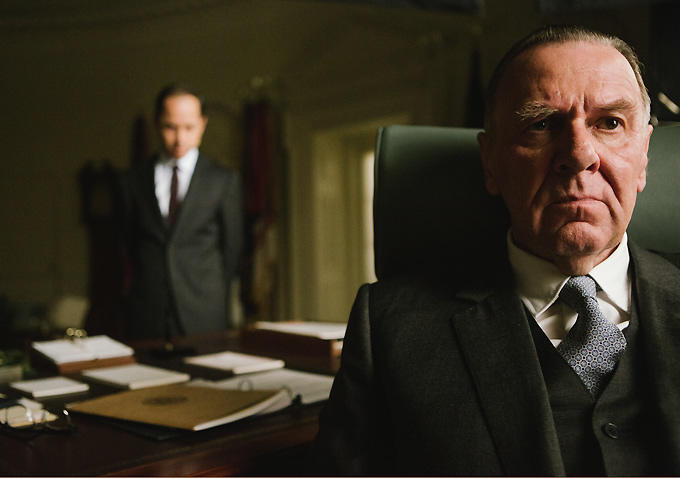
As mentioned earlier, the film falters in one area. The portrayal of President Lyndon Johnson is not as historically accurate as other portions of the film. Some connected to the film have fallen back on “dramatic license” when asked about inaccuracies in the presentation of LBJ and his involvement in the movement. This may have been a reason, but it is not an excuse and it has weakened the story as well as the public response and reception of the film. selma blog 1 LBJ is presented more as a caricature, as many perhaps think of him today, rather than what is generally accepted as historically accurate by scholars and former staff. LBJ is used, consciously or unconsciously, as a foil to MLK so as to boost the protagonist’s character and or increase the dramatic element in the story. Given all the animosity of other characters and much of the society as a whole, the manufacture of such a foil was unnecessary. While there were times of tension between the two leaders regarding the speed at which each thought voting rights legislation should be pushed, and later the nation’s policies in Vietnam, to infer LBJ opposed the voting rights legislation or the civil rights movement is a distraction those who know the history have a challenge getting past, and misinforms those who do not know the history. Such an inaccurate portrayal was not necessary for character development and narrative arc and detracts from the overall power and credibility of the portrayal of MLK and of the film in general.

These inaccuracies however should not keep one from seeing the film and missing the experience “Selma” provides. It is very powerful and in most areas offers important insight that is often missed or overlooked within the tremendous scope of the civil rights movement.

Posted in Faith Shots, Film Shots | Leave a comment

Film Review “Whiplash”

blog whiplashWith the name “Whiplash” and the subject matter built around jazz music, particularly drums, one would expect a film that explodes from the screen and provides a beat that cannot be missed. That is just what one gets in this double time swing film, from the downbeat opening scene, to the kick drum finish. As I thought to myself, and heard from another viewer, who knew jazz drumming was so intense? Of course the answer is anyone who has ever picked up the sticks. So, in addition to being thoroughly entertaining and presenting questions as to when pushing a student or oneself crosses over into punishing, “Whiplash” pulls back the curtain into one of the most important and demanding positions in jazz music, sitting behind the kit. In doing all of this, “Whiplash” is also one of the best films of 2014.

“Whiplash” is a film for anyone who loves music, especially jazz of which there is an abundance. It is also a film for anyone who likes masterful acting.blog whiplash 3 J.K. Simmons, as instructor and ensemble leader Terence Fletcher, offers one of the best acting performances of this or any other year, for which he has received Screen Actor’s Guild and Golden Globe Supporting Actor nominations. Much like Anthony Hopkins’s Hannibal Lector, Simmons’s Terence Fletcher not only commands the screen when he is on it, his character fills the theater when he is not. This performance is as far away as one can imagine from his droopy-eyed and lovingly understanding father in “Juno.” Miles Teller also gives a compelling performance as a resiliant young drummer determined to achieve his lofty goals. Most importantly, “Whiplash” is a film for anyone who has considered for whom they strive to live for or please in life.

“Whiplash” is the story of Andrew Neiman a first year music student attending The Shaffer Music Conservatory the most prestigious music school in the nation. As with many, if not most jazz drummers Andrew hopes to join the pantheon of drumming greats such as drumming icon Buddy Rich. Success at Shaffer is the first and perhaps most important step in his journey, and success at Shaffer means joining the prime jazz ensemble. whiplash blog 2 Joining the top group means catching the eye and ear of the conservatory’s notoriously demanding ensemble leader Terence Fletcher. Andrew soon learns that catching the ear and winning approval from Fletcher is easier than keeping them as the driven instructor will stop at nothing, including intimidation, humiliation, manipulation, verbal and even physical abuse to get the best out of his students.

During the film the audience discovers that Andrew’s motivations to succeed are rooted in his childhood where his talent and desire to be a professional jazz drummer and musician are dismissed in favor of the lesser, division III athletic talents of his cousins who serve more as siblings in the close knit family. Andrew also desires professional greatness that his widowed father, an aspiring author who is forced to teach rather than live off his writing, never achieves. blog whiplash 4 As Andrew responds to the demands required to stay the primary drummer in the number one ensemble, he becomes more focused on practicing, improving, and pleasing Terence Fletcher to the point that he breaks up with his girlfriend, distances himself from his father and other friends. In Andrew’s mind he decides to dedicate his life to his music and career. In reality he gives his life to his teacher, and it seems never to be enough for his leader who makes Vince Lombardi look retiring.

After a climatic event in the final third of the film, Andrew and Terence meet in a jazz bar where Terence explains his techniques and motives. Earlier in the film Fletcher had told Andrew the story of band leader Jo Jones throwing a cymbal at the head of jazz legend Charlie Parker following a less than stellar solo. According to Fletcher it was the seminal moment that led to Parker becoming one of the greatest jazz musicians of all time. It is also the event from which the instructor takes license for his teaching techniques. In the jazz bar, Fletcher further explains that too many people settle for mediocrity rather than strive and sacrifice for greatness. Borrowing from another music oriented film, one could say Fletcher believes that too many are satisfied to be Salieri rather than pushing to be Mozart.

Fletcher imparts to Andrew and the audience his belief that the worst two words in the English language are “good enough.” The more talent and potential a musician had, the more Fletcher believed it was his duty to push, manipulate, and even abuse into greatness. The ending of the film leaves it up to the audience to decide if Andrew succeeds or fails and if successful, whether it was worth the price he paid. It is also left up to the audience to decide whether Fletcher pushes or punishes and whether he does it to find the next Charlie Parker for altruistic, for the love of the student or jazz, or selfish, ego driven reasons.blog whiplash2

After his father inquires about his motivations for putting up with the torment of Terence Fletcher, Andrew states that he is is determined to please or prove himself to his teacher, because doing so could help him achieve his personal goals and ultimately please himself. Christians must also decide for whom one lives and seeks to satisfy. Dietrich Bonhoeffer famously described discipleship as “dying to oneself” so one could then live for God. For the disciple, part of dying to oneself is caring more for pleasing and honoring God than pleasing or honoring anyone else, including oneself.

Jesus teaches in Matthew 25 and Luke 19 the importance of applying oneself to the best of one’s ability. God gives abilities and it honors God when such talent is developed and applied. God does not expect more than one can deliver, but God expects one to seek out to be the best one can be. Disciples are to devote their lives to serving God by developing and using the gifts and grace God has given them, and then be content with a life lived pleasing God rather than others including oneself. Contentment, while not often seen by Western societies as virtuous is portrayed in scripture as a fruit of discipleship. Philippians, I Timothy, and Hebrews teach of the importance of being content with one’s circumstances and life, something possible if one is living for God.

“Whiplash” is rated R for intensity and very strong, abusive language.

Posted in Faith Shots, Film Shots, Scattershooting | Tagged , , , , , , , , , , , | 1 Comment

Film Review “The Theory Of Everything”

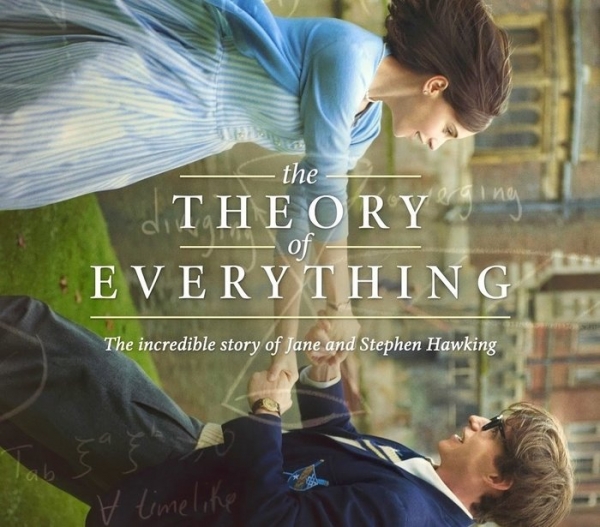
thoryThe jigsaw puzzle piece is a fitting symbol for marriage, with each person being a different shape as determined by their interests, talents, beliefs and personalities. When two people with complementary shapes find one another, they are best able to connect together. These connections help the couples hold together as they journey through life. “The Theory of Everything” is a film about connection, the connections of love, loyalty and determination.
Based on Jane Hawking’s memoir, Traveling to Infinity: My Life With Stephen Hawking, “The Theory of Everything” depicts the life and love story of Jane and Stephen Hawking.

theory 2Beginning in 1963 while both were pursuing Ph.Ds. the calm, cool, beautiful, devout Christian Jane met the awkward, eccentric, brilliant and avowed atheist Stephen Hawking, and despite the efforts of others, became enamored and soon fell in love with one another. Just as their love was blooming, Stephen received the devastating news that the increasingly persistent neurological issues he had been hiding were the result of ALS and he was given a life expectancy of two years of complete physical decline. Despite his best efforts to isolate himself from those near him, Jane overpowered his fear and ignored the advice of others by refusing to fade away from his life. The two married and set about what they thought would be a short, challenging life together where every day was to be cherished and each new obstacle met with determined love and creativity.

theory 3Beset with physical challenges and routines that no one who has not been exposed to such a condition can hope to imagine, the two found a way to live, have and raise three children, and support Stephen’s groundbreaking physics research into the nature of time. As the two years that they thought they might have stretched into five, then ten, then fifteen, the challenges and pressures of increasing responsibilities as parents, partners, and Stephen’s growing fame, combined with his relentless physical decline, compound through the years, straining and wearing the jigsaw connection of their marriage.

Eddie Redmayne gives and extraordinarily nuanced performance as he depicts Hawking’s gradual decline from an active 21 year old graduate student into a man in his 50s who is unable to speak and only able to move his finger and eyebrows. Redmayne’s ability to convey humor and other emotions from the twitch of his eyebrows mirrors those of Hawking whom he met him in preparing for the role. Felicity Jones also offers a subtly strong performance as she conveys the compounding effect of the growing pressure and demands required of Jane as she serves as the sole caregiver to her declining husband and mother to her three normally rambunctious children. James Marsh’s direction is light and restrained, allowing the story to evolve through the character’s performances and the use of home-movie style flash forwards in time. Anthony McCarten’s screenplay paces the story effectively with humor and tenderness as the weight of Hawking’s disability increasingly applies pressure to the characters, story, and viewers.

In the fifth chapter of his letter to the Christians in Rome, the Apostle Paul speaks to the nature of suffering for the sake of Christ and his ministry, teaching that suffering produces endurance, which in turn produces character that yields hope which does not disappoint. Hebrews 12 also addresses the need for perseverance in running the race of life in faith. “The Theory of Everything” shows the unimaginable levels that can be achieved through faith and perseverance. While Stephen had great faith in his intellect, Jane had faith in the power and faithfulness of God to give her strength to endure and overcome. With Stephen willing to try, and Jane willing to support sacrificially, and both willing to risk, they were able to achieve success beyond anyone’s imagination. Yet, overcoming tremendous obstacles rarely occurs in a vacuum, and if that is the sole focus of an individual or a family system, the costs are paid elsewhere.

When living in such challenging circumstances, the temptation is often to focus solely on the special ability or need of oneself or one in the family system while allowing other individuals or relationships to bear the brunt of the burden. theory 5 In family systems this usually yields an identified individual, patient, who acts out against the pressure placed upon them as resources and attention are focused elsewhere, or relationships drift apart as the individuals are worn down from the demands and pressures that are not addressed and relieved through respite and care of oneself. While the film calls everyone to risk and persevere through all challenges so as to live up to one’s potential and calling, care must be given along the way. Neither Paul, nor Jesus were able to persevere on their own as both saw to their needs by seeking and finding renewal and strength through prayer and time with God. When one, even with strong faith, goes it alone, the great likelihood is that they will break and or change significantly.

In addition to being a parable of scriptural teaching, the film speaks directly to the issue of faith. From the beginning, Hawking makes an issue out of Jane’s faith in God and his faith in science, or more specifically, his faith in his theory of the universe being explainable in one ultimate equation. Persons of faith will probably find themselves debating Hawking’s notions and statements to Jane about her faith. Mine for instance were where in his equation or theory would he place love, the sacrificial love of Jane that drives her determination to care and support him through his challenges which allowed him to make his discoveries? Where in his equation is courage? Though initially lacking in Stephen, Jane demonstrated courage that empowered her to enter into a relationship she knew would be unimaginably difficult and, she thought, end shortly in his death? Lastly, why was his notion, that one equation could explain everything in the universe, and that such be worked out by a human, more explainable than the belief in a creator who created all there is in the universe?

Persons whose faith, like Hawkings, is strictly in science would doubtlessly be asking similar questions to the faith claims by Jane. In the film, there is no question about living by and through faith, the question is what does one have faith in?

Some have criticized the film because of the lack of attention to the scientific component. While the science is addressed from a distance and in general terms, this is not a film about science nor is it a film about Stephen Hawking. It is a film about the relationship between Jane and Stephen. As such it is a film about love, determination, faith, loyalty and their power to overcome tremendous adversity. It is also a warning to combine such with humility and attend to self-awareness and self-care.

Posted in Faith Shots, Film Shots | Tagged , , , , , , , , , , , | Leave a comment

“Lifehood:’56-Up’ and the ‘Up’ Series”

56 upRichard Linklater has received deserved accolades as the writer and director for “Boyhood,” a film 12 years in the making that chronicled the life of a family. Filming 3 to 5 days every year for 12 years, the characters change in real-time as the story develops through screen-time. In addition to the characters showing their ages, the story was sculpted effectively to include changes in the world and society during the time of filming. I highly recommended the film if you have yet to see it.

While not a narrative feature, the “Up” series of films offers a similar insight into the lives of its cast as they progress through childhood, youth, young adult, middle age, and are now looking toward retirement. “56 Up” is a 2012 film 49 years in the making. Combining interviews from each of the 8 films in the series, “56 Up” offers both “street level” and “10,000 foot” views of the lives of the series’ participants. “Seven UP” was a British documentary shown on ITV in 1964. Based on the Jesuit motto, “Give me a child until he is seven and I will give you the man,” the film follows a group of 14 children from a variety of socio-economic backgrounds. The hypothesis of the 1964 film was that a child’s future was generally predetermined by the social class they were born into. Every seven years since, there has been an update showing the original children as they have grown into youth and adulthood.

56 up1 Michael Apted, a researcher for the original show in 1964 and director for each of the subsequent 7 episodes, effectively moves in and out of the current and previous interviews of each character to show how the individuals have changed and grown through their lives. Using the abundance of previous interviews, Apted allows the characters the opportunity to do what many or most folks have wished for at some time, their older selves being able to speak with their younger selves, and visa-versa. Through pinpoint editing, the characters often seem like they are conversing with each other through time.

The series has not been without critics, the most critical being the participants themselves. Most or all speak about their hesitancy to continue, and some have skipped one or more of the films in the series. Similar to Linklater, Apted filmed each subject for about a week every seven years. The characters are critical in saying that seven years of living cannot be truly captured in seven days of filming. One subject made the astute connection that the film does not effectively show him as an individual, but does present a life lived out.

Another question is what, if any, effect the film had on the lives and decisions of the subjects. Would they have made the same decisions if their decisions and actions in life were not going to be documented? While this question occurred to me and some others who have seen the series, given that the subjects lived less than perfect lives, it seems unlikely.

The hypothesis of the project, that the position into which persons are born into determines generally where and how they live their lives, is for the most part confirmed as most of the participants stayed within the broad social settings of their birth. The major exception being Nick Hitchon who was raised on a farm, educated in a one room school yet eventually studied nuclear physics at Oxford and became a university professor in the United States. What is not born out from the hypothesis is a difference societal placement has on one’s happiness and contentment in life.

After watching “56 Up” the feeling is that each participant lived their lives well within the duality that is one’s life, the life given through circumstance and the life shaped though choice. While looking at the “street view” provided in specific episodes, viewers see mistakes and misfortunes, yet looking at the “10,000 foot view” offered through the this latest film, viewers see individuals who are content with their current situation and life arc.

Watching many films of the series and especially “56 Up”, I was reminded of Jesus’s teaching in the Sermon on the Mount against worrying, “Do not worry about life…” not fearing the future, but living in the present. Even in the midst of the difficult times through which the participants journeyed, they have come through those times and lived their life well.56 up2 This teaching is exemplified most through Neil Hughes who perhaps has had the most difficulties in life, going through times of homelessness and struggling with mental illness all of which were documented and discussed in the series. Eventually, Neil found an unconventional niche in life through local politics and by faithfully serving as a Lay servant in the Church of England.

“56 Up” is a living example of scriptural teaching on peace and contentment that speaks to those who too often are weighed down by the worries and concerns brought forth by life’s challenges. The lives of the participants echo the words of the psalmist, “Be still and know that I am God,” Psalm 46:10. They also show the truth of scripture such as Hebrews 13:5, “keep your lives free from the love of money, and be content with what you have; for he has said, I will never leave your or forsake you.” For most people, as with each of the subjects, the dreams of childhood rarely come true, but, if one lives at peace in the moment rather than vainly in the past or solely for the future, one’s life can be a life of contentment, and happiness.

“56 Up” and all of the films in the “Up” series are available on Amazon Prime and DVD. (Episode 1 of 63 Up is available in the USA on You Tube)

Posted in Faith Shots, Film Shots | Tagged , , , , , , , , , , , , , | Leave a comment

In Case You Missed It Film Review Series: “War Photographer”

revkennydickson's avatarCrossRoads Faith and Film

With the recent murder of foreign correspondent James Foley we are reminded the danger war correspondents accept in their determination to report on wars and conflicts and in so doing share the suffering these bring to so many. I have reposted a review of a film that captures the heart of those who risk their lives to tell these important stories.

http://vimeo.com/78800042

Watch “war photographer” here

“war photograper” is a powerful 2001film that takes viewers on a journey into the belly of hate and cruelty that are war and extreme poverty zones. James Nachtwey is perhaps the most influential war photographer of his generation. With a 25 plus year career documenting the effects of conflicts throughout the world, Nachtwey is the Lou Gehrig of war photographers, the “iron horse” in a profession known for high burnout and casualty rates. From Palestine to Kosovo, to Indonesia to Ground Zero, James Nachtwey…

View original post 555 more words

Posted in Scattershooting | Leave a comment