Film Review: Louder Than Bombs

Louder Than Bombs (directed by Joachim Trier) is an American-Norwegian film about a family still coming to grips with the untimely loss of the wife and mother. It stars Gabriel ByrneJesse EisenbergIsabelle HuppertDavid Strathairn, and Devin Druid. Byrne stars as Gene, a failed actor turned teacher and widowed husband to Isabelle (Isabelle Huppert), and the father of Jonah (Jesse Eisenberg) a young college professor and Conrad (David Druid) a fifteen year old high school student. Set three years after Isabelle, a war photojournalist, is killed in a traffic accident near her home, and just before a Gallery opening of her work, the film moves seamlessly back and forth through time and between the three surviving characters as they continue to process Isabella’s death. 

In his first English language film, Trier explores the always intricate issue of family dynamics made more complicated by the early, unexpected death of one of its members. After the shock of such a loss has worn off, and a new sense of normalcy (or complexity) has been established, the family members soldier on.

louder than bombs 2Even though Trier moves backwards and forwards in time and between characters, he does so without a moment of confusion. We are always clear about when and where we are in the timeline of the narrative. Several scenes are presented from the perspective of two characters, which offers the viewers a clearer glimpse of what is actually going on with and between them, knowledge that the characters do not fully share.

Through flashbacks and news accounts of Isabelle’s injuries sustained covering conflicts in the Middle East, and the concerns Gene has for her each time she departs, her death so close to her home seems cruelly ironic, until a hidden fact is revealed. As is often the case in families, the secret further threatens already fragile relationships and becomes an immediate issue as Richard, Isabelle’s colleague and close friend, is about to disclose it in a New York Times article in advance of the Gallery opening.

louder than bombs 4Though ultimately more hopeful, Louder Than Bombs echoes American Beauty. Rather than examining the characters as the story leads up to the death of a member of a dysfunctional family, Louder than Bombs does so following the death. In addition to American Beauty, Louder also echoes the documentary film War Photographer, the story of leading war photojournalist James Nachtwey, by exploring the risks to those sharing the individual stories of unimaginable suffering to otherwise autonomous victims of distant “conflicts.”

Where Isabella had spent her career chronicling the tragedies of others, now her life and death is being depicted to the public through both the exhibition and accompanying article. Unlike the subjects of her photos, the effects of her life choices and death, are not nearly as evident.

louder than bombs 6Louder Than Bombs reminds us that secrecy is almost always a disease that erodes the health and strength of a family. It’s an option that’s easy to fall back on in the trauma of loss, yet it rarely lies dormant. Secrecy within families, and the fear that is its genesis, continues to grow through time and usually prevents the movement through, or resolution of, the grief process. Such decay in relationships–especially among family members–is often not evident until dysfunction louder than bombs 3grows greater than the individual’s, or the family’s, ability to control it. It then becomes evident to everyone in ways that are often more explosive than the original trauma that bred such secrecy. Thankfully, Louder Than Bombs also shows the possibility of healing that comes through embracing the truth and confronting challenges within relationships before and after the bombs of life fall.

Posted in Scattershooting, Film Shots | Tagged , , , , , , , , , , , , | 1 Comment

The Young Messiah: Interview with Director Cyrus Nowrasteh

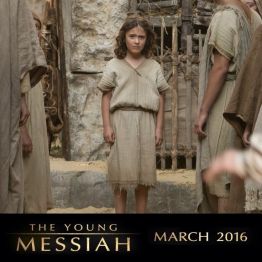
Interview with Cyus Nowrasteh director of The Young Messiah, a film, based on the Anne Rice novel, Christ The Lord: Out of Egypt. The Young Messiah Opens March 11 and stars Adam Greaves-Neal as Jesus, Vincent Walsh as Joseph, and Sara Lazzaro as Mary.
cyrus 2

All Photos Courtesy of Focus Features

The Young Messiah imagines a year in the life Jesus during the missing years of his life where there is no Biblical narrative, the time between his birth and Luke’s Gospel account of him as a 12 year old child teaching in the Jerusalem Temple. During this period the Holy Family had been forced into exile in Egypt in order to protect Jesus from Herod the Great who sought his life to the extent that he had murdered innocent children in the hopes of killing this new King. After Joseph was told of Herod’s death in a dream, the family returned to their homeland. The Young Messiah is the account of that journey home.

cyrusI visited with Cyrus Nowrasteh at a hotel near the Dallas / Ft. Worth International Airport. Although it was just two days from the film’s premier, and the culmination of a five year effort, Mr. Nowrasteh was remarkably relaxed and generous with his time and attention. I have been aware of the project since 2014 when I was a part of a group of faith leaders and bloggers that Focus Features sent to visit the film’s set during the fall 2014 production in Rome Italy.

From other interviews, including one shot on the film’s set, I knew Cyrus’s journey with this story began when Anne Rice sent him a copy of her novel Christ the Lord: Out of Egypt following her viewing and writing a positive review of his 2009 film The Stoning of Soraya M. I was also aware that he had consulted with theologians and pastors as part of his pre-production research. I was interested however if he had studied other Jesus films. In the discussion that followed it was evident that his interest in Jesus and Biblical films had long predated his involvement in The Young Messiah.

KD As part of your preparation process did you look at the presentation of Jesus in other films?

CN I looked at other Jesus movies and Biblical movies certainly. You can come to my house and I will show you DVD’s that will fill up a shelf. I didn’t have a specific reason for watching them. I was waiting for something to jump out at me. A lot of them were movies I saw as a kid in the theater, The Greatest Story Ever told, The Bible and Ben Hur.  Of course I saw The Passion many times so I know it, and I love it, and Mel Gibson is a brilliant filmmaker. I studied The Passion for Soraya. One film that jumped out at me was Barabbas, the one with Anthony Quinn, which was better than I thought it would be. There were moments there that were very powerful. I also thought the whole eclipse scene, I don’t know if you remember it, there was a real eclipse, and apparently that they knew was going to happen and they shot it. It is stunning and I would have loved to see it on the big screen.  So there are some good ones out there, no doubt.

KD Are you happy with the way The Young Messiah is rolling out and the reception you are getting?

CN I am very happy with the reception we have gotten because we have gotten a lot of cross-denominational support which is very gratifying, considering we were expecting perhaps some resistance and push back. So that’s always nice.

KD In an earlier interview you described Jesus arriving at his understanding of himself as his “veiled divinity.”

CN That was from the conversations we had with theologians. I didn’t make that up, this is what they told me, that he veiled his divinity basically to walk amongst us, to experience life and the world as we do.  That, to me, justifies the foundation of the whole, fictional exercise, if you want to call it that… In order to do that, it’s all how you do it. Yes we were careful knowing there are some people you weren’t going to please. We haven’t run into those sort of naysayers as I thought we would honestly,… People were not put off as we ventured into this fictional territory.

KD I liked the way the story was described in the press information, that it was based on the person of Christ as presented through scripture.

CN Oh yes we did not want him doing anything that was contradicting his (Jesus) behavior in the Bible, or anything in the Bible, for that matter.  There is no way that, frankly, I can get up to speed, (scripturally and theologically) do the research myself and make the determinations myself. I really did need help. I do a lot of research on all my projects, and I don’t normally trust other people’s research because I never know when I am going through stuff when something is going to jump out at me as a scene or a character, or a visual. I kind of have eagle eyes for that. When I go through material and stuff pops out, it will only pop out to me. It won’t necessarily pop out to someone else because everything is interpreted. In this movie, I needed help (with the scriptural and theological components.)  What I tried to do with my research is research the time period, the history, the look, the feel, the textures, the colors, all that stuff.

KD Our set visit was my first time on a film, set so you wonder how things will fit together and what things will look like afterward on the screen.  After viewing the film, I think it is just gorgeous.  Another thing I really liked was it built momentum, of energy and story development, throughout the film until the last scenes when Mary explains to Jesus in voice-over and tells him that “your whole reason for coming was just to be.” It was a wonderful presentation of the incarnation.cyrus 9 - Copy
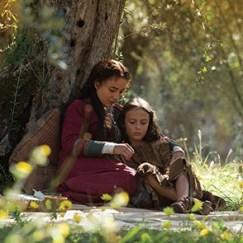
CN The film now ends with the boy giving a narration in his voice.  It’s the boy who says that. Now there is also a scene when Mary is telling him about the Angel, (who foretold his birth nature, and mission) and all about who he is, which I think is a terrific scene, and I am very proud of that one.

KD A lot of films, especially faith films, start out strong,  and even considering narrative arc,  they peter out, but this film built throughout to the very strong and poignant ending.

CN That’s a common thing in a lot of movies.  This one actually builds to a good third act.  I think second act is the toughest. Not only in other films, in my films, it’s the second act that’s the key. Billy Wilder used to always say the third act can’t work if it isn’t set up. I do think our final act is clicking.

KD Oh it’s great, again, theologically, that it really drives home the point of the incarnation, the point of Jesus just coming, something that is easily and often overlooked. Just the fact he came is a miracle in itself and is the event that that changed all history. In those last few scenes, you really put a strong bow, theologically as well as narratively, on the film.

CN Thank you.
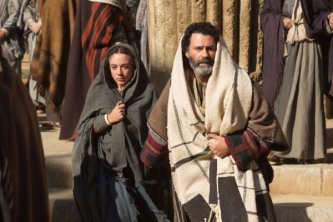
cyrus 11KD I want to talk about the depiction and idea of Mary and Joseph, and the burden it was for them. I have a special needs daughter, and it dawned on me, while we were watching the filming, and it came out in the film, that they were raising a special needs child, or a gifted and talented child, who, until they grow into their gifts and talents, have special needs. For parents of special needs children there is no rule book, the normalcies that govern other parents don’t apply to you. You wake up each day wondering what will happen today, and what will we do. That really comes through in the film.

CN The wondering about when this (Jesus’s full nature) is going to start to reveal itself, which it does in our movie, at seven years old, is seen and shown in the way Mary reacts, she says “I just didn’t expect it so soon.” She says that early in the film to Joseph, I thought that was interesting because we say that all the time, when they (our children) graduate from high school, go off to college, all that stuff.

KD I was really hoping that sense would come through when we saw the filming at Cinecitta Studios, and it did.

CN Well I am glad.  Casting is everything. The cast is your story, and I think we got very lucky. We were blessed with this cast…. cyrus 7I am so proud of our Joseph because he is unlike any Joseph you have ever seen. I really think he is terrific.
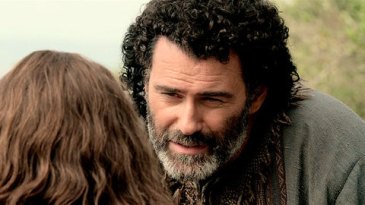
KD I remember many of us were on the set visit were struck with him (Joseph) in particular because you rarely hear about Joseph. He just sort of disappeared from the Biblical narrative. In this film, you really have a sense of his burden as the step-father of a child whose father was the ultimate birth father.

CN I think that dynamic between them, that family unit, is our movie.  When I was going through the audition process I would try to put people together to try and figure out if this is going to work?  I actually never got a chance to put my choice for Mary and my choice for Joseph in a room together until I cast them.  So, I was just winging it. This movie lives there, that’s it. If that doesn’t work, we’re nowhere. And I think that part of the reason for that is because we are, without patting myself on the back too much, daring to go inside that family, because I haven’t seen it.  I told you I saw all those Bible movies and I haven’t seen it (such a focus on Jesus’s family.)

KD That to me is really the hook that I hope will grab people and bring them in.

KD The other thing that struck me in the film was the shared sense of discipleship we as followers today have with Mary and Joseph. We are on opposite ends of the spectrum. Their discipleship, based on a story told to them by an angel, and in a dream, was on the front end, prior to the birth of Jesus. Our discipleship, based on that story as well as the crucifixion and resurrection is based on the back end. We as disciples are charged with carrying, nurturing, maybe protecting, this story/truth in a world that is in opposition to it, as they were charged with carrying, nurturing, and protecting Jesus in a time and world that was against him. I am really excited about that and look forward to sharing that about this film.

CN It’s so important that people share their impressions of the movie, that they talk about it with one another. I find there is always a level of skepticism and resistance, even in the people who have endorsed the movie the most enthusiastically. I can see there is always this, “aw wait a second” kind of thing.  I am worried that this is our audience and that our audience is doing that and will stay away from the movie.

KD Are you worried at all that it is following close after RISEN?

CN That doesn’t worry that much. Because we were originally supposed to follow Ben Hur, which I think worried me more…. I saw RISEN… I met Kevin Reynolds (Director of RISEN) years ago. We were at USC Film school at the same time, and I think he is a real talent. I thought it was a little rough getting out of the blocks, but when it got where it needed to get it was effective…I did feel like we needed more in terms of the ending with Joseph Fiennes….I thought we needed another piece with him (the Tribune) at the very end….I thought it was interesting that Pilate had decided to send these guys out to get him. I almost thought to myself that’s where it’s going, they’re going to end up getting him, he’s going to die willingly because he knows where he’s going… or maybe a variation of that. I was surprised we didn’t get that extra piece… but I thought it was a good, solid movie. I liked RISEN.

KD I haven’t seen much comment on the character Severus (the Roman soldier who is tracking Jesus down to capture and kill him on Herod’s orders.) Obviously, there is Jesus and the Holy Family, but to me, that is just as powerful a character.

CN You’re right. He’s kind of the rock cyrus 6underneath it all, but he gets forgotten because we are all so enamored with the family because that’s who are sympathies are with. But, Sean Bean (Severus) playing a tortured soul, he does it beautifully. I love working with Sean.
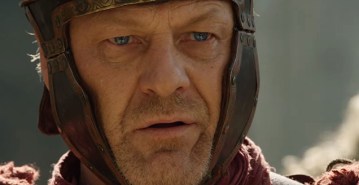
KD Again, I really liked his character. That’s the character that speaks to all the rest of us because that is the character that is faced with a decision to render to Caesar, literally, or to God. He really shows the call to, and struggle to accept, redemption and transformation.

CN Jesus isn’t here just for the needy or the sick.  He is also here for the sinners, especially the sinners. We have to show that. This is a guy who has committed about as bad as sin as you can. So I think Severus is in many ways the backbone.

KD Absolutely, there isn’t any doubt. We are all in some ways Severus, in ways that differ than the way we are like Mary and Joseph in our discipleship. I think that will be the character that speaks to persons who are marginally faithful or outside of the faith.

CN I hope so.

KD Did you have a favorite character as you wrote or directed the film?

CN Not really.  I was excited by the prospect of the Severus character and how he would serve the drama of the piece overall because that character is not in the book. In the book, through the first person voice of Jesus, which was I thought a daring literary device Anne used, he (Jesus) talks in his voice about the threats, the dangers, and the chaos for him and his parents…. But we needed to focus those feelings and observations which we were able to do through Severus.

The interview ended when we discussed what hopes Cyrus had for the audience in viewing the film. He said he had been asked about this a lot and he really didn’t have specific themes and ideas. Where filmmakers often stumble is when they try to “pound themes and ideas” through the story rather than allowing them to grow organically, for each viewer, from the story. We discussed how this is the model of Scripture itself, that even the most complicated teaching in Scripture, the essence of God, humanity, and the relationship between the two are communicated through story. Two prominent examples being when, at God’s direction, Nathan judged David for his crimes against Bathsheba and Uriah through the use of the story of the rich man who stole the poor man’s only lamb, and when Jesus was teaching about the nature of the Kingdom or the nature of God he used stories, the most famous being the parable of the prodigal son and forgiving father. Cyrus indicated his belief that when left to grow through the narrative, intended themes and ideas will emerge, and, perhaps more importantly, other ideas and themes that the filmmaker had not thought of will emerge as well.

Concluding thoughts from the film and interview:

Perhaps the most powerful and important aspect of The Young Messiah is that as story it resonates on a variety of levels, regardless of where the viewer is on the spectrum of faith. Even though the story itself is fictional, it is as Cyrus described it, “informed conjecture” into the time in Jesus’s life where there is no Gospel record. The Film is based on the historical times and the Scriptural presentation of the historical individuals. Whether one has little to no faith or is a person of strong faith living a discipled life, there are themes and messages that emerge in the film. This commonality, where persons familiar with, and those new to the faith and story of Jesus can see it on equal footing is rare in Biblically based films.

Although Cyrus had not encountered as much resistance to the conjectured aspect of the story, I have seen such questioning in the “comments” section of articles relating to the film. In those comments, people have labeled the film as non-scriptural. In reality, it is scriptural. The exile into Egypt is in Scripture.  Additionally the elements of that film that are in Scripture, the Annunciation, birth, and Epiphany arrival of the Magi follow the narrative rather closely. As far as the conjecturing of the events in Egypt, there is nothing, as Cyrus stated, that would go against the spirit of the Biblical persons and events. As stated elsewhere in this interview and thoughts, there is a benefit to such imagining the life that the Holy Family and others lived.  When we can see similarities to us in living our lives and that they faced struggles, perhaps similar in nature, it can offer hope and be a source of comfort and strength.

Whether a new or seasoned disciple, one lives out one’s faith, calling, and experience of God on a variety of levels and in a variety of ways. There is God’s love for us and grace given to us, ultimately expressed in Jesus. This is the heart and soul of our faith and life. There is also the calling to discipleship; following and proclaiming the truth of Christ through words and, especially, deeds to a broken and often hostile world. This is the backbone of service.

In The Young Messiah, one experiences this heart and soul primarily through Jesus, Mary, and Joseph. One also experiences the call to be a backbone of service through the character of Mary, and Joseph and their acceptance of God’s call in raising Jesus. One also experiences the transformational call of Severus, a tortured instrument who hears the call to change his loyalty from the preeminent earthly power, Rome, to the ultimate power and King of all Kings. For most of us for whom God’s is not an easy call to accept nor transformation to make, it is helpful to see characters share our struggles and, through God’s grace and power, accept redemption and transformation.

Posted in Faith Shots, Film Shots | Tagged , , , , , , , , , , , , , , | Leave a comment

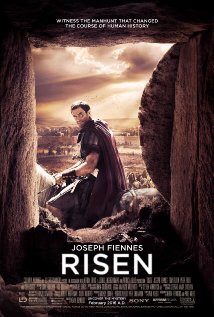
Film Review: RISEN


Photos courtesy of Affirm Films and LD Entertainment

Over the last two years there have been several releases of Biblically based films. While these films are often overly produced and lacking in cinematic elements such as compelling acting, direction, and writing, and while also presenting the stories with needless dramatic license to the Biblical text, I was hopeful when I saw the preview for RISEN.  Upon viewing RISEN my hope that this would be a high quality, engaging film was confirmed.  This newest Biblically based offering is a compelling, fictional account of Clavius, a Roman officer who pursues war, doing what he must and going where needed, as he works his way up the Roman army ranks in pursuit of, ironically, a peaceful life.

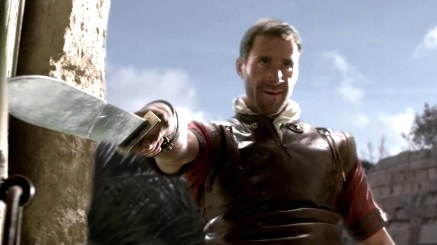
In the film Clavius (Joseph Fiennes) finds himself as a Tribune in the far flung  Roman outpost of Jerusalem, serving at the beck and call of the Roman Prefect, Pontias Pilate (Peter Firth).

The film begins on Good Friday when, returning to the city after putting down an insurrection, Clavius is ordered by Pilate to see to it that the crucifixion of three men earlier in the day is concluded quickly and quietly. One of the three is a Jewish Messiah who has angered the Jewish Pharasees to the point that they engineered protests and demanded his crucifixion. Pilate relunctently conceded to their demands as he is trying to maintain peace and control prior to a visit by Tiberius Caesar.

After attending to the deaths and burial of the three men, Clavius is ordered to ensure the body of the Messiah is not stolen by his followers in an attempt to claim he had been raised from the dead as the Messiah had predicted. After the resurrection, and disappearance of the the body, Clavius is ordered to find the stolen body.  The majority of the film follows the contemplative Tribune’s hunting down the Messiah’s followers in order to find a body that can prove the Messiah’s claims were false. During this portion, the film interestingly resembles a first century presentation of the film The Fugitive as witnesses are tracked down, detained and interviewed. As in the modern crime drama the investigator cares not about guilt or innocence, but only that the remains of the suspect, or even a suspect, are found.

The closer Clavius gets to the Messiah, through interviews with followers including a disciple and Mary of  Magdala, the more unsettled he becomes. These followers have a peace about them that he, as a brutal tool of the oppressive power that is Rome, has never experienced.   Usually, suspects and subjects of Rome wilt or melt in his presence, or at least attempt to fight back. These suspects however are ready to receive whatever may come. They IMG_0537have embraced, or been embraced by a power that is even greater than that of the greatest earthly power in the history of the World. These lowly, irrelevant, desposable subjects have received freely what Clavius is seeking and sacrificing himself for, contentment that comes from true peace. In his pursuit of the remains of the Messiah, Clavius remains determined, but his purpose changes as he gets closer to that which he pursues.
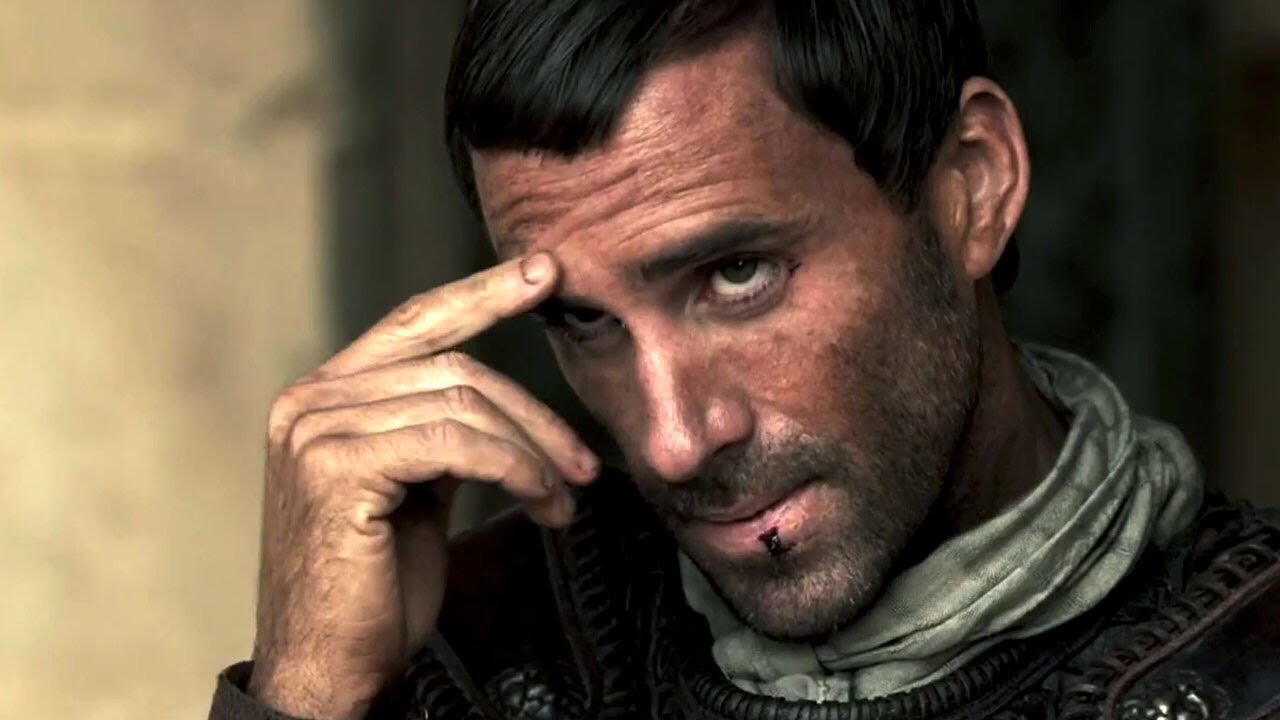
As the film depicts someone pursuing faith from a place of disbelief RISEN is the rare faith based film that can appeal to persons of faith as well as those who may have interest, questions, or doubts about faith and Christ. RISEN is true to the presentation of finding or embracing faith and discipleship in Christ that is often overlooked in faith based films, as well as teaching within churches. To truly embrace faith in Christ, one must let go of those things one has placed their faith in. For Clavius this was his entire life, his pagan spiritual beliefs, his life goals, as well as the power, protection and purpose of Rome.

Joseph Fiennes offers a remarkably subtle performance as the powerfully brutal, yet uniquely reflective instrument of earthly power. While there are some overly dramatic moments and a non-canonical presentation of Mary Magdalene, overall the script, Kevin Reynolds’s direction, and other cinematic elements are refreshingly understated for a faith based film. The presentation of Yeshua (Cliff Curtis) is effectively intimate and reflective of his humanity, as opposed to the frequent, more distant, divine dominant presentations. As with almost every presentation of Jesus there is a conflation of the gospel accounts of his life and teaching. While this tact usually detracts from the teaching and purpose of the Gospels, such is not as noticeable in RISEN as the focus of the film is on the life journey of Clavius, his questioning and experiencing Christ, and just as importantly, his accepting redemption and transformation through Christ. Risen is a film that speaks to the contrast of powers between humanity and God, the need and source of true peace, and the change one must be willing to accept in order to be a disciple and receive God’s redemptive grace.

RISEN is one of the most financially successful faith based films grossing over $17 million in North America it’s first week.


Posted in Faith Shots, Film Shots | Tagged , , , , , , , , , , , , | Leave a comment

Film Review: The Revenant

J.Ryan Parker, a friend and fellow theology minded film blogger, (Pop Theology on Patheos.com) asked me if I saw The Revenant. My response was an immediate “no.” The new film epic starring Leonardo DiCaprio as Hugh Glass is not merely viewed; it is one of the rare films that is experienced. Alejandro González Iñárritu‘s epic is based loosely on the legendary story of Hugh Glass, a frontiersman working along the Upper Missouri River in present day South Dakota.

While serving on a large expedition to trap beavers, Glass was injured when the party was attacked by a group of Airikaras. Later he was viciously mauled by a bear defending her cubs. Fearing further attacks, and believing Glass’s wounds were mortal, the surviving expedition members left two men behind to bury Glass after he died, which would be within a day or less. The two men abandoned Glass when, after a week, he was still clinging to life. Miraculously Glass regained consciousness and, surviving on berries, roots, and rancid meat left from wolf kills, crawled and walked the 200 miles to the nearest outpost.

(20th Century Fox)

The story has grown into legend and The Revenant (one who has returned, particularly one who was or was believed dead) is the second film to tell the story. Included in Iñárritu’s screenplay are contested elements of the Glass legend, that he had spent time living with Pawnees where he had a wife and child. Unlike the historical account of Glass’s legend, The Revenant takes place in the winter which adds even more obstacles to Glass’s surviving the unimaginable trek. Even though there are narrative elements added to the story, The Revenant depicts the harsh conditions of early nineteenth century frontier life and the thread thin difference between life and death.

(20th Century Fox)

The Revenant is the rarest of films. It is a very action oriented epic, yet it has scenic beauty and acting that rivals any small, independent, art house film. Iñárritu’s ability to put the viewer in the middle of the action rivals, and at times surpasses that achieved by Steven Spielberg in Saving Private Ryan.  The mauling scene is among the most compelling action sequences ever filmed. While this scene is the pinnacle, there are several other unbelievably filmed action sequences and situations throughout the 156 minutes. In addition to these unimaginable action sequences there are scenes between Glass and his son Hawk, and visions Glass has with his murdered wife that are intimate and emotional and add unexpected depth to the character of Glass.

(20th Century Fox)

(20th Century Fox)

The cast offers many enthralling performances. Tom Hardy‘s performance as the grizzled and savage antagonist John Fitzgerald, whose self-centered nature in a land that mandates sacrificial support of others, is superb. Leonardo DiCaprio’s performance however is among the most compelling in decades and will go down as a seminal acting achievement. Due to his injuries Glass is unable to speak, requiring DiCaprio to communicate solely through grunting, breathing, and contorted body motions and facial features for much of his time on screen.  DiCaprio uses each of these tools to convey not only the physical pain associated with his injuries, but also the emotional and spiritual pain and loss his character experiences as he literally claws his way out of the grave. In an interview with Charlie Rose, DiCaprio described The Revenant as not just a film project, but a chapter in his, and the entire cast and crew’s lives. The production of the film itself modeled the epic nature of Glass’s legend. Using only natural lighting in some of the most rugged terrain, the film shoot spanned 9 bitterly cold months in mountainous locations in Canada, Montana, and Argentina. After seeing the film, one can hardly disagree that the film was a chapter in the life of the cast and crew.

Ryuichi Sakamoto‘s haunting score is felt as much as heard and exquisitely enhances the cinematography, narrative, and overall feel of the film. Emmanuel Lubezki‘s cinematography captures the grand beauty of the South Dakota Rockies, and the power of the Upper Missouri River, but he also communicates the intimate, and snowflake delicate nature of the pristine mountain forests.

In addition to presenting the triumph of determination, the parallel theme is revenge, and the power revenge can have to fuel determination. Glass is believed to be a revenant because of his surviving against all odds. However, it is questionable whether to what extent has he survived. While his body is alive, it is unclear the state of his spirit. Did the determined desire to exact revenge which fed and strengthened his body, diminish and slay his soul?

In his Sermon on the Mount in the Gospel of Matthew, and his Sermon on the Plain in the sixth chapter of The Gospel of Luke, Jesus teaches disciples the ways of life in God’s Kingdom. Disciples are to live Kingdom lives on earth and as such resist the temptation to exact revenge including seeking the worldly legal remedy of an eye for an eye. Instead, disciples are to turn the other cheek, forgive and even love enemies.

In the twelfth chapter of Romans The apostle Paul teaches followers of Christ to live new lives found only in Christ and not be conformed by the ways of this world and life. Seeking revenge is one such worldly way of living. In contrast, followers of Jesus are to transform themselves, others, and be a part of God’s transforming the world by living lives that reflect the life and way of Christ and God’s Kingdom. Later in the same chapter Paul teaches that followers are not to repay evil for evil, nor take revenge against others. Judgement, including revenge, or grace, is strictly the domain of God.

While the film’s ending may be ambiguous for many, what is clear is the toll revenge takes on the soul if not the body. While seeking revenge might have pushed DiCaprio’s Hugh Glass to survive against all odds, it was not enough to bring relief or ultimately restore the life lost to him. Thankfully, few in our place and time have to endure such suffering. Unfortunately, lives built around revenge, anger or bitterness toward enemies or even loved ones are common and result in emptiness if not death of spirit.

The Revenant is rated R for graphic violence and language. While the violence is extreme and not for everyone, it is not gratuitous in that it serves the narrative and the eventual teaching element of the story.

Posted in Faith Shots, Film Shots | Tagged , , , , , , , , , , , , , , | Leave a comment

Film Review: ROOM

ROOM is one of the most impressively directed and acted films of the year. Even though it has no graphic images, it has some of the most intense moments put on film in years. Based on the novel and screenplay by Emma Donoghue and predating two life imitating art events, ROOM is the story of a 24 year old woman, Ma/Joy (Brie Larson) who was kidnapped at the age of 17 and has been held captive in a shed for 7 years. Living with her is her 5 year old son, Jack (Jacob Tremblay) who was fathered by “Old Nic,” (Sean Bridgers) Joy’s kidnapper. While Joan Allen, William H Macy co-star as Joy’s parents, the third leading character is room itself. Through Lenny Abrahamson’s skillful direction, the audience views Room as a character. For Jack, Room is a friend or family member where each part and piece is named, from the cupboard where he often sleeps, to the the bed, tub, table, chairs, stove and plants, Room is living friend. For Ma, Room is alive as well, however it is a co-conspirator with her captor Nic.

In an effort to shield her son from the trauma of their situation, Ma allows Jack to live with the understanding that the shed is the world, and the outside is the unreachable universe. Jack’s only conception of existence beyond the world that is Room is the view out of the skylight in Room’s ceiling. The only interludes from what is outside Room are the occasional nighttime visits from Old Nic who brings weekly food supplies and other necessities. The only contact Jack has with Old Nic are parts of conversations and mysterious noises he overhears and glimpses of the man he is able to steal between the wooden louvers that make up the door to a cupboard where he sleeps on nights Old Nic calls on Ma.

During most of the captivity scenes within Room, the audience experiences a mother who is doing the best she can to shield her son from the captive hell that is their existence. It is a more realistic vision of the power of love and the extremes a parent would go to make what is intolerable livable that is presented in Life Is Beautiful, an Academy Award winning film in which a father shields his son from the reality of life in a World War II concentration camp.

The last third of the film shows the challenge of life after Ma and Jack escape from Room. Even though they break free from their isolation, in many ways they still feel the presence and power of Old Nic and Room. It is in this part of the film where the acting, story and character nuances truly shine. While Room had been a place of captivity and challenges beyond imagination for Ma, it also served to shelter Jack and Ma from many of the complexities of life in the world beyond Room. Immediately upon rejoining the world, society, and family, Jack and especially Joy encounters the challenges of life made more difficult by now being celebrities.

As Israel experienced challenges after their dream of escaping from their slavery in Egypt and later Judah’s homecoming after the Babylonian exile, the exodus of Joy from her imprisonment and her return home from the exile that was her time in Room brought challenges as she was reintroduced to her life at home. As Judah discovered, the home she returned to was not the same home she was taken from. While the circumstances of her home had changed, as is usual in family systems, the way of being, homeostasis, of the system that was Joy’s family reasserted itself upon her return. Many have experienced this reality in lesser forms when an adult child returns home after moving away. Though an independent adult away from home there is a tendency to revert to child roles when back at home. For Joy, there would not be true escape until she broke free from this second family systems captor.

A second scriptural connection is presented in Jack’s introduction to the world outside Room. Paul teaches in I Corinthians 13 that though we have a glimpse of God and the Kingdom of God now, it is obscured, as through a darkened window. Whereas now we see and experience God and the Kingdom only in part, through resurrection we shall know fully and see God face to face. Our comprehension of God and the Kingdom is just a small taste of the ultimate experience. So the world is for Jack. The full exposure to the world after his escape is beyond anything he could imagine looking up into the world through Room’s skylight.
Both Brie Larson’s and Jacob Tremblay’s performances are extraordinary. Larson is being discussed as potential Oscar nominee, and Tremblay offers as powerful and realistic performance from a child since Anna Paquin’s Academy Award winning performance in The Piano.

ROOM is rated R for language, intense scenes and scenes of child endangerment.

Posted in Faith Shots, Film Shots | Tagged , , , , , , , , , , , , , , , , , | 1 Comment

“Hey Atticus.” Review of “Go Set A Watchman”

image* SPOILER ALERT *

In the lead up to the anticipated release of Go Set a Watchman, and in response to early comments by reviewers, many people expressed fear and questioned whether the this work would lessen Harper Lee’s status as an influential author or even detract from To Kill A Mockingbird. Such fears and statements were unfounded. Standing alone, Go Set a Watchman will not measure up to the popularity or literary importance of To Kill A Mockingbird. As a follow-up to the Pulitzer Award winning novel however, Watchman successfully adds meaning and depth to Mockingbird. In so doing, it is, in the words of my sister, a scholar of literature, theology and psychology, “a worthy successor” to Lee’s seminal novel. An argument can be made that although a lesser novel, Watchman is a greater accomplishment given the fact that while landmark novels are fewand far between, successful sequels to landmark novels are almost unheard of. Even as it serves as the genesis from which the earlier novel grew, Watchman provides additional evidence to the deep cultural insight and powerful narrative skills of Nelle Harper Lee.

Set in 1954, 20 years following To Kill A Mockingbird, and in the midst of the immediate aftermath of the landmark Brown vs. Board of Education desegregation decision, Go Set A Watchman is set in Maycomb Alabama as Jean Louise Finch travels home from New York for her annual two week vacation pilgrimage. As with previous trips, the youngest Finch is having difficulty reconciling her present life as Jean Louise, the single, New York, professional woman with her past life as Scout, the tomboy, daughter of Maycomb’s moral pillar Atticus Finch. Frustration is familiar to many who return to their hometown from the big city. In her case, Jean Louise is frustrated by the things that have not changed, expectations and pressures placed on her and women in general, as well as those things that have changed, the new way the “Doxology” is played at the Maycomb Methodist Church. (The title of the novel comes from Isaiah 21:6, the sermon text the Sunday Jean Louise attended. )

While those frustrations are bothersome, the changes that are truly disturbing to Jean Louise are those she sees in her father Atticus and her lifelong friend and likely fiancé, Henry Clinton. For Scout, and most of Maycomb, Atticus has long been the voice of calm and reason, and the model of Christian discipleship and care. Jean Louise is therefore shocked by her accidental discovery that Atticus, and Henry, had joined the Maycomb White Citizen’s Council, the local chapter of the notorious political machine that was actively working in virtually every southern city and town to keep Jim Crow laws and practices in force. The revelation that her father, and to a much lesser extent her oldest and closest friend would condone such an organization, and what it stood for, rocks Jean Louise to her core.

To Jean Louise Finch, Atticus was like the North Star, the absolute dependable beacon that would lead her in living a moral and Christian life. That her father would, by his silent presence, give credence to horrid racial hate speech and calls to action, and that her father had once attended a Klan rally forty years prior, threatened to destroy Jean Louise’s very identity.

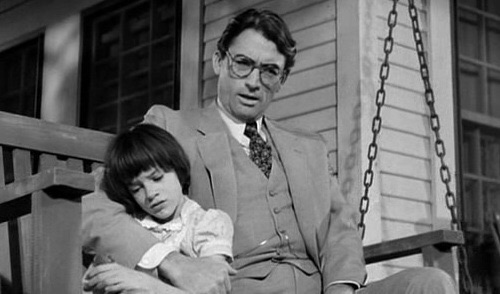
imageFor many readers and viewers of To Kill A Mockingbird who sat with Atticus and Scout in the home porch swing as he tenderly shared time and wisdom, and were also in the courthouse balcony with Scout, Jem, and Dill as he courageously fought for the life of Tom Robinson, Atticus Finch has been the standard bearer of righteousness and heroism and a model of citizenship and parenting. Upon the revelation in Watchman, we join Jean Louise in asking, what is he now?

Although shocking, and initially hard to process as one reads, Go Set a Watchman actually strengthens the heroism of Atticus. No longer is Atticus Finch a flawless, Michelangelo statue of virtue and integrity like which all should strive, but inevitably fail, to live up to. Like us, Atticus has clay feet. Like us, Atticus is human.

Through Watchman readers can see paternalism in his beliefs and rationalized, fear fueled hesitancy in his actions later in life. Yet, Atticus is still the courageous man from To Kill A Mockingbird who ignored those who whispered behind his back and stood up to the hateful mob who threatened him to his face. He is still the character who put himself in harm’s way and, for the sake of one man’s freedom and the triumph of justice, exposed his children to the world’s hate. He is still the role model who lived out the Sermon on the Mount call to suffer for righteousness. Reading Watchman, we no longer see Atticus Finch as a literary Melchizedek, the super human, inerrant, and indestructible figure in the Old Testament. Instead, we know him for what he was, a loving and faithful man susceptible to flaws, fear, and fault.

As strong, courageous, and righteous as he had been throughout his life, even Atticus Finch had stumbled. In the midst of painful, declining health and the dramatic social change in the wake of the Supreme Court order of desegregation Atticus had accepted the easier path of stay, or slow, the course over the harder road of change and transformation. In doing so, Atticus did what everyone does at some point in life, he gave into fear of the unknown rather than live righteously by faith in the unseen.

Through Go Set A Watchman, Nelle Harper Lee offers a parable that shows the importance of Isaiah’s teaching that was the source of the title. All people need a watchman who stands to guide and protect. While God uses faithful individuals and institutions to teach, reflect, and lead in the ways of righteousness, it is still incumbent to set Christ as the true Watchman against whose life example, with the continual prompting of the Holy Spirit, one measures personal and communal thought and actions. Only Christ can be the true Watchman by whom one sets their moral compass.

imageFor those who are familiar with To Kill A Mockingbird, it will probably be impossible to read Go Set A Watchman without the characters and stories of Mockingbird playing in one’s background memory. For me two scenes from the earlier novel coincided most powerfully. The first was when Scout first met Boo Radley after he saved her and her brother Jem. After years of wondering about and accusing him of all sorts of imagined crimes and activities, she spoke her first words, “hey Boo.” And in so doing she saw him as he truly was and began a genuine relationship. Go Set A Watchman introduces us to the real Atticus and likewise allows us to open a true relationship.

imageThe second scene was perhaps the most powerful moment in To Kill A Mockingbird. After Atticus has lost the trial of Tom Robinson, and upon the urging of the town’s African American pastor, Scout stood with her brother Gem and all the African Americans in the balcony of the courthouse out of respect as her father passed by. In the final page of the book, Jean Louise stands again as her faltering father passes by. Only this time she sees him not through the dim mirror of childhood, but face to face as an adult. What she sees is her father, humanly flawed, at times mistaken, yet still courageous, patient, and truly loving.

Posted in Faith Shots, Film Shots | Tagged , , , , , , , , , , , , , | 2 Comments

“Inside Out” is All In

inside-out-pixar-one-sheetPixar Studio’s latest feature, Inside Out is a blast from the Studio’s celebrated past. For many years Pixar and I had a ritual, where in late winter I would start counting down the days to the traditional early summer release of that year’s film. Often during this period I would be questioning whether “they” had pushed the subject matter envelope too far. Is a film with a name they have to tell you how to pronounce and a story of a rat who wants to be a chef really going to work? Likewise, is a film about the world’s last functioning garbage robot, a film that is also virtually silent really going to be worthy of time and attention? And, will an odd-couple film about an old man and young boy who travel by a floating house really be worthy of an adventure to theater? After seeing each of these films, Ratatouille, Wall-e and Up I chastised myself doubting the company that had never disappointed.

Prior to the release of Cars 2 I suspended such questioning and for the first time was disappointed. Likewise Brave was, in my mind, ordinary at best. In the rollout of the Inside Out, I again had serious doubts as to whether this film would be meh or memorable?

Thankfully Inside Out has that old Pixar magic. I was fortunate enough to see it as it premiered at The Cannes Film Festival where the viewers are notorious for demonstrably expressing their negative opinions and reactions, often during the film. Inside Out was among the most well received films during the festival, and deservedly so.

While Pixar has always produced visually stunning films, what made their films truly special was that the stories spoke to both children and adults. Inside Out succeeds in this difficult challenge. Inside Out reflects what every child has experienced, emotional responses to the positive and negative experiences of life. Likewise, time and again, every parent has wondered, usually during an emotional explosion, what was going on in their child’s mind. Inside Out goes where few dare tread, the emotions of a child as she grows and works through the biggest of childhood challenges, moving from a happy home town to a vastly new and different place.

Inside Out EmotionsIn making the film, writer, director Pete Docter set out to examine human emotions. He does so by depicting five emotions as characters. Amy Poehler, Bill Hader, Lewis Black, Mindy Kaling, and Phillis Smith star as Joy, Fear, Anger, Disgust, and Sadness who live and work in “Headquarters,” the mind of a girl named Riley, where they are responsible for keeping her functioning as she grows from an infant through adolescence. Thankfully, Joy is the primary emotion and is generally in control of Headquarters and Riley’s responses to life. As Riley grows, Joy’s main job becomes keeping Sadness from doing much of anything as everything she touches turns blue, literally and figuratively. While all the emotions have their turn at literally pressing Riley’s buttons, it is Sadness who Joy, and the others have to watch out for as her’s has the most impactful, long lasting touch.

The film moves quickly though Riley’s childhood showing her responses, and those of her parents as she grows from a newborn into a preteen. In addition to guiding her through incidents and everyday life, the emotions also play an important role in keeping her memories that will establish and maintain her core values, those elements that will shape and guide her the rest of her life.

Everything is going swimmingly in Riley’s life, and for the film’s characters as Riley is smart, friendly, and a successful hockey player. All of that changes when the family moves from idyllic Minnesota to San Francisco as her father chases his dream of leading a silicon startup company. As with most teens forced to move from a happy situation, nothing about the new city measures up. The new house, new friends, and even new family time and activities pale in comparison to “home.” It seems as if Riley’s personality, happiness, and even her hockey skills were left behind and replaced by awkwardness, uncertainty, isolation, and failure.

inside outFor the first time Joy and the other emotions seem helpless to control the situation and keep Riley, Riley. The once happily contented child is changing before her parent’s, and the emotions’ eyes. What once were her bedrock memories and foundational parts of her identity literally begin to crumble.

The second half of the film depicts Joy’s and Sadness’s struggle to get back into “Headquarters” after they are accidently moved to another part of Riley’s mind, all while Riley’s world seems to be falling apart. It is in this struggle that Joy, the other emotions, and the audience learn the important fact that all of one’s emotions have a purpose and are important.

While people would rather be joyful all the time, since there is no such thing as a perfect world, such is not possible. Yet, for many, it is hard to accept this reality as well as the consequence, that one cannot always be in a state of joy or happiness. As with disobedient children, and adults, where the cover up is often worse than the offense, the attempt to live in and or project to others, joy and happiness while in the midst of difficulty or despair, is often worse than the precipitating events of life’s challenges.

Too often individuals and families, fueled by societal expectations, seek to put on a good face regardless of the difficulties and challenges in life. To show sadness, anger, or fear is considered by many a weakness, or a burden to others, and is too often a societal “no-no.” Such airs also have negative consequences for individuals and families.

Denying and struggling against the times that are other than joyous adds pressure to one’s life and can foster a cycle that results in increased unhappiness which then leads to greater pressure to remain or at least project joy or happiness that then yields even greater dissatisfaction and more pressure. Such denial of events and resulting emotions are also a fearful and non-faithful response to life’s trials and difficulty.

The Book of Ecclesiastes famously reminds readers that there are different seasons in life. There are times to sing, and dance and there are times to cry and mourn. There is a time to live and there is a time to die. Christ echoed this reality when he taught that there will be times when the sun shines and times when rain falls, and there will be times when the righteous will suffer and the unrighteous flourish. Even when living faithful, discipled lives, there are times one spends in the garden, on the cross, in the tomb, and a time for resurrection. Each of these times or seasons yields emotions that are important in living in and through the seasons.

The life example of Jesus shows a variety of emotions as he lives and ministers in the midst of different seasons. In reading the Gospel accounts of Jesus’s ministry, one senses Jesus experiencing joy in the midst of serving and ministering to the lost and forgotten people who had been pushed to the margins of society. Jesus demonstrated anger toward leaders who abused the privileged of their position and allowed profiteering in the Temple. Jesus was fearful in the garden and saddened when in the presence of Lazarus’s mourners. Christ did not avoid living in, and showing, his emotions in the midst of life and circumstances as he knew God was eternally present and faithful.

inside out 3Inside Out teaches children of all ages, including parents, that all of our emotions are important and have a place and function in living lives of meaning and fulfillment. In addition to teaching generally about the presence and purpose of emotions, Inside Out could be of useful tool in teaching children with autism or other developmentally delayed conditions that have difficulty recognizing and understanding the nuances of emotions in themselves and others. It is important for all to understand that emotions are a part of us, and when properly expressed and utilized, are tools given by God that equip us for living life in a broken world, and they are also signs of God’s faithfulness and eternal presence.
Inside Out is rated PG

Posted in Faith Shots, Film Shots | Tagged , , , , , , , , , , , , , , , | 2 Comments

Cross+Roads Faith and Film Renewal Tour, Cannes: Film Review “Filiosophi Kopi”

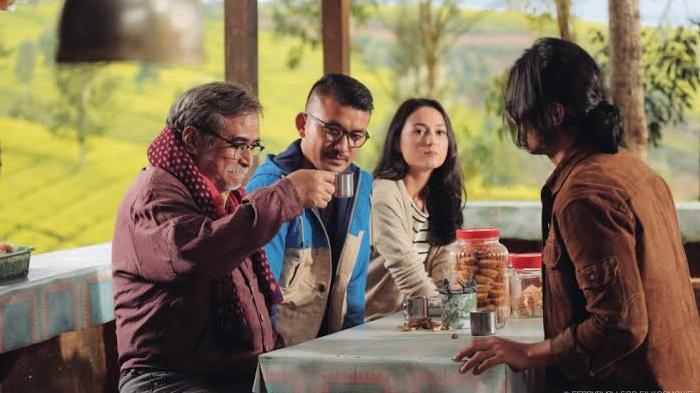
kopi 6To some, coffee is just a carrier of caffeine that fuels a dulled mind and a tired body. To Coffee-philes, it is much more than that, it is one of the great joys of life. “Filosofi Kopi” is a film brewed for the latter group, though in reality, the message can be generalized to others as most people have some interest, hobby, or passion that generates joy and meaning in their life. For some it is coffee, for others it is wine, for others still it is cinema. The fact that for one person coffee is a commodity and for another it is a spiritual experience, or that films to some are movies and to others they are cinematic experiences simply indicates the diversity of interests and passions in the world.

Set in Indonesia, one of the largest coffee producers in the world, “Filosofi Kopi” is the story of Jody (Rio Dewanto) and Ben (Chicco Jerikho) two good friends in their 20’s whose lives have been complicated by past events and the actions of others, and who seek to rise above their present circumstances by opening and running a coffee shop.  While one wants to erase debt built up by his father, debt he soon learns was created to fund his education, the other wants to produce the finest coffee as a way to get past the traumatic disintegration of his coffee growing family.

kopi1The film opens with the revelation that the shop, Filosofi Kopi, is failing and, unless something changes soon, will close. There is a hint that some of the debt is owed to people who would do more than take ownership of the building. It is also evident early that the two partners have different agendas, business student Jody seeks to make the Filosofi Kopi profitable by expanding services such as offering WIFI and opening during the lunch hour, as well as cutting expenses by purchasing  cheaper, lower grade coffee beans. Coffee master Ben believes that it is coffee and only coffee that should, and will, make the shop successful, and therefore the shop should buy only the best beans. Ben also considers ancillary things such as WIFI a distraction from the “superior coffee experience” that he believes Filosofi Kopi, and he, provide.

As the two partners seem at a stalemate, in walks a businessman offering them a challenge as well as a life line. If they can brew the finest cup of coffee in Jakarta, as chosen by his wealthy client, they will earn enough money so as to buy down their debt and save their shop. So confident is Ben that he ups the issue, and money, by promising to pay the much larger amount should he fail, much to Jody’s desperate consternation.

kopi2After spending more money on very expensive coffee beans and two weeks finding the right blend, Ben and Jodi believe they have blended the perfect cup, and begin selling it with the name, “Ben’s Perfectooo!”  All is well until an international coffee grader, El (Julie Estelle) comes into the shop and has a less than overly impressed reaction.  El tells them where she has tasted the best coffee, a plantation some miles from Jakarta, and offers to take Jody and Ben to meet the grower and brewer. Hesitant to go initially, Ben becomes closed and distant as they travel and especially so when they taste the superior coffee.

kopi 3 It is during Ben’s return to a coffee plantation and encounter with a grower like his father where, through flashbacks, the backstory of Ben is revealed. As often has happened throughout Indonesia, Ben’s family suffers a tragedy as father is forced to give up growing coffee as the land is needed for producing Palm Tree oil, which is a far more profitable crop that has led to deforestation and the takeover of land used to grow coffee and other crops. Following the incident, Ben’s father transforms from the gentle coffee-plant whisperer into a volatile man whose reaction to Ben’s trying to continue his mastery of brewing coffee is shocking to the young boy.  It becomes evident that Ben traveled to Jakarta to escape his father. Eventually Ben decides to leave Jakarta and return to his home and to his father in an attempt to achieve some sense of closure to this life defining event.

Throughout the film the audience learns that to brew a cup of high quality coffee, care must be exorcised throughout the entire process. Care for the plant through proper and timely pruning of nonproductive branches so that the most nutrients can reach the bean.  Care must also be given in the picking of the bean so that they are at their proper and full, taste producing ripeness. Complete Sun drying is essential to prepare the beans for roasting. The roasting process must be timed so as to retain and craft the proper flavor. Coffee must be ground enough to release the taste but not so as to lose it during the brewing. And lastly the brewing must be at the correct temperature for the right amount of time so as to release, yet not lose, the full taste. All of these steps are important if one is to experience the perfect cup. If there is a break, or shortcut at any step the brew will be damaged and the taste impacted.

Ben’s life was producing a less than quality brew because he was damaged. His childhood trauma had injured the plant that was his life, and even through his life was producing fruit, it was less than it could or should be. Rather than going back, facing his trauma, and repairing that which had been lost by confronting his father and fears, Ben had tried to compensate by doubling down in other areas of his life. The reality that Ben knew about coffee but failed to realize in his living was unless he pruned the trauma from his life by addressing it, his cup that was his life would never be of the quality he desired or his father desired for him.

Whenever one has injury in life, damage to one’s spirit from the actions of others, poor personal decisions, or just random life events, one cannot wait the situation out. Though bodies may heal and to some degree spirits may return to functioning, if one does not address the pain, loss, or fear, one’s life will not be embody the fullness it could. As with non-productive growth on a coffee plant, fruitless growth that start through failure, trauma, disappointment, or other critical life events rob one of the spirit needed for a fuller and more meaningful life.

kopi 9aAs with the coffee grower, care of the plant that is one’s life is tedious work that cannot be rushed or mechanized. It can be painful, and in the short term draining, but it is the only way to ensure the health of plant that is one’s being and the only hope for producing fruit that yields fulfilment in and with life. While one can skip this process and still have fruit that is a life, and even some happiness, it will not be truly satisfying to the palate that is one’s hope in life.

As with Jacob in the Old Testament, we all have baggage that we try to leave behind. But like Jacob, our disappointments, loss, behavior, and fears, follow us through life. No matter how successful, wealthy or powerful one becomes, it is not until one faces one’s past, wrestles and struggles with one’s loss and fears that one can overcome and reclaim the life one was intended and desired by God to live. As with Jacob, we may come from this encounter changed, or even wounded, but we will, even in our change and wounds, be truly whole and empowered to live a more fulfilled life.

“Filosofi Kopi” was directed by Angga Dwimas Sasongko, has some adult language and depiction of violence. It is currently seeking distribution in the United States and other countries.

Posted in Film Shots, Scattershooting | Tagged , , , , , , , , , , | Leave a comment

Cross+Roads Renewal: Cannes

2015_Cannes_Film_Festival_posterUpon my first full day in the town of Cannes, France, I was reminded of a truth I often forget, sometimes it’s good to get lost. The day following my 29 hour trip to this sublime town, and after a long night of sleep followed by a couple of naps, I set out to explore the area. The first thing I found was of course the Palais Des Festivals, the home of the famous Cannes Film Festival and soon to be my home for ten days.

Next I began exploring the town. Cannes is a wondrous mixture of extreme wealth and hardworking shop owners and workers. It’s also a mix of grand boulevards and tiny streets and alleyways. All along the boulevards are large restaurants and stores with names known around the world. If you stay on the bigger streets, you’re less likely to lose your way, more likely to run into well-known attractions, and certain of a very predictable experience. If, on the other hand, you turn onto a smaller street, or better yet, an alleyway, you’re in for a less predictable, but often more meaningful experience. Here, less often means more.FullSizeRender

I had this choice my first day exploring Cannes. While I was still hung-over from the grind of three flights, two layovers and one train ride, I was tempted to stick to the main streets, but in a breath of fresh energy and channeling my inner Robert Frost, I made a turn onto a less traveled path and was off on a beautiful stroll into the heart and soul of the city and people. I saw modest but beautiful apartments, which were obviously taken care of and beautified by very modest flower boxes and other IMG_5294small, personal touches. I also discovered small, family-owned cafes and ristorantes that were charming and intimate. In these streets I experienced peace, not just from the quiet, but from the genuineness of the area and the people.

I did get a bit lost but I found something special. This charming peace was in direct contrast to the preparations underway at the Palais and along the famous Le Croisette, the promenade that hugs the Cannes beach and is the address for the Ritz, IMG_5317and other famous hotels. Here, cranes were lifting giant cement planters and placing them along the street. One crane was even lifting 15 foot palm trees onto an upper balcony of one of the fancy hotels in order to temporarily give the space that “genuine” Mediterranean look and feel. While those trees will be gone within a fortnight, the real beauty of Cannes will remain in the small streets, paths, and modest apartments hidden from view but easy to find.

Upon reflecting on my choice to get lost, I was reminded of the film Up and Ellie, the wife of Carl Fredricksen, who from her earliest days had a great desire for adventure. In her words, “Adventure is out there!” but it’s usually not found on the path well-traveled. To always stay on the main roads and only see the famous landmarks makes one a tourist. By getting off the beaten path, trying something new and even unknown, one becomes more of an adventurer. I understand that traveling to the south of France is not exactly an adventure into the wilderness, but within this or any locale, one can still get lost and have wonderfully meaningful experiences. I made some wrong turns and had to backtrack a bit from time to time. But it’s that stroll that will stay with me long after the glamour of the landmarks have been packed away and the last grains of Cannes beach sand has been shaken from my sandals.

As it can be good to get lost when we travel, getting lost is also helpful in our spiritual journey. As with travel, faith can be prepackaged with set itineraries, timetables, and expectations. Certainly there is importance in encountering the faith landmarks, but one should resist the temptation to hit only the hotspots of faith, special occasions such as baptism, confirmation, and Christmas and Easter worship. Knowledge of scripture should not only include popular texts and uncritical reception of packaged lesson plans. Rather, one should linger among lesser known texts, contemplate the observations and teachings of others, and learn more about different traditions, both within and between faiths. Being open to and interested in what is not known or familiar–in teaching, traditions, and other experiences–is certainly not the safe way to journey, but it produces longer lasting faith experiences and spiritual growth and development.

Taking time to stroll down these off the beaten spiritual and theological paths adds to the richness of faith experience as well as an understanding of other expressions of faith. As always, learning about the customs and understandings of others builds upon and deepens one’s personal faith and spirituality. As with traveling, there will be times when we get a bit lost. We may not understand, agree with, enjoy, or even appreciate what we learn or encounter. We may not come away with all of our questions answered, but in thinking about these questions and pondering possible answers, we grow in our faith and broaden our spirit. Who wants to be a spiritual or faith tourist, when one can be a spiritual and faith adventurer? As Up reminds us, the spirit of adventure is out there! May we desire and follow such a spirit.

Posted in Faith Shots, Film Shots, Scattershooting | Tagged , , , , , , , | Leave a comment

Cross + Roads Faith and Film Festival Overview

imageAfter King David coveted and took Bathsheba, the wife of Uriah, a loyal soldier fighting the King’s battles, David tried and failed to cover up his offense. When that planned failed he had Uriah killed in a last gasp attempt to hide his sin. Knowing what happened, God sent the Prophet Nathan to pronounce judgement upon David. To do so, Nathan used a story to lift a mirror before King David so the King could see and convict himself of his sin.

Story based art forms such as music, literature, plays and film also serve as a mirror reflecting to society its brokenness and distance from God and God’s desires for humanity and all of creation. In addition film and other story forms offer prophetic words and visions of hope, grace, and new life within the brokenness.

In a macro sense society needs no reminder of its brokenness, but on the micro level film lifts up the specific, often subtle evidence of it’s brokenness as well as the glaring if sometimes underground shards of a humanity at its most depraved. Film also measures the pulse of society by projecting the burdens and fears as well as hopes, needs and dreams humanity and societies live with and express.

An Overview of humanity’s brokenness and longings of those directly victimized by such fracturing has been on display during the first 4 days of the Tribeca festival. Though there have been several themes thus far one that has been evident in multiple films is oppression and the struggle to escape. The Festival has shown oppression in several forms, oppression that is human trafficking: women, captured by false promises, isolated from family, moved between countries and sold repeatedly from one owner to another. There is also oppression that is prostitution: where women, made vulnerable by “life” are exploited by predators who spin webs camouflaged by attention, acceptance, and love that insnares rather than lifts up.

While there has been greater attention in recent years to the reality that human trafficking and slavery exists in first as well as second and third worlds, it is important that the reality of what has been going on under the radar of first world attention continues to be exposed and brought into the light where efforts to reduce or eliminate such tragedy can be launched and continued. Therefore while the reflection of oppression of individuals and groups is tragic and hard to watch, it also fosters a growing awareness of the problem and in so doing the first steps and hope of ending the practice.

image“Hyena,” written and directed by Gerard Johnson and starring Peter Ferdinando is a brutally gritty story of drugs, corrupt police, and East European human trafficking. Named after what is considered by most as the lowest, most vile and opportunistic animal on the African plain “Hyena” is a mixture of the “ultra violence” and disregard for human beings from “A Clockwork Orange” and the grimy 1970’s corrupted cop films such as “Serpico” and “The French Connection.” “Hyena” shows how little regard individuals and groups can have for persons outside their close knit families and communities. Whereas “Clockwork” was set sometime in the future and “Serpico” and “The French Connection” are true, 40 years old stories, “Hyena” shows that the future is now and we have not progressed, and perhaps have regressed, from the crime and corruption of 40 years ago.

image“Sunrise” depicts the plague of children, 100,000 primarily young girls, who go missing each year in India and are forced into prostitution and other forms of exploitation. “Sunrise” was written and directed by Partho Sen-Gupta, and stars Adil Hussain as Laksham Josi. Laksham is a social services police officer whose task is to investigate kidnappings even as his own daughter was kidnapped because he was late in picking her up from school. The film depicts the torturous life he endures as each case reminds him of his daughter’s disappearance. With very limited dialogue, past and present for Lakshman converge as he pursues a shadow through endless rain falling in the deepest dens of Mumbai’s seediest neighborhoods. At the less than happy ending the statistic of the 100,000 children kidnapped each year is captioned as well as a dedication for two children. As dark, literally and figuratively as a film can be, “Sunrise” shines a light on what is a problem of epic proportions and tremendous pain for all the families touched by it.

Paralleling the oppression track have been films with characters that showed bravery and determination to escape or fight for those victimized by oppressors.

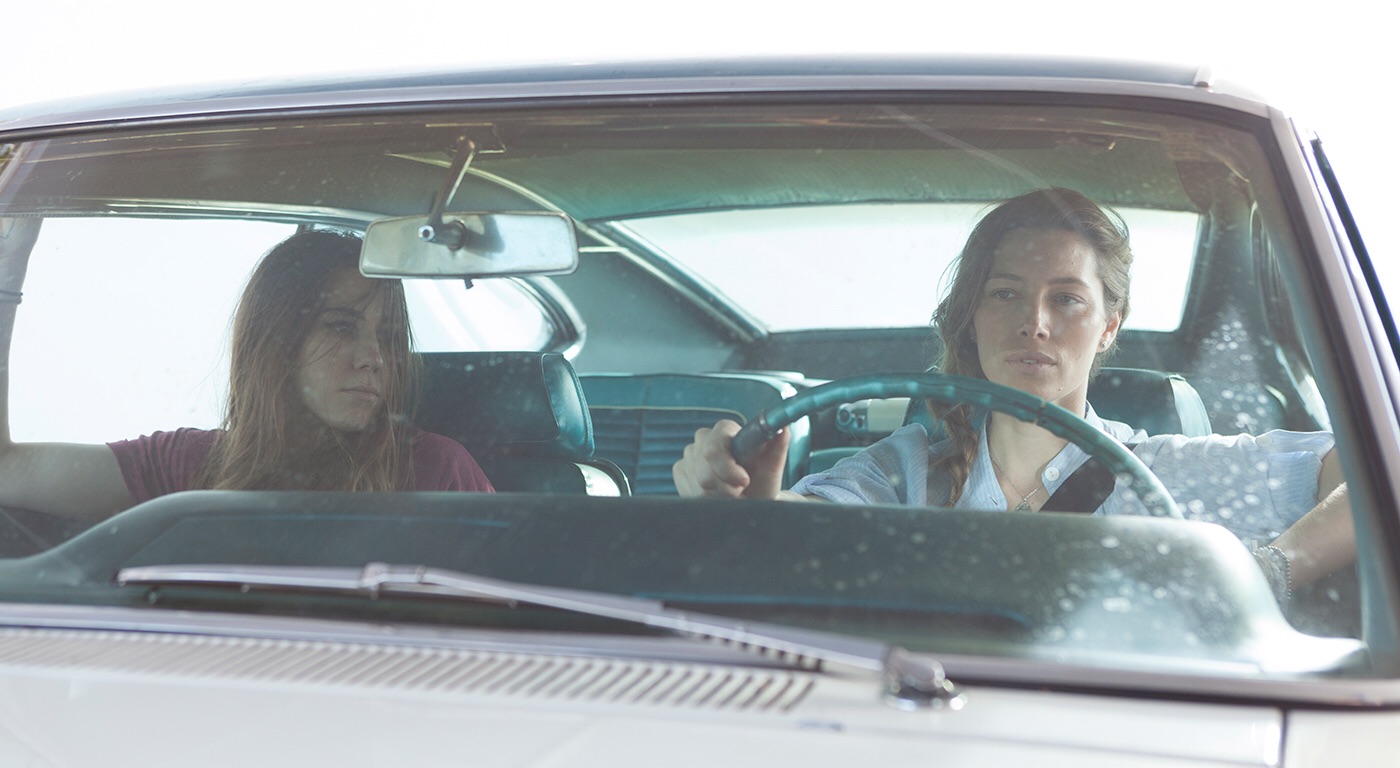
image“Bleeding Heart”is directed and written by Diane Bell, and stars Jessica Beal as May, a yoga instructor dedicated to helping others find inner peace through yoga and meditation. “Bleeding Heart”shows the terror and tragedy that is the oppression of domestic abuse and prostitution. May’s peaceful life is disrupted when she searches and finds her lost half sister. As refined and tranquil as May is, Shiva (Zosia Mamet) is raw and revved up, always on guard from her explosively violent boyfriend and pimp. While urged to turn her back on her sister by her well off, adopted mother and her controlling, peacenik, zen boyfriend, May becomes more determined to stay connected to her sister even as her growing presence produces more conflict in her sister’s life and resistance by Shiva and her brutal boyfriend. May refuses to yield to the pressure and finds strength she never knew she had offering love Shiva never knew existed.

Other forms of bondage are those that come through grief, guilt, and the oft turned to remedy, drugs, that like the pimps and human traffickers, offer the hope of escape from pain only to lead to further suffering and helplessness.

image“Franny” stars Richard Gere as a philanthropist who is responsible for the accidental death of his two best friends who are also the parents of his college bound god-daughter Olivia (Dakota Fanning.) Following the accident, the film moves forward in time to portray an unkempt, Franny who has disconnected from most of his past activities and community. Then Olivia calls to tell him about her new husband and asks if Franny could get the fresh physician an interview at the children’s hospital where Franny remains chairman of the board. The call rejuvenates Franny who seems to pop back into his hyperactive positive personality and spontaneous ways of living. Empowered by prescription pain killers, the resurgence is masking Franny’s ongoing struggle with guilt and depression that continue to plagued him. “Franny” demonstrates the oppression guilt and the resulting depression can wield over individuals. While the conditions can be masked for a time they eventually become too much for even the strongest narcotics and are overcome by addressing and confronting the precipitating event(s) and accepting grace and forgiveness from others and oneself.

While these films do not provide the escape from life’s daily grind and problems that comedies and action adventure genres offer, they do offer a glimpse into humanity and the tears in society’s physical, ethical, and spiritual fabric that fosters oppression in all its forms. In so doing such films can echo the prophetic teachings, the lamentations of the Psalms, and the corrective teaching of Christ, by casting light into darkness, naming sins, offering hope,and yielding the first steps to healing the brokenness.

Posted in Scattershooting | Tagged , , , , , , , , , , , , , , | Leave a comment