
All Photos Courtesy of Exhibit A Productions
In the game of football months, sometimes years of training go into preparing for the seconds that occur after the ball is snapped. Although the tactics, strategies and plays can be very complicated, at its core, football is a simple game. Plays are called on both offense and defense, players execute their assignments and react to what their opponent brings to them. The team that responds better, with most determination to what the game brings, wins.
Steve Gleason was an eight-year NFL veteran with the New Orleans Saints. The biggest play in his career was when he blocked a punt that resulted in a touchdown on the fourth play of the first, post-Katrina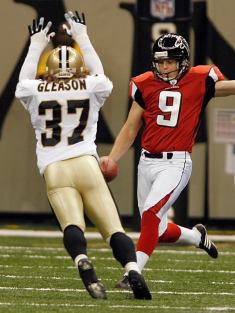 game the Saints played in the Superdome. It is called the most important play in the history of the Saints as it led to them winning the game and was a symbolic turnaround for the entire region.
As big and significant as this play was in his career, the biggest play in Steve’s life began with the snap that was a diagnosis of ALS, the disease best known for striking after another athlete in the prime of his life, Lou Gehrig. As with most other ALS patients, doctors gave Steve between 2-5 years to live. As the disease progressed, he would lose the ability to move, speak, and without assistance from a ventilator, breathe.
Steve was diagnosed at the age of 34, two years following his retirement from football. Within 6 weeks of his diagnosis, Steve and his wife Michel discovered that they were expecting their first child. Still in the midst of coming to terms with his life-changing condition, Steve decided to live life to the fullest of his abilities even as he began to lose those skills. Additionally, Steve and Michel decided to document this time in life by creating a living video journal of his life so that his child would be able to know him, see him move and hear his voice after he had lost those abilities.
Written and directed by Clay Tweel, Gleason is the story of Steve, Michel Varisco Gleason, son Rivers Gleason, and the rest of his family and friends as they all journey through life impacted by ALS. As one can imagine there are times of great grief and loss as Steve’s physical condition diminishes through the film. As difficult as at times it is to watch the story on the screen, one can only imagine the emotional, physical, and spiritual pain experienced in life by Steve and those close to him.
 In addition to the hundreds of hours of video being a gift of Steve and Michel to Rivers, the film is a gift to all who watch it. Although grief is present like an uncredited character throughout the entire film, joy is also present. While the grief brings a silent weight to the viewer, there is also a joy that sounds a greater hope even in the midst of unimaginable loss revealed repeatedly throughout the film.
Part of the gift element is the film’s raw honesty of living life with ALS that Steve and Michel share. While not dwelling excessively on valley periods, the film does not shy away from the physical, emotional and relational low moments. The nuts and bolts reality of ALS’s physical deterioration, the accompanying medical issues, and the difficult conversations, and non-conversations that come with the hour by hour, day by day exhaustion of caring for a loved one, or being cared for by a loved one are included in this journal of life.
The other gift element of course is the “no white flags,” never give up spirit of Steve and Michel. Their their joy in living their lives brings joy to the viewers. While theirs is not the life they thought they would live when they married, Steve and Michel do not surrender living life to ALS. Rather than focusing on Steve’s limitations, on what ALS has taken, they focus on the lives they can have. As such they travel, they go, and they do as much as they can rather than sitting, grieving and waiting. They live out the challenge presented on the film’s poster. Steve and Michel “live with a purpose, “and they “love with a purpose.”
This spirit is a product of the faith that Steve and Michel not only have, but that direct their lives. As with anyone struggling to overcome a life changing and challenging illness, the Gleason’s is a realized faith life. For Gleason, Faith is not a concept or way of being, it is the Way of life. Of course, there are ups and downs and times of questioning, however those are but dips of faith, not pits of despair. Steve and Michel and all in their orbit know that there is something greater than Steve’s diagnosis and mortality. This reality and opportunity to live lives of realized faith is possible for all people. For Steve, it is just more evident.
While there are many Biblical passages lived out by Steve, Michel, and Rivers, some readily come to mind. In the fourth chapter in his letter to the church in Philippi, Paul tells the church to rejoice in Lord always, not to worry, and to make prayers known to God. In the sixth chapter of Matthew Jesus also teaches not to worry. One is not to worry about what one will eat, wear, one’s body or about tomorrow. And, in the eleventh chapter of Hebrews faith is presented as the substance of things hope for, the conviction of things not seen. While prayers, and a painfully documented trip to a faith healer, are not answered by a reversal of his condition, Steve and Michel do have faith in God to deliver hope. And God does. While viewers experience grief throughout the film, hope and joy are more abounding and realized.
In Hebrews 11 the writer also presents a roll call of Israel’s heroes of faith, including, Noah, Joseph, Moses, and Abraham, all of whom live as residents in an alien land. They live in tents while hoping assuredly that one day they will live in homes inside a nation whose foundations are designed and constructed by God. None of the heroes made it into the promised land, but they died seeing it. The writer of Hebrews was not ultimately referring to a nation or homes of this world, but to the coming Kingdom of God. Through Christ, those heroes of Israel, and all who have such faith, find and receive one’s final and true home.
 As Steve Gleason’s body is as inadequate and challenging as the tents the heroes of Israel lived in, he, and us like them, can see through faith that assured land of promise.
Although not a classic Easter story, The Gleason’s living in the joy of life is an example of living life as Easter people. Too often persons of faith think, and live as if resurrection life occurs after they die. People of faith are called to live a life of resurrection now. Of course death will come, but Easter people live life in the here and now, as well as leaning into the eternal life provided through the resurrection.
Steve and Michel and others whose spirit overpowers human frailty and brokenness are examples of faith that sees, experiences, and lives lives of assured hope, lives of resurrection lived now and eternally in the Kingdom of God.
Gleason is rated “R” for Language.


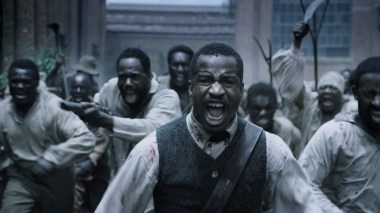 The Nat Turner rebellion lasted 48 hours and resulted in the deaths of between 55 and 65 slave owners, their families, and others in August of 1831. Though the rebellion only lasted 48 hours, it led to panic on the part of slave owners and white citizens throughout the south. In retaliation for the killings, southern militias and mobs killed over 200 slaves in addition to those who participated in the rebellion. Nat Turner was able to elude capture for 2 months before he was finally caught and hung. The rebellion also resulted in greater restrictions on slaves and free blacks including prohibiting education, the ability to assemble, and the possession of firearms.
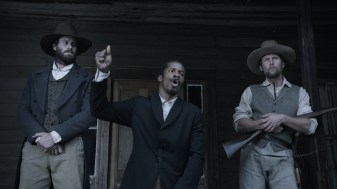 Nat Turner’s owner in leasing him out to other slave owners to preach compliance to and instill the fear of God into, their slaves. It is no secret that Scripture has long been used to justify unrighteous actions of persons and nations toward others. And, although I have known most southern Churches or denominations, including Methodism, allowed or endorsed slavery, seeing the impact such support had on the enslaved individuals, disturbs the soul in addition to informing the mind. That clergy and others so distorted and misused the Gospel of Christ for such gain, or whatever reason, deepens even further the sadness and anger.
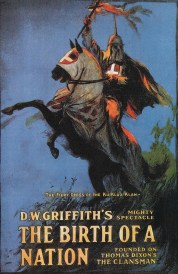 edress the false, racist presentation of African Americans, and the righteously heroic depiction of the Ku Klux Klan by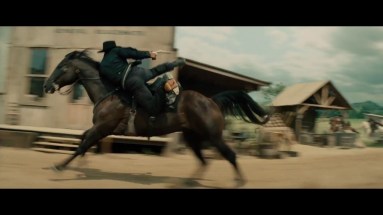
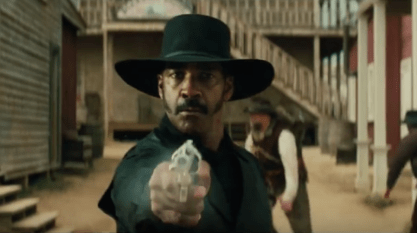
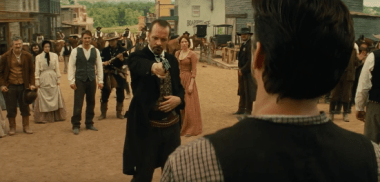 Bartholomew Bogue and his gang, not unlike the townspeople of Rock Ridge lamenting the demise of their fair town in
  When trying to convince Chisolm to accept their offer and plea, Emma Cullen states why and what she is seeking,” I seek righteousness. But I’ll take revenge.” Whether or not recognized, such is the sentiment of many persons of faith today. Christ calls to love one’s enemy and to resist returning evil for evil. Christ teaches that it is better to suffer than retaliate. Yet such teaching is hard to follow when put to the test in the “real world” as constructed by society.
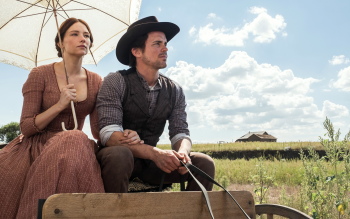 Yet, there are in the film, as in the world and in the community of faith, glimpses of the grace and hope that are central to the life and teaching of Christ. And, as is often the case with the followers of Christ, it is the community where such is often experienced when characters face their crises of faith and character.
 The process and findings of the investigation, though condensed in the film, were similar to the original inquiry. Also, the effect of the event on Sullenberger, though perhaps overly dramatic as presented in the film, does indicate the power of traumatic events even when they are short-lived and have positive outcomes.
 In what is another masterful performance by one of Film’s most accomplished and versatile actors, Tom Hanks quickly disappears into the role of Sully Sullenberger. In playing someone so unassuming and so familiar with the audience, Hanks conveys the subtle complexity of the reserved Sully’s life during the time following the crash when he was being both hailed as a hero as well as investigated for endangering the 155 lives for which he was responsible. Cast into a limelight he does not desire, Sully does what he does best as a pilot, manages the situation, including his emotions and his reticence to accept the notoriety and moniker of hero.
 All of these experiences were called upon during the 200 plus seconds of flight 1549. While considered miraculous, the landing was anything but a miracle. It was instead the product of instinct, training, steady nerves, and decisive action.


 In contrast to many previous depictions of Jesus on screen, Rodrigo’s conception and McGregor’s depiction of Jesus is earthy, intuitively wise but without full understanding, and kind but not campy. One feels an intimacy with this Jesus that has often been lacking in the grander, larger than life accounts so often depicted in the past. Much of this closeness comes through witnessing Jesus interact with a family he comes across as he is leaving the desert and with whom he spends time with and learns life lessons from.
 Using McGregor for both parts correctly identifies and presents the truth that Satan’s power, temptation, lies within oneself rather than from outside physical forces. Last Day’s depiction of Satan echoes that in The Rolling Stone’s epic song, “Sympathy for the Devil.” Confusing Jesus is the nature of this tempter’s game. Through confusion and manipulation, McGregor’s Satan casts seeds of doubt into McGregor’s Jesus.
 While superficially acknowledging the humanity and divinity of Jesus, the depiction of Jesus in most previous films has often been at an arm’s length, and effectively presented him as more of a superhuman than a fully human being who knows what it is to struggle, wonder, and question. Such a depiction creates distance that makes it harder for some to connect in ways that can be transformative.
 Set in the desert around Judea and filmed in the Anza-Borrego Desert State Park, one could describe the film’s look and feel as, in the words of Buzz Aldrin’s description of the moon, “beautiful, magnificent desolation.” Technically the film presents light touch direction from Rodrigo Garcia, top notch cinematography from three time consecutive Oscar winner (Gravity, Birdman, The Revenant)
  What makes this film stand out from ordinary documentaries is, in addition to actual footage and still photography, the very creative use of rotoscope animation and voiceovers by actors to tell the stories of the individuals involved in the shooting. When asked at the Q&A following the showing at the DIFF, director Keith Maitland said his decision to tell so much through the use of animation was an effort to engage younger audiences who would relate better to the animated images of young people brought against their will into the nightmare that was the shooting spree. Also, it allowed him to depict the campus and people as they were back in 1966. The
 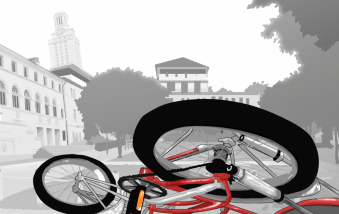 animation also enabled him much more creative flexibility in telling the back stories of the individuals, as well as incorporating symbolic images that kept the attention of the viewer throughout the film. Remarkably, the animation allows the film to communicate the drama and magnitude of the killing spree without being graphic. Gradually, in the last third of the film, the images and voices of the surviving witnesses concluded the stories.
 trimester of her pregnancy. After she and her boyfriend had been shot, Claire laid on the hot concrete for over 90 minutes, fairly certain her boyfriend, who was shot after her, was dead. Her memory of what she thought during the eternity of that time is riveting.
 CrossRoads Faith and Film