A well thought out and expressed article on a common phrase and often base covering sentiment.

Eric Hyde's avatarEric Hyde's Blog

“I’m spiritual, not religious”

Spiritual no Religious 2I wish I had a back massage for every time I’ve heard this line. What gets me most is the presupposition it stems from, that “spiritual” is the assumed equivalent of “good” and “religious” is the assumed equivalent of “evil.” Who made up this language game?

Honestly, who decided that “spiritual” was a term that would be used to contradict religion and as evidence of personal enlightenment without further ado? And does anyone using the phrase ever stop to think what they actually mean by it? I think what is usually meant is that religion is man-made tradition, whereas spiritual is a phenomenon that happens on a personal level, free from all “man-madeness” and tradition, and thus… true?

My experience has been exactly the opposite. I spent the first 20 years of my journey in Christianity believing that I was spiritual and not religious, and I…

View original post 433 more words

Posted in Scattershooting | Leave a comment

Confessions From the Dark Piece of the Puzzle

autism pieceThe symbol for autism awareness is the jigsaw puzzle and specificaly brightly colored puzzle pieces.  This is an appropriate symbol because, in the grand scheme, that is what living through autism is like, putting individual pieces together.  Whether it is the pieces of diagnosis, overcoming limitations, or just managing to get through the day, the picture of autism is made up of many pieces.  While this is an appropriate symbol, what is missing is the frustrations and challenge that comes when large, complex puzzles are attempted.  Not all the pieces in the autism puzzle are brightly colored. There are darker pieces, challenging time, that are a part of the puzzle, part of parenting in the twilight zone puzzle that is the autism spectrum.

In putting together two 3000 piece puzzles, I found out I can only do it in short bursts before I get frustrated and have to get away. In putting the puzzle of autism together you can’t just get up and leave it for a while. Like everything with this condition, and in many ways parenting in general, respite must be planned, and one never really gets away.

One of the most common and long lasting effects of this condition is grief. For families with severely impacted children, grief is the piece that invariably gets lost and is never to be placed or covered.  I guess I came to the realization that the window to grief and pain is one that can open at any time.  Even as it has been 10 years since the diagnosis of our daughter’s autism, 10 years since we haltingly yahoo’d the words “autism symptoms” then “autism treatments,” there are still periods where the pain of loss since the diagnosis are as fresh as they were a decade ago.  There are also painfilled times when the memories or images of the early, happier days before autism (BA) blitz into my consciousness and wreak havoc upon my spirit and day.

I have learned the triggers, usually seeing preschoolers doing preschooler things, but it is only occasionally.  One time I was serving communion when a father led his 3ish daughter to the rail, taught her how to kneel, fold her hands in prayer, take a piece of the bread and one of the juice cups. Two other times when I felt blitzed by the grief were when I was participating in services when a 3rd grader received her Bible and when a 6th grader was confirmed.  The girls reminded me in some way, their look or mannerisms, of my daughter and that I would not have this experience, at least not in this way.  The genesis of this blog was watching a preschool boy become unhappy and showing this by flopping on the ground, just as my daughter did/does.  This Grief Blitz strikes from out of nowhere, and hits my spirit like an unexpected kick to the stomach.  It is these unexpected, out of left field shots that send my spirit staggering into the ropes.

It is not so bad when shot is expected, and, like a hit to the stomach, when I can see it coming I can tighten my spiritual muscles and absorb the blows and protect the core of my spirit.  I have long learned to do this at weddings.  The day my daughter was born, I remember having a flash image the first time she locked hold of my index finger with her hand, of her holding my finger when I walked her down the aisle on her wedding day.  Now, whenever I preside at weddings I steel myself and focus my attention elsewhere, usually watching the groom watch his bride approach.

The grief I experience is similar, from what I have been told by parents, to loosing a child to death.   There is the wondering what they would be like at each age.  There are the milestone events that they are not participating in, graduations, marriages, starting careers, having their own children and the like. Those parents have lost their child and the dreams that come with children.  We have lost the dreams we had when we expected and thought we had a “neuro-typical child.  We have lost our dreams but we still have our child. Some with low functioning children say that this is harder than the grief and loss of a child through death.  I do not make that claim.  I would suspect that most of the parents who have lost children to death would make that trade.  We still have our daughter and she brings joy and laughter to our lives, but, there are challenges that death removes when a child dies yet remain in children with severe disabilities.

While we are dealing with the loss of the dreams, we also often have to deal with the reality of her cognitive deficits.  Like the grief that can blitz me at any moment, so can her tantrums which include screaming, head-banging, hitting herself in the face, and biting her arm.  We have generally learned what can set her off and we try to avoid those things or events, but we can’t always and we don’t always have clues. During these times I have wondered, asked angrily in my mind and prayers, isn’t what we have lost, what we have given up enough?  Isn’t it enough that she will never be able to live on her own, that she will never experience sleepover, giggling on the phone, romantic love, marriage, or holding her own child? Now she has to experience bursts of frustrations that lead to injurious behavior, and then feel the consequences of that.  Now we have to experience that as well. Sometimes these episodes serve to rip off the scab, or reopen the wounds and loss that come with autism.

Autism isn’t the only condition that is hard to get through.  It may or might not be the hardest.  Whether it is autism, downs, cancer, bi-polar, addictions, MD, MS, or a host of other diseases or disorders, everyone has something to deal with, and have times when dealing with it is harder than hard.  Don Imus when talking about autism and childhood cancer commented that nobody gets out unscathed.  The secret then becomes to become “strong at the broken places.” One way one gets strong in the midst of brokenness is to notice the blessings that come in life but are often overlooked in the fast paced, bright light life of normalcy.

While autism has robbed our lives of many hopes, dreams, and happy occasions, we will never suffer from underappreciating little successes or minor achievements.  There is a saying, made up obviously by a tightwad accountant, “if you count the pennies, the dollars take care of themselves.”  When you are not chasing or demanding monumental achievements, you savor what others overlook.  For us a smile, eye-contact, a warm hug, a laugh, a spontaneous 4 word request or sentence, are like making an A+, the first team or first chair. For us perfect is never the enemy of the good.

Like many things in life, autism is a journey, or a part of the greater journey that is life.  Though I sometimes forget them, I have learned somethings along the autism odyssey. The secret to  controlling or, when necessary, shutting the windows that let in the blitz of grief, is to accept that happiness should not be relative, live in the moments of blessings one has, do not live in the fear the unknown future may hold, and never stop working the pieces even when some are missing.

Posted in Scattershooting | Tagged , , , , , , , , , , , | 4 Comments

Wonderful reflection from the Aspie Isle of Unique-fit Toys.

musingsofanaspie's avatarMusings of an Aspie

In honor of the annual airing of Rudolph the Rednosed Reindeer this coming Tuesday.

—–

When I was in elementary school, I was fascinated by the Island of Misfit Toys.

If you have no idea what I’m talking about, here’s an outtake from Rudolph the Rednosed Reindeer. Rudolph and his friends have just found themselves on the Island of Misfit Toys and the toys are describing their problems:

The Island of Misfit Toys is like aspie heaven–a place where no one measures up to conventional expectations and you’re not even allowed to stay if you might be the least bit “normal.” A place where it’s okay to be a bird that swims or a cowboy who rides an ostrich.

Because that’s the real issue with living in a neurotypical world, isn’t it? Conventional expectations. If 99% of people had aspie brains instead of neurotypical brains, then aspies would be…

View original post 400 more words

Posted in Scattershooting | Tagged , | Leave a comment

The Gift of Rejection

The Gift of Rejection.

Posted in Scattershooting | Leave a comment

Lincoln, In Living Color and Prophetic Courage

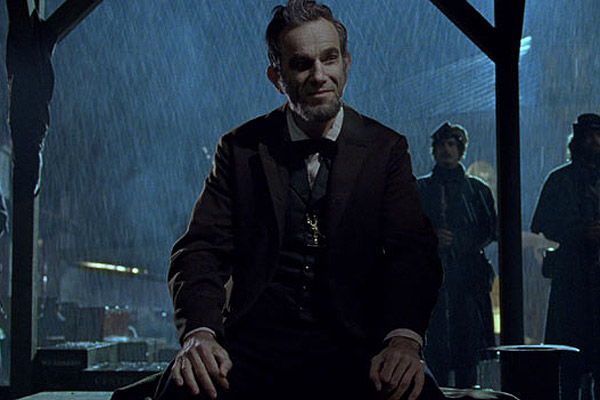
One day in a discussion with my parents I referred to an event from the 1940’s as happening during the “black and white days” because most photos, films, and newsreel footage of that time are in black and white. I am still surprised when I see color films of World War 2 and the effect it has on my connection to that terrible event. The term “living color” is truly appropriate because seeing the persons and events of this the greatest conflict in history in color makes them seem more alive and real. I had the same feeling watching the highly anticipated Steven Spielberg film “Lincoln,” except it was not just the clear color picture that made the martyred 16th president seem more alive, it was hearing his voice, that scholars believe matched the high-pitched tenor offered by Daniel Day-Lewis, and encountering a personality, that included humor, passion, determination, compassion, and tenderness.

Seeing Abraham Lincoln, the man whose existence in my mind was limited to the static pages of history and grainy black and white photos, come to life as someone who loved to tell stories, laughed, and listen to common people and apply what they said was powerfully moving. Though the film was at times tedious and took effort to follow, it was a profound experience as my relationship with the greatest president evolved in a matter of two hours from the skeletal knowledge afforded through “history,” to a fuller understanding and even greater respect gained through experiencing “his story.”

Based in part on “Team of Rivals,” the best-selling book by Presidential historian Doris Kearns Goodwin, “Lincoln” is the account of the President’s fight to get the 13th amendment outlawing slavery in the United States passed before the end of the war. The President felt a sense of urgency because he believed it was less likely the amendment would be approved after the war was over, and was afraid the Emancipation Proclamation might be overturned once his Presidential war powers were suspended following the war. Resisting tremendous pressure from inside and outside his cabinet and family, Lincoln decided to push for the amendment’s passage even if it required a delay in the war’s end.

Left unstated, but felt throughout the film was the reality that had President Lincoln not put forth and fought tooth and nail for this amendment, and had not the House joined the Senate in approving it, then the entire national nightmare and tragedy that was the Civil War would have been for naught. One could feel upon Lincoln the weight and burden of the deaths that would accompany a delay in pursuing peace and the surrender of the South, yet allowing the cruel institution of slavery to remain in any portion of the nation was an even heavier burden. Under the most challenging of circumstances Lincoln was walking the narrowest of lines between what was best for the nation at that time, and what was best for the nation from that time on.

Daniel Day-Lewis offers a performance for the ages, revealing an emotional arc that ranges from a whispering, tender father playing with his son to a determined leader passionately commanding wavering cabinet members to show courage in the quest of righteousness.  Steven Spielberg’s pitch perfect direction effectively captures the tired, rough edged living that one imagines was the nation at the conclusion of the deadliest war in the nation’s history. Each member of the steller cast effectively portray characters who were worn, tired, and wearily unkempt from years of strain, stress, and sacrifice. The spirit of the President and the Lincoln family, his cabinet, Congress, and all in Washington was frayed, even as the war’s end and victory was inevitable and in sight.

“With malice toward none, with charity for all, with firmness in the right as God gives us to see the right, let us strive on to finish the work we are in, to bind up the nation’s wounds..”                                                       Abraham Lincoln Second Inaugural Address. 1865

In our post film discussion, my wife Michelle and I had identical reactions from the film in light of current events. Both of us felt sad and ashamed for all of the talk about secession that has been in the news since the national election. After watching the film and experiencing vicariously the slightest degree of the suffering experienced by those who fought, were injured, and died during the Civil War, these petitions are an insult to the memory of those men and women and their families.

Most of those who participated in, supported, or even entertained the idea of their state seceding, did so in reaction to what they consider is a tremendous threat to the nation, yet their remedy would break the nation apart. The irony is that many who profess patriotism and love of nation most fervently were those who participated in, or were sympathetic to, this political expression that was directly contrary to the fabric of the same nation. Regardless of political belief, victory or defeat, as an American one is called to accept and work within the political process. To do otherwise is by definition, “un-American.

“Men are not flattered by being shown that there has been a difference ofpurpose between the Almighty and them. To deny it, however, in this case, is to deny that there is a God governing the world. It is a truth which I thought needed to be told; and as whatever of humilation there is in it, falls most directly on myself, I thought others might afford for me to tell it.”Abraham Lincoln,   Letter to Thurlow Weed on March 15, 1865

Politics is not the only setting where such dichotomy exists. Such dissonance between expressed thought and action echoes those who profess belief in, and love for, Christ and who desire clerical leadership to preach “The word” yet balk at the preaching and living out parts of such Word that challenges all followers to change the way they think and act.

Common to all who profess the Christian faith and have a relationship with God is the acknowledgement of one’s fallen nature, need for change, and repentance. Jesus’s Sermon on the Mount, for example, demands followers of Jesus to love enemies, without qualification. Many however, who want “the word” preached instead follow the worldly practice of seeking vengence or harboring resentment and then offer criticism of those who call them to hold to the teaching of Jesus.  A similar example is one who  judges one who proclaims Jesus’s call not to judge? Such inconsistancies indicate the difficulty of repenance from the ways and practices of the world and to the desire of God and ways of God’s Kingdom.

I have known clergy who have received intense criticism and been removed from churches for challenging congregations to follow these and other commands and teachings of Jesus. Certainly members of churches in the United Methodist and other traditions do not have to agree with every statement and thought offered by preachers. Clergy make mistakes. Clergy preach bad sermons. Not all have clear or correct theological understanding. Preachers need to hear when sermons and statements have parts that are confusing or contain errors in Biblical interpretation and theology. They should not however be uncritically judged or blanketly labeled when they proclaim the most challenging portions of the Gospel and are genuinely seeking to live up to both their baptismal and ordination vows to make disciples and proclaim scripture.

As with the shepherd who could account for 99 out of 100 sheep, all Christians have work to do in living out and proclaiming in word and deed the challenging message and calling of Christ. It is the job of ministers, lay and ordained to lift up this reality before followers of Christ.

I do not consider myself a prophetic preacher, yet I have tried in conjunction with my baptism and ordination to proclaim prophetic portions of Scripture and the entirely prophetic life and teaching of Christ. I am not under the illusion that I do so with anything but modest ability, but I have tried, and I have received criticism for delivering this word. While I am not surprised with receiving such critique / hostility, as almost all preachers of the Gospel have received similar antipathy when presenting the Gospel call to change thoughts and actions, it is disheartening, even in the relatively minute amount I have experienced.

I cannot imagine the toll the infinitely greater criticism and indeed abuse Abraham Lincoln received when he sought to live out and up to the oath he took to serve the nation and constitution and prophetically lead this nation through the darkest of times. Through the film “Lincoln” my estimation has increased from black and white vagary, to “in living color” awe.

Posted in Faith Shots, Film Shots | Tagged , , , , , , , , , , , , , , , , , , | 2 Comments

This approach and the success of Silver reminds me of 1982 when I worked in the Bill Clements campaign and saw a young wonder-analytic-kind Karl Rove WOW everyone.

Tim's avatarInsideTimsHead

As the election drew near, many political and stats junkies (like me) became fans of Nate Silver, aka @fivethirtyeight, the shrewd political number-cruncher and blogger for the New York Times. His way of aggregating the most reliable presidential polls into megapolls, and factoring in those polls’ historical accuracies, was considered by some to be as revolutionary as the introduction of “Moneyball” — or use of undervalued stats — on baseball.

Like anyone who develops a following, Silver soon drew his shares of detractors. Newsmen, pundits and politicians alike scoffed at his methodology, and Silver tended to respond quite intelligently with an unrivaled grasp of statistics. Even as the news networks hyped the election as anyone’s game last week, Silver said his estimations “represent powerful evidence against the idea that the race is a ‘tossup.’ A tossup race isn’t likely to produce 19 leads for one candidate and one for…

View original post 847 more words

Posted in Scattershooting | Leave a comment

Bond, Baptism, and Beginning Again

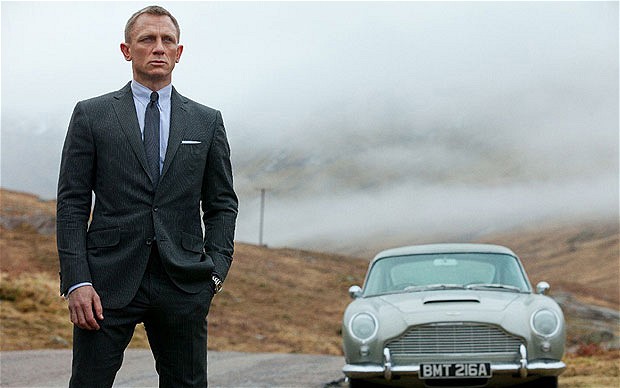
After seeing the newest James Bond film, “Skyfall,” I thought about the nature of rebooting.  Celebrating 50 years of Bond, the newest edition continues the reboot of the series that began two films ago with the casting of Daniel Craig as Bond. Resetting a film franchise allows the producers to make changes in a film series and remain relevant. For Bond this was a long time coming as the world has changed so much since 1962 when the Bond franchise began. What spoke to audiences then and what connects with viewers now is as different as night and day.

Prior to this reboot, changes in the character of James Bond and Bond films occurred primarily when the actors who portrayed 007 changed. Each one varied the way he portrayed the superspy but these were more nuance than change. The series still operated with the same biography, assumptions, and expectations. Each Bond film had to have more outlandish gadgets, exotic locations, and cool quips. At times during the years, Bond films strained with the pressures to outdo these elements in previous films resulting in less than impressive gadgets and forced or lame witticism.

While the series continued to be financially successful throughout the 45 years prior to the reboot, it had become tiresome and to varying degrees, disappointing. With this re-launch, the producers, writers and directors have had the freedom to choose which components of the series to keep and which to jettison. With the restart, James Bond is more brooding and mysterious; his background and life before he became a “00” is part of the shadow narrative that drives the nature of the character as well as the energy and feel of the film.

While there are still gadgets, exciting locales, beautiful women, and superb action sequences, they play a less prominent role, and are not the driving elements in the films. Bond himself is. In “Skyfall” there is an effective and satisfying acknowledgement of the Bond heritage, and a refreshing break from the constraints of the Bond past.

Reboots are also important in the world outside the theater. Like films, people and institutions such as the Church have history that is a part of their framework and should be honored as well as past methodology that have become constraining and out of touch with their calling and should be excised. In the Christian understanding, God’s grace and forgiveness is such a rebooting.

Through baptism, individuals are brought into the Body of Christ, claimed and marked by God, and begin a new lives. Throughout a faithful life God offers grace that, in the words of Charles Wesley, “breaks the power of cancelled sin,” sin that stains the image and likeness of God that is indwelled into all people. Sin has power because it separates one from God. This separation manifests through persons rejecting the relationship that requires them to deny those desires whose genesis are of the world and whose focus is on themselves, rather than give of themselves to God, and live by the desires of God and ways of God’s Kingdom.

Though we do not deserve such grace, God is forevermore willing to bestow such to us, forgive us and reboot our lives than we are to ask for and accept such change and peace. Yet when one does accept the forgiveness of God the burden, guilt, and shame of sin, that which weighs and wears all people down, is cut loose and true freedom is experience

The need to reboot also occurs in churches. As with films, congregations, and the Church universal, are in communities and a world that is continually changing.  Congregations that are 20, 30 or 50+ years old are located in communities that have evolved during that time.  Demographic features of neighborhoods change as families grow older or younger, wealthier or poorer, and cultural identities and practices transition. In response, the needs of those in the community change.

Congregations need to be aware of the fluidity of their neighborhoods, as well as their own membership, and change, sometimes even reboot, to meet those needs and fulfill the mission to re-present Christ as they minister to those around them.  While God is constant and everlasting, the children of God and their communities are forever changing, necessitating modifications in the way ministry is offered, the Word understood, and the grace and love of God experienced.

Posted in Faith Shots, Film Shots, Scattershooting | Tagged , , , , , , , , , , , , , , , , , , , , , | Leave a comment

A powerful, well written letter about the importance of forgivness.

justinegraykin's avatarJustine Graykin

It’s been a rough couple of months. Losing the first cat wasn’t so bad (I wrote a nice article for the newspaper about that). The second cat was a lot harder (see the previous post). But that was nothing.  Nothing.

My brother-in-law called yesterday morning and told me my sister had died. I didn’t even know she was ill. Everyone else did. All her friends, the entire family, her church. Not me. Because she had expressly told them she didn’t want me to be told. They had their chance to visit her in the hospice where she lay dying of cancer. Not me. They begged her to let them tell me. She refused. Why?

Because I am an atheist.

It was her final gesture to me, her final retribution for my lack of belief in her god.

We had been estranged for a long time because I did not…

View original post 704 more words

Posted in Faith Shots | Tagged , | 1 Comment

Rebirth

A touching post of determination, grace, love, survival, and rebirth from a cancer fighter whose new life comes through a bone marrow transplant. I invite you to read and remember on nn/16th.

Rebirth.

Posted in Scattershooting | Tagged , , , , , | 2 Comments

Virtual Choir, Communion and Saints

I was driving home from church today, Sunday November 4, when I heard an interview on NPR that struck me.  It was one of those “in the moment” experiences, or as I said in my sermon earlier today, a moment when several thoughts and experiences came together and brought forth something new. In the stock trading vernacular, this day would be labled as a triple witching day. In the language of the Church it would be described in more Trinitarian terms.  The worship today was one river that was made from three tributaries.  It was All Saints Sunday, the day when we remembered and honored those persons in our lives that had contributed to our establishing or growing in our faith individually and those who had been a part of the founding and growing of the congregation.  It was also the first Sunday of the month when the congregation traditionally celebrates the sacrament of Communion, the Eucharist, or Lord’s Supper. Lastly it was commitment Sunday, the day when members made their financial commitments to God through the church for 2013. It was, as I mentioned in the sermon, a busy day.

The stewardship committee, and I, were initially hesitant to set commitment Sunday on All-Saints Sunday and a Communion Sunday as a third emphasis might take away from the meaning of all three.  But, again, as I mentioned in the sermon, it was the perfect day to touch upon all three themes because they came together as a tapestry of meaning and experience of the Kingdom of God and the Communion of the Saints.  The combination of the three enabled and enhanced understanding of each.  As we remembered the Saints in our lives and church, we were encouraged to continue the support of the congregation many of them had worked together, with God, in growing.  As we considered our commitment to God we were reminded of God’s total and ultimate commitment offered for us through Christ as was recalled in the Sacrament of Communion.  We were also reminded of the Communion of the Saints through All Saints day and by the sacrament of Communion, where we believe that we are joined in the celebration of the sacrament by the great cloud of witnesses that is the Communion of God’s Saints.

I continued to contemplate the reality and meaning of these foci for the day, individually and intertwined, as I drove home.  I was listening to NPR when I heard a story about an American composer and conductor, Eric Whitacre and his “Virtual Choir” projects.  I had heard the interview before, and while very impressed it did not hit me then with the meaning and connection it did as I drove home following this meaning-filled day.   The Virtual Choir is a project that came to Mr. Whitacre through the internet when he received a video from a young girl singing one of his compositions.  It occurred to Eric that the internet could be a tool to bring voices from all over the world together into one choir.  Short story, Eric composed a piece intended to be sung by individuals at home, recorded by webcams, and uploaded to him.  The choir members would watch a video of Eric conducting the piece as they sung and recorded their part. These uploads would then be scrubbed to improve the quality as much as possible, synced up, and a choir would be born.

The result is, I believe astounding.  The first Choir had 185 singers from 12 countries.  The second, over 2000 from 58 countries, and the third consisted of 2945 members from 73 nations. As I listened to this beautiful music while driving home, I was struck how this, in my mind, is how I picture the Communion of the Saints; individuals from all over, joining voices in one song. In contrast to virual reality, this was a virtual, yet real, choir. I think it was this virtual yet real aspect where I connected on a deeper level.  I had discussed that day in the course of the sermon and celebration of Communion the theological understanding that as we were partaking of the Eucharist we were joined in the meal by the Great Communion of the Saints.  While I would not describe the Communion of the Saints as virtual, they were, and are, present during the sacrament in a real, though mysterious way. As Christians we are called to develop our theological understanding as much as we can yet be comfortable with living with and within the mysterious realities of God. The Sacrament of Communion, and contemplation of the Communion of the Saints allow us to practice this development of our faith.

If you haven’t heard the Virtual Choir, I invite you to listen through the link below.

Posted in Faith Shots | Tagged , , , , , , , , | Leave a comment