Kenny and Mike discuss the film and faith elements spotted in David Lowery’s A Ghost Story, which stars Casey Affleck and Rooney Mara.
Both Mike and Kenny enjoyed A Ghost Story and found it to be an organic film that did not resort to artificial devices or technology to capture interest and inspire reflection after viewing. The film is highly recommended for those who enjoy, and savor films that work to generate interest through strong story and character development. Listen to the A Ghost Story episode here or on Apple Podcasts and Spotify.
Fear to move forward: Excessive nostalgia, clinging to objects, places, and times in life is rooted in the fear of losing the familiar rather than having faith in the future. The Ghost’s halting before a portal to an afterlife is emblematic of the Israelites halting in taking over the land God promised. God forced the Israelites to wander in the wilderness because of their lack of faith in God’s faithfulness to protect and provide for the nation. The result of the Ghost halting and seeking to cling to his present life was to remain in the present observing rather than living life. (Numbers 32)
Casey Affleck, Rooney Mara
Seeing and Experiencing God Through a Veil: In our lives we experience God, our relationship with God and living in the Kingdom of God through a veil or dimmed mirror. Through the resurrection we are able then to see and experience God and God’s Kingdom without the distortion of our worldly brokenness. By hesitating to move forward to his afterlife, the Ghost was left to witness life through the veil of his death sheet rather than living and experiencing God and life in God’s Kingdom directly and fully. (I Corinthians 13:12, II Corinthians 3:13-16)
The Timeless Nature of God: Though remaining in his current life, the Ghost moves forward and backward through time, through the history of the home’s location. God as Alpha and Omega, beginning and end, God is timeless. Time, as known in worldly ways do not limit God as it does creation. (Genesis 1:1-5, John 1:1-3, Hebrews 13:8, Revelation 1:8, 21:6, 22:13)
Enola Holmes is the 16 year old sister of the famous London detective Sherlock Holmes and their older brother Mycroft. Following the death of her father soon after she was born, and her brothers moving out when she was a young girl, Enola’s world was her mother Eudoria and her home. Eudoria developed Enola’s mind through traditional academic studies with special emphasis on developing deductive thinking. Eudoria also developed Enola’s physical health through rigorous activities including Jujitsu.
When Eudoria is disappears on Enola’s 16 birthday, her brothers return home where Sherlock is to find Eurdoria and Mycroft takes charge of raising Enola. Being her brother Sherlock’s sister, Enola takes it upon herself to find her mother, led by clues left behind for her by Eudoria.
Faith Elements Spotted:
Millie Bobby Brown, Helena Bonham Carter
John 14- Jesus does not leave His disciples orphaned. He prepared his disciples to continue His ministry without Him with the guidance of the Holy Spirit.
Jesus offers his followers peace, His peace, which is different from the way the world sees and understands peace. The Peace Christ offers is God’s faithfulness to God’s promises of grace, love and life.
John 10:The Good Shepherd, Jesus described himself as the good Shepherd who was willing and did lay down his life for the sake of the flock under his care. He was able to do that partly because of His peace that came from his love for and faithfulness in God’s promise of life eternal in God’s Kingdom. Disciples are to have that same peace and willingness to be good shepherds who risk, and at times suffer for the sake of those in their care.
Matthew 18, Luke 15 the Parable of the Lost Sheep. As good shepherds, disciples are called to go out, even into the dark wilderness searching for the lost one, rather than remain with the 99 who are safe.
Philippians 2:12 Disciples must take responsibilities for their own faith, or as Paul taught the members of the church he founded in Philippi, to work out their own salvation. John Wesley, the founder of Methodism emphasized this teaching for followers of the Methodist movement. Although parents, friends, and others can play a significant role in introducing and developing one’s faith, each person must take responsibility for their own faith and relationship with Christ.
Mike and Kenny discuss the experience of going back to the theater for the first time in 8 months to watch the Christopher Nolan film Tenet as well as the corporate worship.
While viewing films, and church services via streaming or television offers ways to view films, shows, as well as to worship, they lack the benefits of a truly communal experience. Whether hearing the reactions of others in the theater or having conversations before or after the show, or experiencing the love, communion and connection of fellowship with other disciples, participation within community allows a fullness of the experience that cannot be replicated alone.
Cannes Lumiere Theater 2018 Cross Roads Faith and Film
The Christian Church is referred to as the Body of Christ and as a body, is designed to be connected working in concert with other parts of the body.
This reality is also a reason for faith communities to always be looking for ways to minister those who are unable to participate in the events of a faith community.
First United Methodist Church, Richardson TX 2016 Cross Roads Faith and Film
While Tenet is a very complex film that may require a second viewing to more fully understand the complexity, it is also a film that is worthy of a second viewing. In addition to the complex plot, it is a stunning visual and auditory experience that will suffer greatly if seen even in the best home theater.
Faith elements includeSpotted:
God as Alpha and Omega,. While it pushes human imagination, God the Father, the Word, and the Holy Spirit pre-exist time and creation. There never was nor will be a time without God. (Revelation 21:1-7)
Apocalyptic Scripture and the whole Truth amidst less than full understanding: Given the complex plot and stunning, mind bending visuals, viewing Tenet can be similar to reading apocalyptic Scriptures. In his introduction to his commentary on the Book of Revelation for the New Interpreters Bible, Christopher Rowland offers guidance in approaching Apocalyptic Biblical texts:
To decode Revelation as if it were Morse code- a language whose only function is to conceal and is a means to an end, namely, the communication of something that has to be kept secret- fails to take seriously the apocalyptic medium. John, as the recipient of a revelation from Jesus Christ, has bequeathed to us an apocalypse , a prophesy, not a narrative or an epistle, a text requiring of its readers different interpretive shills- imagination and emotion for example.1
The symbolism of the visions and codes taken from the experiences of the books’ writers and their communities, The Books of Revelation, Daniel, and to a lesser extent, portions of the synoptic Gospels, Matthew 24-25, Mark 13, Luke 21, can be difficult for modern readers to understand and follow. The codes, imagery, and mysteries can be for readers a distraction and block the greater Truth, teaching, and experience gained from reading the passages. While study of the history and cultural context can provide greater understanding regarding the meaning of the images and symbols, embracing the mystery of these and others aspects of Scripture and God is a part of deepening one’s faith.
If one gets stuck trying to understand every component of the film Tenet as it is presented, one is likely to get lost very quickly. However if one excepts the mystery of some of the film’s plot etc. one will be in a better position to follow the and have a better experience of the film.
John David Washington
The non-linear, mysterious, and expansive nature of God: Similar to above, the reality of God is infinitely beyond human imagination and capacity to understand. Part of one’s faith is a willingness to accept and embrace the mystery that is God. The human tendency to limit God to the boundaries of human experience and laws of creation, is an act of disobedience and fear rather than faith. (Adam and Eve in Genesis disobeying God in an effort to fully understand if not be like God, (Genesis 3:1-14)(Job 15:1-9)(Ephesians 3) (I Corinthians 1:18-25)
Greed vs. Love: The greed fueled desire to own and control others is the antithesis of faith, righteousness and love for God. Such is in contrast to the desire and willingness to sacrifice oneself for the welfare of another. (II Samuel 11 David covets and kills) (Psalm 10 The ways of the wicked)(John 15:12-14 No greater love)
Christopher Nolan
The New Interpreter’s Bible Volume XII, p. 506, Abingdon Press, Nashville 1998
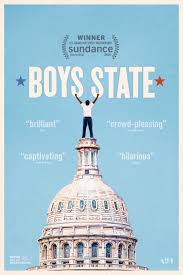
Kenny and Mike discuss the film and faith elements spotted in the documentary film Boys State. Directed by Amanda McBaine and Jesse Moss, Boys State documents the 2018 Texas Boys State gathering. Boys State is a national program dedicated to building in high school age teens greater understanding and participation in civics as well as developing leadership skills in community and state governance.
Dating back to the 1930s, Boys State and Girls State is sponsored by the American Legion with AL Auxiliaries in each state sponsoring and supporting boys and girls who attend their respective programs. Each state organizes and conducts their Boys and Girls State gatherings.
In planning the film, directors McBaine and Moss identified 4 of the 1150 that would be the primary subjects of the film. The film details as the boys go about the work of running for leadership positions in the political party they were randomly assigned. The for primary cast members are Ben Feinstein, Steven Garza, Robert MacDougall, and Rene Otero.
While the primary focus of Boys and Girls state is to elect statewide office holders, the program in Texas also elects members to the Boys/Girls State state legislature where legislation is presented and voted on. Each party also develops a platform which is a part of the election process.
Kenny’s reaction to a pre-screening event for the film:
Rene Otero
Watching Boys State is a Dickensian experience as we see the best of our society and the worst of our politic. The best is watching 1100+ teenage boys spend a week taking serious the complex job of governance and reflecting on issues that impact society. The worst is the witnessing the imitation of the most inferior practices of Adult State. The hope is the rising generation will retain the former, refine the latter and lead the nation in a resumption of its foundational march toward a more perfect union.
Faith elements spotted and discussed include the appropriate and inappropriate ways persons of faith are called to deal with differences and disagreements. Such ways of keeping community in the midst of differences are an act of love Christ calls all persons to offer all others.
I Corinthians 13 is lifted up as an example and expectations for how individuals and communities are to behave. As with most of Paul’s letters to churches he founded, he offers corrections to some of their actions and drifting from the expectations Jesus and he has that they reflect the Kingdom of God in their beliefs, actions, and treatment/love for one another.
Other elements from I Corinthians include chapter 3, tribal divisions in the church (followers of Paul and Apollos.) Chapter 10:23-33 Do all for the Glory of God vs personal glory, satisfaction, and elevation. Just because something is lawful does not make it beneficial. Persons of faith are to aim for a higher standard.
Other example from Scripture for how communities and and persons of faith are to live and treat others include;
Romans 12: the Marks of a New Creation, blessing those who persecute and not repaying evil for evil.
Ben Feinstein
II Corinthians 5: Ministry of reconciliation and serving as ambassadors of Christ.
II Corinthians 6:1-8 Do not accept the Grace of God in vain, by living contrary to the Way of Christ. Now is the acceptable time and day of salvation to serve Christ fully and not put up obstacles to others.
Ephesians 4:Unity in the Body of Christ. v25speak truth to neighbors and fellow members of the Body, speak truth to one another, settle differences and anger.
Philippians: Chapter 2,4: Imitating the humility of Christ, and putting aside differences and be of the same mind in Christ and focus on what is true and good in Christ.
Another topic is maintaining an awareness that as younger members of society and communities watch, listen, and replicate the behavior of adult leaders, so persons of faith are observed by persons within and beyond the faith and seen as representative of their faith community but also of God and Christ. II Corinthians 5 above. To misrepresent God, the Gospel or the person of Christ is to put a stumbling block before others. (Matthew 18:6-7, Mark 9:42, Romans 14:13-23)
Lastly as one the subjects indicated after he saw the film, that he regretted some of his actions. While we do not have the luxury of seeing a film of our actions, or others seeing it, we know that God sees everything we do, and when we act in ways unbecoming a disciple we hurt the one we say we love and worship.
Kenny Dickson and Mike Hatch discuss the cinematic and faith elements reflected in the Fred Rogers Documentary Film Won’t You Be My Neighbor, available for streaming rental or purchase on YouTube, Amazon Prime and other streaming services.
Although not categorized as a “faith film,” Won’t You Be My Neighbor communicates elements of faith and what it is to employ faith by serving God as a disciple of Jesus. In showing the how Fred Rogers cared for and taught children, families, and other adults, the film allows viewers to witness truly effective proclamation of the Gospel and reflection of the person and teaching of Jesus.
Faith Elements Spotted:
Incarnation, God With Us: Fred’s willingness and courage to be present with people, through television, in the midst of challenging, difficult times as well as good or ordinary seasons. Reflects God’s desire to be with us as one of us. John1:1,14-18 (The Word Dwelt Among Us,) John 3:31-36 (The One Who Comes From Heaven,) John 8:12-20, (Jesus the Light of the World,) John 11:28-35 (Jesus Weeps,) Matthew 18:19-20
Jesus Honors and Welcomes Children: Fred respected children enough to include them and talk to them as people even in the midst of unpleasant or tragic situations. Matthew 18:1-5, Matthew 19:13-15, Mark 10:13-15, Luke 18:15-17
Holy Space and Moments, Worship: Fred’s “Holy Ground was the space between the TV and the children watching his program. Wherever two or three are gathered. Jesus’s ministry was itinerate and primarily conducted in towns, countryside, Samaria, and the homes of sinners. It was not restricted to Jerusalem or the Temple.
Allowing faith to determine moral beliefs rather than moral beliefs and opinions determine elements of our faith. Fred uses his faith, Scripture and other education and experiences to determine his moral beliefs and the subjects he addressed. Mark 1:40-45 (Jesus ministers outside towns and cities) Matthew 4:23-5:2 (Sermon on the Mount) , John 4:1-42, (Jesus with the woman from Samaria.)
In all things and times, God works for Good. Fred’s health challenges as a child allowed him to experience the importance and need for imagination and stories. Romans 8:26-28
Calling: Having the faith to follow even when one does not know where or is unfamiliar with the ministry God is calling one to. Fred was not familiar with television when he sought to make it the setting of his ministry. Call of Abram) Genesis 12, (Jesus Calls Disciples) Matthew4:18-22, Mark 1:16-20, (Levi) Mark 2:13-17, Luke 5:27-29, (First Disciples, Philip and Nathanael) John 1:35-51 (Would Be Followers) Matthew 8:18-22, Luke 9:57-62 (Rich Young Man) Mark 10:17-31
Photo: Fred Rogers
Photographer: Robert Ragsdale.
Living in and by the Ways of the Kingdom of God vs ways and values of the world. Following the example of Christ, whenever Fred saw injustice or other societal needs or failures, he had the courage to address them, even or especially when they were difficult. This opened him to receiving criticism and attacks. All children of God, are special and unique because they are created and loved by God. (Sermon on the Mount) Matthew 5-7 (Servant Leadership in Kingdom) Mark 10:41-45.
Please consider subscribing to Faithspotting, sharing, and leaving a comment.
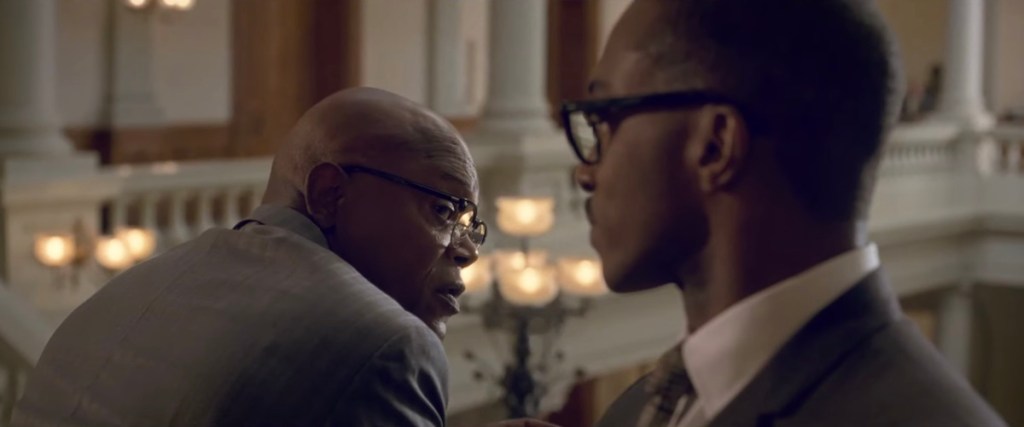
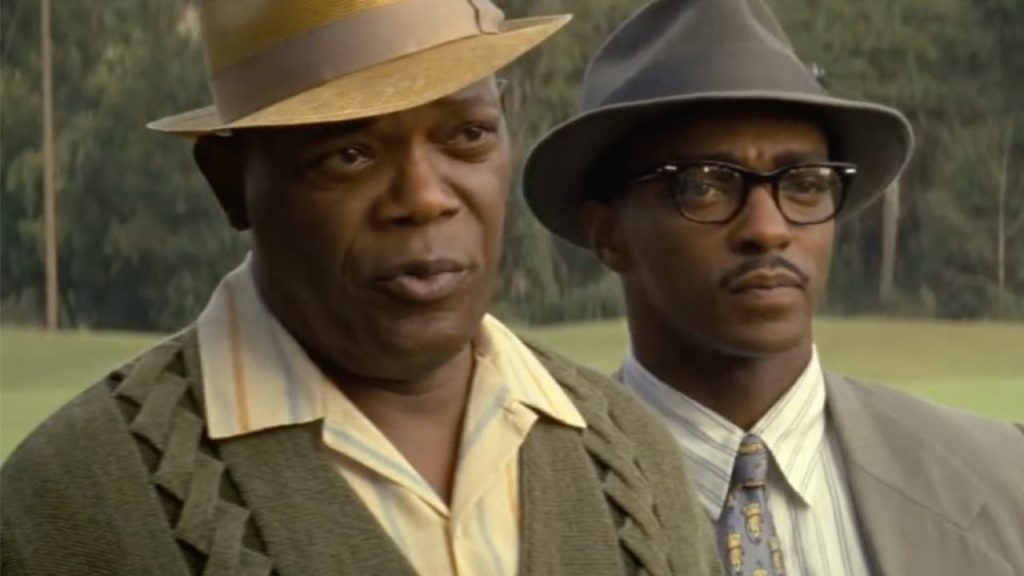
The Banker tells the story of two of America’s most successful Black business men in the 1950’s and 60’s who sought to use their talents and financial success to offer blacks the opportunities to start building generational wealth, something discriminatory laws and customs had prevented in many areas of the country.
Apple TV+
This film offers context to the current conversations and conflicts over race in the United States and other nations. The story of Bernard Garrett and Joe Morris and what they worked to achieve offers a specific example of systemic racism that continues to impact persons and communities of color. The inability, or for some, limited ability to build generational wealth has been perhaps the greatest hurdle for persons of color to acquire the skills and opportunities typically necessary to achieve success similar to much of the white community.
Faith elements spotted include the following:
After having escaped the limitations imposed on him by Jim Crow laws and customs, Bernard becomes of of the most successful businessmen in the country. After a trip back to his hometown, Willis Texas, Bernard experiences the call to return and help the Black Community there by purchasing the town’s bank and begin offering credit to African Americans. He knows this is a risky proposition and that he will face extraordinary challenges and risks in doing so. Here he Bernard serves as a Moses figure, who, twice put the welfare of Hebrews above his interests, the first in defending Hebrews from abuse within Egypt and the second in returning to Egypt to lead the Israelites out of Egyptian slavery. In so doing Moses put himself and his wealth at risk. Throughout he Bible, ministry and the call to serve God in serving others involves risk and sacrifice. Exodus 3
Jesus’s parable of the talents calls disciples to use all the gifts and abilities given to them rather than bury them under fear and expectations of others. Both Bernard and George used the intellectual gifts God had given them. In particular the expectation placed upon Bernard was that he should not utilize his intellect to the fullest and be content to bury it by accepting the limitations Jim Crow society placed on him. Matthew 25:14-30 Luke 16:6
God’s call is greater than the social and other worldly obstacles one will encounter following God’s calling and desire. Discipleship calls one to live by God’s perfect vision rather than one’s limited sight. David and Goliath narrative 1 Samuel 17,
In order to be able to serve God and live by faith and God’s vision persons of faith must do their spiritual homework by practicing spiritual disciplines such as Bible study, prayer, worship, and theological reflection. Worship: Psalm 100, Prayer: Jesus prays at Gethsemane prior to his arrest, Matthew 26, Mark 14, Paul teaches Christians in Rome to offer themselves as a living sacrifice which is spiritual worship. Romans 12:1-2, Paul urges Philippians to continue to follow what he had taught. Philippians 4:8-9
In Christ, Christians have received spiritual freedom from slavery to the limitations of the flesh. Followers of Jesus are called to use such freedom in serving and loving God by offering love through service to others. Galatians 5
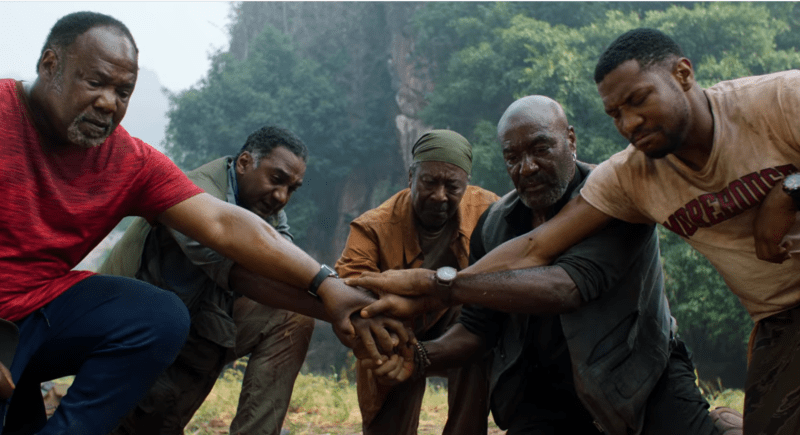
Hosts Kenny Dickson and Mike Hatch discuss the film and faith spotted in Spike Lee’s Da 5 Bloods, a film vast in imagery, characters, and story and flush with social and theological reflection.
Spoiler Alert for those planning to watch the film. Those not planning to view it should be able to follow the conversation especially the discussion of the faith issues presented. Da 5 Bloods is available on Netflix and is rated R for language and violence.
Da 5 Bloods has a solid cast led by Delroy Lindo d who offers an Oscar worthy portrayal as Paul the leading of the 4 surviving members of the squad, “Da 5 Bloods” who return to Vietnam to find and repatriate the body of their original squad leader, “Stormin Norman” (Chadwick Bosman-RIP) as well as finish a plan hatched during a fateful mission.
Treasure What and where are one’s treasures as these determine where one’s heart is and what one’s life is dedicated to. Are treasures Godly and located in God’s Kingdom, where they cannot be lost nor lead to destruction? Or, are such treasures worldly and thereby vulnerable to destruction and being a path to destruction. Luke 12:13-21 (Parable of Rich Fool), Matthew 6:19-20, Colossians 2:1-5,
Forgiveness The transformative power of forgiveness whether offered to others, oneself, or received from others, which leads to peace within or between those injured. Such peace is in contrast to the destructive power of to oneself and others of burying or holding on to anger and guilt. Peace leads to reconciliation while destruction perpetuates brokenness of spirit, mind, body, and community. The reunion scene between Paul and Stormin Norman depicts the peace found through redemption. Genesis 50 15-21 (Joseph forgives his brothers), Matthew 12:18-35 (how often to offer forgiveness) 2 Corinthians 2:1-11,
Control of Reactions and Faith The ultimate and often final element of control one has is one’s reaction to the thoughts, words, and actions of others. Maintaining one’s faith in God’s goodness and the opportunity to be Easter People in the midst of suffering, whether brought on by the brokenness of the world and or the direct actions of others allows hope which leads to assurance and true peace. Not surrendering to human emotions and desire to live by worldly values and ways is redemptive to self, community, and adversaries. Numbers 6:22-26 (Priestly Benediction, John 16:16-33 (Sorrow Turning into Joy), John 14:27-31 (Jesus gives His peace)
“What’s Going On?” The seminal song by Marvin Gaye, written in response to the unimaginable hate and suffering inflicted by the Viet Nam war and the accompanying societal division and disorder. The song is more pointed when heard in the context of Jesus asking the question to the church / persons of faith when they fail to live up to His life example or teaching. Matthew 12, Mark 11, Luke 19, John 2 (Jesus Cleans Temple) Luke 19:41-44 (Jesus Weeps for Jerusalem) John 11:28-37 (Jesus weeps for other’s mourning)Matthew 16:21-27 (Jesus rebukes Peter)Matthew 17:14-21 (Matthew rebukes Disciples for lack of faith), People of God Deny God’s Faithfulness: Exodus 32 (Golden Calf) Numbers 14 (Lack of Faith and Rebellion of God’s People)
Faith in Film Discussion of the two audiences of faith films and secular films that reflect and present elements of faith: 1. the church and 2. persons of faith and persons beyond the church or those questioning the faith in God. Faith films and films that reflect and lift up faith and theology are not synonymous with family or family friendly films. Discussion of how the Gospel can be communicated in powerful ways that are not considered family friendly. 2 Samuel 11-12 David’s adultery and murder, God sends Nathan to confront David.
Hosts Kenny Dickson and Mike Hatch look at the Apple TV+ film Greyhound and discuss the faith elements spotted in the World War II, Tom Hanks screenplay. Based on the novel, “The Good Shepherd” by C. S. Forester, Tom Hanks stars as Navy Cmdr. Ernest Krause, Captain of the U.S.S. Destroyer Keeling, codenamed Greyhound. Krause also has charge over two other Destroyers providing protection for 37 cargo and troop transport ships crossing the Atlantic during World War II. The Battle of the Atlantic was the longest continually contested battle in the second Word War.
Captain Krause (TOM HANKS) peers out the broken pilot house window in TriStar Pictures’ GREYHOUND. Apple TV+
The faith elements spotted and discussed by Kenny and Mike include:
Confidence in one’s faith, God’s call, and grace to serve in ministry for Christ. Romans 15:8-11, 2 Corinthians 3: 1-6, Ephesians 4:4-7
Understanding “the evil foe” includes not only external forces, but the internal temptation to live according to the ways of the world rather than the righteous way and calling of God. Jesus tempted in the wilderness: Matthew 4:1-11, Mark 1:12, Luke 4:1-13, Jesus in the Garden of Gethsemane 26:36-46, Mark 14:32-42, Luke 22:39-46. Paul’s peace amidst storms at sea. Acts 27.
The contrast between Peter’s denial and sermon on Pentecost. Mark 14:43-50, Luke 22:54-62, John 18:15-18,25-27, Acts 2:14-36
Serving Christ as Jesus served as the Good Shepherd, even willing to laydown one’s life. John 10:11-18 Such is the Way of Easter People.
Jesus is the same yesterday, today, and forever and as such is the place of stability and certainty in the midst of uncertain times and circumstances.. (Hebrews 13:8)
Symbolism of water as chaos, Jesus sending the Legion into the swine, (Luke 8, Mark 5,) Genesis 1Creation account.
Going where one does not want to go. Jonah.
For more information and discussion tools, please email kenny@crossroadsfaithandfilm.com
Walt Disney Company Daveed Diggs / Lin-Manuel Miranda
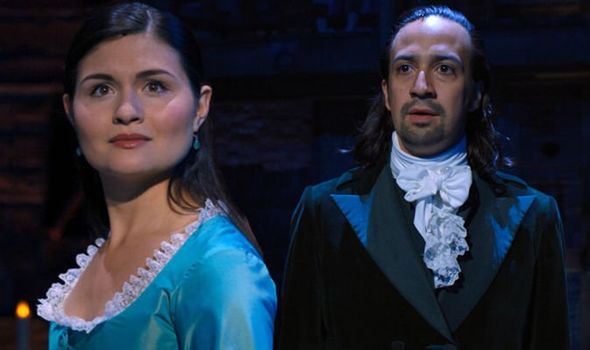
In this first episode premiering August 14th 2020, hosts Kenny Dickson and Mike Hatch discuss the film and faith elements in the Disney+ film and cultural phenomenon Hamilton. The film was recorded over several performances at the Richard Rogers Theatre on Broadway, and includes the original Broadway Cast featuring Lin-Manuel Miranda (Alexander Hamilton); Leslie Odom, Jr. (Aaron Burr); Daveed Diggs (Thomas Jefferson & Marquis de Lafayette); Phillipa Soo (Eliza Hamilton); and Jonathan Groff (King George).
The following faith topics, and corresponding songs, were spotted in the story as told through Lin-Manuel Miranda’s lyrics and music.
Lin-Manuel Miranda
A new identity available in Christ. “Alexander Hamilton”
Jonathan Groff
The world turned upside down through the Incarnation. “Yorktown (The World Turned Upside Down)”
Leslie Odom Jr.
Imitating the humility of Jesus instead of pride in personal accomplishments. “The Room Where It Happens”
Philippa Soo/ Miranda
The unimaginable reconciling and healing power of forgiveness. “It’s Quiet Uptown”
Soo and Cast
Accepting the call as disciples of Jesus to tell the Gospel of Christ. “Who Lives Who Dies Who Tells Your Story”
Faithspotting is found on Apple Podcasts, Google Podcasts, and Spotify. Weekly episodes are released on Friday mornings. Please listen, subscribe and share.

























 CrossRoads Faith and Film