 Jules Winnfield, the repentant gangster in Quentin Tarantino’s “Pulp Fiction,” when trying to explain why he was getting out of “the life” to his unrepentant partner Vincent Vega said his decision came after he “had what alcoholics call a ‘moment of clarity.’” The precipitating event for Jules’s life changing, and perhaps lifesaving, decision was his and Vincent’s escaping death and 6 bullets fired at point blank range. While not presented in the same understated irony as the “hand-cannon” scene in “Pulp Fiction,” General Conference 2012 provided the United Methodist Church, in an ecclesial sense, an equally shocking and surreal moment in time. Everyone going into the GC knew it was going to be a difficult process. Few if any thought it would end with so little few legislative accomplishments and no success in restructuring the denomination. While many are saying nothing was accomplished, I believe that, if we take the time to look back at the event(s) of GC, as Jules did with his life changing event, there is much that may still be accomplished by the GC 2012.
As Paul received his vision when the scales of blindness fell from his eyes in Damascus and he was able to see his calling to be an apostle of Christ Jesus, GC 2012 revealed the UMC as it is, a body that is more divided and less trusting than believed or acknowledged before, and a body that can no longer continue the allusion that all is well and united. This General Conference, there were no legislative “victories” to camouflage the fear, anger, and divisions within the General Conference and the denomination. One of the chief symptoms of the above is the lack of trust among the various constituencies within the denomination. Elders mistrust Episcopal leaders, progressives mistrust conservatives and visa versa, and the American Jurisdictions don’t trust the Central Conferences and visa versa. Certainly these feelings have been present in prior conferences, yet this year there was no legislative action or other accomplishments to put a united face/mask on the Church at the Conference’s end. This year, there is no doubting that we are as we appeared, broken and operating amid substantial dysfunction including the reality that we are a worldwide body that does not know how to operate as a worldwide church.
While this true portrait of the state of the denomination is ugly and hard to look at, GC 2012 provided the Church a moment of truth and clarity, and, if we will truly look at ourselves, the first and foremost step has been taken if the denomination is to be, not only revitalized, but salvaged. Amid all the disagreements and differences at GC, there were two areas of commonality. One, everyone realized that the church is struggling to survive and two, everyone wanted others to make the major compromises necessary to address the denomination’s weaknesses. Prior to GC 2012, as with GC’s 08, 04, 00, and 96, I have heard calls from both sides of the various issues/caverns that divide the UMC, that God can unite the church. Looking back at the 5 GC’s since I entered ministry, it seems that what people meant when they say God can unite Christ’s church is that God can convince the other side to see the light, as I see it, and agree with my understanding and interpretation of scripture upon which I base my beliefs and actions. Too often we believe that we will be united as soon as God removes the log from the other side’s eye. For the UMC as for the subject in Jesus’s parable, the log in the other’s eye is not as big as we believe and the speck in our eye rivals if not surpasses that which blinds the other side. The reality is we all have logs in one eye and through the other one we see only through a glass darkly. The only way to improve the vision for everyone, and hope for genuine unity for the whole, is for each one to humbly accept the limitations of their own understanding and beliefs, while recognizing the validity residing within the beliefs of those with whom we differ. Some or many on each side refuse to compromise in belief or practice because they believe they are upholding the honor and truth of God. In reality, such supreme confidence in knowing the truth and desire of God is brazen confidence that in and of itself is an offense to God. Were the Apostle Paul to offer one bit of instruction to the post GC2012 UMC, I believe he may retweet to us his teaching to the church in Philippi:
Is there any encouragement from belonging to Christ? Any comfort from his love?
Any fellowship together I the Spirit? …. Then make me truly happy by agreeing
wholeheartedly with each other, loving one another, and working together with
one mind and purpose. Don’t be selfish; don’t try to impress others. Be humble,
thinking of others as better than yourselves. Don’t look out only for your own
interests, but take an interest in others, too. You must have the same attitude
that Christ Jesus had. Though he was God, he did not think equality with God as
something to cling to. Philippians 2:1-6

 “The Brooklyn Bothers Beat the Best” is a film to put on your list for September if you like quirky characters (Jim and Alex,) road story genres, catchy though offbeat music, and don’t have “virgin ears.” The Story is about two down on their luck and life musicians, Jim and Alex, who have the universal dream of musicians, to be successful as determined by big audiences and paydays. Their following of their dreams deliver decidedly more modest results as the duo literally play anywhere and everywhere, from a street corner in front of their out of gas car, to a non-paying gig at the Theta, Beta, Potato fraternity. As with all journey films, the characters grow as they travel down the road touching the lives of others and visa versa. While the major theme is to follow your dreams, there is a twist; follow your dreams AND be content to where they take you.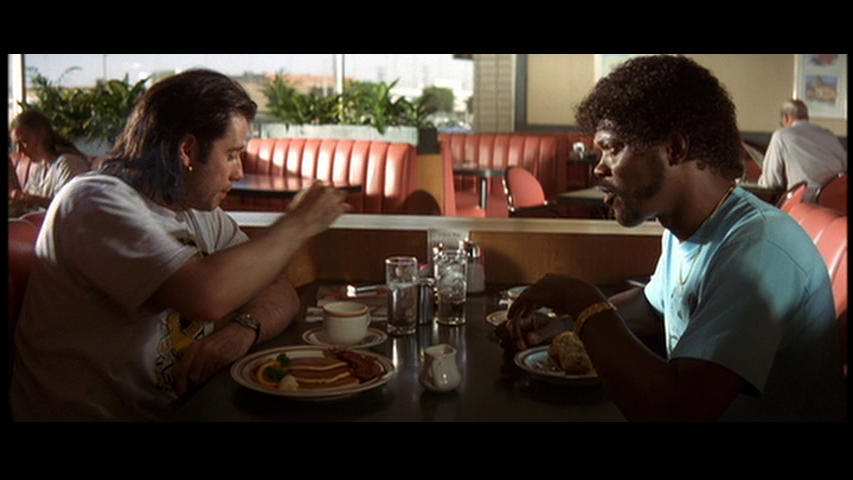



 CrossRoads Faith and Film