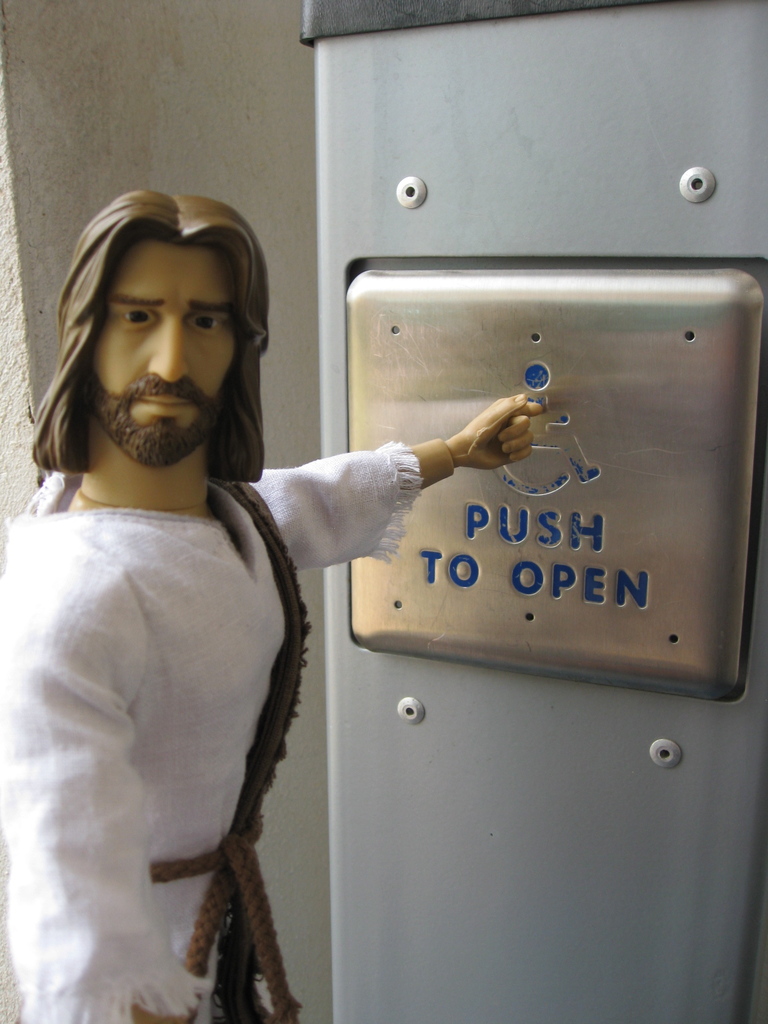
Sermon: John 10:22-38 “Just the Facts, Man”

Jesus rejected in Jerusalem for offering Truth in a facts driven world

http://r.b5z.net/i/u/10092240/m/Sermon_120715_1130b.mp3

Posted in Faith Shots, Film Shots, Sermons | Tagged , , , , , , , , , , , | Leave a comment

The Perils of Pride

Continued from “Humble Pie” posted earlier this month

My experience of community bravado is not limited to my home state.  I am a member of a local service organization and, as with most such organizations, we pledge our allegiance to the republic before each meeting.  As we stand, facing the flag, a person is designated to lead the pledge and most of the time the person leading begins by inviting everyone to make their pledge to the “greatest nation in the world” and sometimes “in history.” Every week I wonder if other nations believe that theirs is the greatest nation in the world, if not history? Do folks in Spain, Italy, Brazil, and England say the same?  It is safe to assume that the French think likewise about France, and we know Germany and Japan had a history of such belief during the 1930’s and 40’s.  My question is why the need of citizens to state this about their nation?

America is a country that appreciates humility and sportsmanship.  Vince Lombardi and Paul Bear Bryant, two of the most iconic and popular coaches in American athletics, are attributed with the quote “Act like you have been there before,” when criticizing excessive celebrations following touchdowns. Another of the most popular coaches in American athletics, and without doubt the most popular athletic figure and one of the most beloved persons in my community, Tom Landry was admired in great part because of his reserved, humble demeanor.  In recent years, the NFL has seen an explosion of excessive, attention getting demonstrations for not only scores but even routine first downs. The NBA is also seeing increasing acts and posturing over dunks and other baskets. In my experiences, when people I have known called such attention to themselves it was an attempt to mask some uncertainty or sense of inferiority felt in themselves.  I would imagine with a high degree of certainty that most of the individuals in my service organization and others I have heard make this statement of American exceptionalism, have been critical of athletes offering primetime dances or demonstrations.   Why then do individuals and groups who admire men such as Landry, Lombardy, and Bryant for their humility in the midst of their excellence, and who think excessive celebrations in sports distasteful, find it necessary to state or brag about American superiority every time they say the Pledge of Allegiance?

It is not that I do not appreciate the achievements of this nation.  It is not that I am not aware how the United States has defended, served and sacrificed for persons all over the world.  It is not that I am not aware that no other nation responds to crisis and disasters more than the United States. It is not that I do not consider myself very lucky to be living in such a free, safe, and prosperous nation. I do not wish to be critical of the United States, rather I am only concerned about and critical of the deleterious pride I hear in such statements.

Pride can be positive or negative.  Positive pride is an appreciation for accomplishment and the desire to do one’s best for the sake of doing it or for the good of others. Negative pride is pride that calls attention to self over others, the pride that leads to conceit, egotism and arrogance.  My concern is in the negative facets and powers of pride, whether individual, organizational, or national. It is appropriate to honor the accomplishments, history, and beauty of one’s nation.  The need to claim the superiority of one’s country however is a reflection of negative pride because it places not just the nation but, vicariously, the persons making the claim above other nations and peoples. Such belief feeds ego and appeals eventually to personal pride even over national pride.

The Bible addresses the subject of conceit and the call to be humble.  Jeremiah calls Israel to remain humble even if it attains riches or strength, “Thus says the Lord: ‘Let not the wise man boast in his wisdom, let not the mighty man boast in his might, let not the rich man boast in his riches.’” Jeremiah 9:23.  Jesus taught followers in the 6th chapter of Matthew  to be modest in their righteousness, praying, service, and giving to God in private rather than calling attention to their wealth, ability to pray, and service to God. In Luke 14 Jesus also teaches humility, “for everyone who exalts himself will be humbled, and he who humbles himself will be exalted.” Paul directed many churches in humility but most specifically to the church in Philippi where he told them in chapter 2 of Philippians to” humbly count others as more significant than themselves.”  Paul goes further to direct the followers of Jesus  to imitate Christ’s humility “who, though he was in the form of God, did not count equality with God a thing to be grasped, but made himself nothing, taking the form of a servant.” Throughout the entire Gospel of Mark, Jesus is struggling to deflect attention and praise from others by insisting that those to whom he ministered, especially those he healed, keep silent regarding his actions.  Even though all defied him and went on to proclaim the power of Jesus, such acclamation was not his desire.

Jesus had every reason to point out his superiority over his followers and his opponents but he didn’t because to do so would damage his relationship with, and ministry to, those who followed and  especially those who opposed him. As disciples we are called to follow in such humility. In short, if Christ did not call attention to his divinity and hold it over others, how can we as individuals, churches, states or nations hold our modest accomplishments over others?

Posted in Faith Shots, Scattershooting | Tagged , , , , | Leave a comment

Penn State Sanctions: Shamefully Not Enough

In the spirit of full disclosure I graduated from SMU with 2 undergraduate and 1 graduate degree.  I have been a lifelong fan of SMU and have always thought that they were the victim of not only their own actions and arrogance but of jealousy by other football powers and the NCAA’s selective enforcement of recruiting rules.

Since SMU became the only school to be have an entire sport suspended and has struggled throughout the last 25 years, and with the breakup of the SWC, my interest in college sports has dropped tremendously and I now consider myself a casual fan. In the weeks leading up to the announcement, I had believed there was no chance Penn State would be given the death penalty for the Institution’s role in the Sandusky molestation case. So I am somewhat surprised by my reactions to the announcement by the NCAA.  In the hours after first hearing the sanctions I thought about them and tuned in to much of the media coverage.  The more I thought and listened the angrier I became that the NCAA did not go further, and that some in the media thought the  actions were justified, or even too harsh,  given the impact the death penalty would have had upon those not involved in the actual molestations or cover-up. I offered some posts on facebook, and some of the same thoughts will appear again.

Some coaches and members of the media are saying that the penalties received by PSU are actually tougher than having the program suspended.  As an alumnus who graduated from SMU 4 years before the death penalty, and have followed SMU in its two plus decade struggle to return to any sort of football respectability, I and all other SMU alumni who follow athletics know better than all the pundits the devastating impact of the death penalty on a program.  The entire athletic program has failed to come within miles of even imagining what it was prior to the penalty. Proof of the devastating impact of a suspension of a football program is the comparison between SMU and TCU.  About the same time SMU was given the death penalty, TCU was given what some considered to be a harsher sentence, with severe loss of scholarships and multiyear bowl and TV bans. TCU is now considered a strong second tier football power and is a member of the Big 12. SMU has been struggling to achieve winning records in lower tier conferences.  While some of the differences can also be attributed to personnel mistakes and decisions SMU made, (SMU instituted the toughest athletic recruiting and admission standards of any Div. 1 school immediately following the sanctions and still has some of the most difficult recruiting and athletic admission policies in the NCAA,) it seems the effects of the penalties SMU received were significantly greater than those TCU and PSU received.   If the NCAA continues to believe the death penalty is too severe as evidenced by the fact that it has failed to administer it even though several schools that have been eligible over the last 2 decades, and some for actions I consider much worse than SMU’s, why has it not removed it as a punishment option?  By keeping it as an option, the NCAA shows a desire to have something available should a program commit, in its judgment, truly egregious acts.

The Louis Freeh investigation into the Penn State scandal discovered that coach Joe Paterno and other top officials in the institution knew or had tremendous reason to believe Sandusky was sexually abusing children much earlier than previously thought.  The University was therefore complicit in the molestation of dozens of boys because it not only failed to report the activity but assisted Sandusky in his criminal action by continuing to allow him access and use of its facilities where the abuse continued to take place. If being an accessory before the fact to the sexual abuse of dozens of children is not reason enough for the use of the death penalty, what is? Yes it would be difficult for the community were Penn State not to have a football program for a year or two, but this difficulty pales in comparison to the difficulties many if not most of these children will have for perhaps the rest of their lives. According to the Rape Abuse & Incest National Network, (RAINN) some of the effects victims of childhood sexual abuse have as adults include: low self-esteem, self-hatred, guilt/shame, sleep disorders, inability to trust others, revictimization (repeatedly entering into abusive relationships as adults), flashbacks, sexuality/intimacy issues (inability to have healthy sexual and or intimate relationships), PTSD, depression, and anger. In an attempt to cope with these issues, adult survivors of child sexual abuse are more likely to abuse drugs and alcohol, have eating disorders, and self-injurious behavior. These are the just the effects that are measurable.  What is not is the overall loss of their childhood.

Former Heisman Trophy winner and current ESPN analyst Desmond Howard commented on weighing the victims of this abuse, the children and the PSU athletes.  While death penalty sanctions, as well as those the NCAA handed down, would impact the playing careers of the athletes, they would have had the choice of staying at PSU or transferring to other programs without having to sit out a year as is usually the case. The children whose childhoods were robbed, and who face the above life challenges and dangers had no choice. They could not leave and they were not protected.  Yes Jerry Sandusky is in prison, yes there will be civil damages paid to the children and their families by the University, but, by the NCAA saying that their suffering at the hands of Jerry Sandusky and Penn State University did not warrant the University to suffer the supreme penalty is nothing short of a revictimization, and yet another entity demonstrating that their welfare is secondary to that of the University that did nothing to protect them.

Posted in Scattershooting | Tagged , , , | Leave a comment

Going on a Humble Hunt

What the world needs now? Yes, love sweet love, but it also needs a good dose of humility,  because as another song reminds us, “oh Lord it’s hard to be humble.” I have often wondered what humble pie tastes like but I can’t find anyone who will admit to taking a piece.  It’s hard to find humility, whether on the athletic field, board room, elected office, church hierarchy or community service organizations.  The internet holds few reservoirs of humble waters.  I know I am guilty of “unhumbleness.” Thinking anyone would want to read my thoughts in blog form is not exactly an act of humility, even if it can be one of futility.  So, for the sake of my blood pressure, I take advantage of this outlet to get this and other things off my chest.

I found out early in my ministry that clergy are some of the least humble folk around.  While serving in a small appointment I was a part of the local ministerial alliances.  While they can be a benefit in communities by being a tangible reminder, through joint worship opportunities and other ventures, that as Christians, or persons of faith should the community have a diversity of faiths, we are a part of something bigger than ourselves or our congregation. Clergy alliances can also serve individual clergy by offering a place of friendship with persons facing similar circumstances and challenges. They are also, as I discovered a place where clergy can talk in glowing ways, i.e. bragging, of what their “numbers” are as well as other achievements.   I remember at one community prayer gathering, the length, voice level, and floweriness of language increased as each pastor took to the microphone to pray.  While smiling and having a certain countenance can be a way of expressing warmth, welcome, and Christian love, I have also seen smiles and countenances on clergy that screamed “look at me, I AM all that and a bag of chips, as well as an ant-free picnic.”  As I recall, Jesus washed his disciple’s feet, and through teaching, healing, and breaking bread, was engaged with the masses.  And, he did all that without a reserved parking space.

I am a Native Texan which means I was born in Texas.  That we reserve a special status for those actually born , not just raised in Texas, sums up the braggadocio of my home state as does the State Song,

Texas, our Texas! All hail the mighty State!
Texas, our Texas! So wonderful so great!
Boldest and grandest, Withstanding ev’ry test;
O Empire wide and glorious, You stand supremely blest.

Thinking about this led me to tip toe through the tulips of other state songs, and found out that many states believe theirs is the best.  Here is a taste:

I love you, California, you’re the greatest state of all…… All of the other states throughout the nation may mean a lot to some; But I wouldn’t want another, Jersey is like no other, I’m glad that’s where I’m from……O, Fair New Mexico, We love, we love you so, The grandest state to know New Mexico…..Montana, Montana, Glory of the West, Of all the states from coast to coast, You’re easily the best…. I’ve been to every state we have, and I think I’m inclined to say that Rhody stole my heart: You can keep the forty-nine states,

My father was genuinely surprised that my mother didn’t take Texas history in Louisiana.  I used to wonder what history was there to study in Iowa, Nebraska, or West Virginia.  I realize that all states have” friendly” rivalries with other, usually neighboring states, but Texas has a rivalry with every state, and even the United States. I admit I have played up the “Texas thing” when I travelled or lived abroad, by abroad I mean of course outside “thee” State, not necessarily the United States. I have lived abroad on two occasions and while I was able to enjoy the offerings of Washington D.C. and North Carolina I played up their differences, for example, cole slaw ON the BBQ not as a side, which then I saw automatically as deficiencies.  Were I to live abroad again, I would embrace more fully and equally the offerings of where I was planted.

Yes, Texas has a colorful history and a lot currently going for it. It has made many contributions to the nation and world, but it also has its deficiencies and failures, and other states do have things that Texas and Texans could learn and benefit from if we would stop listening and believing our own bluster.

I will discuss in the next “Scattershooting” that the Bible teaches throughout both testaments, the destructive aspects of pride and ego. For now let’s just say that pride has a tendency to close minds and harden ideas even when those minds and ideas should be changed.

Posted in Faith Shots, Scattershooting | Tagged , , , , , , | Leave a comment

No “Right” Doesn’t Make Healthcare Wrong

With all the discussion regarding the Supreme Court’s decision regarding the Affordable Care Act, some clergy friends of mine have commented on the issue by referring to the United Methodist Church’s stance presented in the Social Principles. These are the denomination’s official positions on a wide variety of social issues as approved by the quadrennial gathering of General Conference and included in the Book of Discipline, the UMC book of law, structure, process, and theological beliefs. While it is not required that members of the denomination accept or follow these positions, they do represent the official stance of the Church. While I do not think I know the particular ins and outs of the Affordable Care Act enough to comment on it specifically, I do have reflections on the issue of providing care for others and the UMC’s stance on the subject as detailed in the Book of Discipline.

Paragraph 162 V of the Book of Discipline speaks to “The Right to Health Care.” Included in this section is the following:

Creating the personal, environmental, and social conditions in which health can thrive is a joint responsibility—public and private. We encourage individuals to pursue a healthy lifestyle and affirm the importance of preventive health care, health education, environmental and occupational safety, good nutrition, and secure housing in achieving health. Health care is a basic human right…. Providing the care needed to maintain health, prevent disease, and restore health after injury or illness is a responsibility each person owes others and government owes to all, a responsibility government ignores at its peril. In Ezekiel 34:4a, God points out the failures of the leadership of Israel to care for the weak: “You have not strengthened the weak, you have not healed the sick, you have not bound up the injured.” As a result all suffer.

Certainly there is other Scriptural warrant to insuring health care to all people. Several years ago I had the privilege to hear Dr. John Holbert teach on the commandment of God to Israel to provide for the strangers in their midst because Israel was at one time a stranger in a strange land, Egypt as well as the land God gave to them after their wilderness experience. It was only through the providence of God that they survived the 400 years in Egypt, the 40 years in the wilderness, and their establishment in the promised land. As God had provided all for Israel, how could they not provide hospitality, ie basic needs, for all persons, including strangers, in their midst. In addition to “aliens” there is also teaching after teaching, commandment after commandment for Israel to care for the most vulnerable groups, widows and orphans. Jesus offered his two denarii when he commanded all disciples to love neighbors AS they loves themselves and then told them that neighbors included strangers and even enemies. In other words, no one falls outside the bounds of who should be loved and cared for.

I do not disagree with the UMC statement other than to question the assertion that people have a “right” to healthcare. In a theological sense there is no such thing as a right, the Declaration of Independence aside. Were humanity to have rights it would then have a claim over and against God, which would rupture the complete supremacy of God. God created humanity strictly out of love and God sustains and saves humanity, via the gift of Christ, out of God’s completely perfect love for humanity and all of creation, not because of a right owed to humanity or creation.

God has given humanity the blessings of life in this world and through Christ the reconciliation of relationship, which we ruptured, and promise of life everlasting, which we forfeited through sin, in God’s Kingdom. Another blessing from God is the call and acceptance through baptism of disciples into ministry. God does not owe these, but gives them to every person out of love. Because of those gifts, humanity then has an obligation to serve God through caring for others, whom God also loves and have given life and relationship. Because of the blessings given to every person by God, each person has the obligation to respond to such love and fully embrace God’s grace by offering such to others. This care for the other, for the neighbor as defined by Christ, is not done in an attempt to justify one’s goodness, but out of love for God and the greater love God has for us.

For bottom line folk this may seem like needless splitting of theological hairs, but the difference in perspective perhaps makes the provisioning for all persons with proper healthcare easier. The care for others has nothing to do with what they “deserve” from government ie. everyone, but has everything to do with what we all owe to God. While all people are in debt to God, if the common understanding is true that all that one has has been given to them by God, the more one has the more one owes to God. Jesus spoke to this when he taught that to whom much is given much is expected. Assuring others have healthcare and other basic needs, whether they are a stranger or a family member, a “producer” or a “consumer” in society is one way those who are blessed with material and financial means can respond to the love, grace, and blessings God has given them. This is especially true for those who claim that their’ s is a nation formed in the name of, if not by the desire of, Jesus Christ. Basing the call to provide for others not on what they deserve, their rights, but on what we owe, our obligation to God, amplifies the directive to providing basic needs for others.

Some will respond to this understanding by questioning the limits of what society should provide all people. Should all people then be given housing, clothing, cable TV, internet access etc.? Yes there are limits to what society should provide and the reality of enabling poor decisions and behavior does exist. These are conversations that are important in deciding how best to serve God in providing what is best for others. But be aware that to do so in an effort to determine what is the least we should do for others, rather than what is best for them, is the same question the Pharisee was asking Jesus when he sought to limit to the smallest circle those Jesus would define as a neighbor, and that Jesus answered by offering the parable of the Good Samaritan. Again, our responsibility to provide for our neighbors as Jesus defined them is not because of what they deserve, but what we all owe to God.

Posted in Faith Shots | Tagged , , , , , , , , , , , , , | Leave a comment

“SKY” VBS Sunday Celebration Sermon: “Trust God, AKA Boldly Go!”

This Sermon concluded the 2012 VBS, the theme of which, “Nothing is impossible with God” It was a wonderful week of great music, stories, games, snacks and fun as we were all reminded that with God the Sky is not even the limit.  Plus it gave me the opportunity to preach from a Hot Air Balloon in our sanctuary.


http://r.b5z.net/i/u/10092240/m/Sermon_120624.mp3

Posted in Faith Shots, Sermons | Tagged , , , , , , , | 2 Comments

In Case You Missed It Review Series: “Up”

In honor of the release this weekend of the newest Pixar film “Brave,” I offer my review of “Up,” my favorite Pixar film and one of my favorite films period. This review originally appeared in the June 19th 2009 edition of the North Texas Conference United Methodist Reporter. 


In what has become a rite of summer, Pixar Studios released its latest masterpiece, “UP,” its tenth consecutive critically Iand commercially successful release.

Since its inception and initial film “Toy Story,” Pixar has been the leading producer of children’s films. “UP” presents more evidence for the removal of the modifier “children’s” and recognition that Pixar produces the finest films of any production company.

Like all of the Pixar films to date, this latest is a road film where the primary journey is one of self discovery. “UP” is the tender story of Carl Fredricksen, a lonely elderly man with a striking resemblance to Spencer Tracy, and Russell, an equally lonely yet innocently vulnerable adventure scout stowaway, who go on an adventure to fulfill a promise Carl makes to a loved one. Both Carl and Russell have experienced loss in life, and both characters are adventurers, though Carl’s sense of, and desire for, adventure has been missing since his recent life loss.

As these kindred souls journey, they discover along the way that the most important adventures are the ones experienced closest to home and within one’s heart. As with all Pixar films “UP’s” characters are not the only ones who go on the journey. The viewers are every bit the stowaway as Russell, and learn, or are reminded, that paradise is not a faraway destination, but a local reality if we will but let ourselves be open to the possibility.

As with 2008’s “Wall-e,” “UP” is a multilayered fi lm that extends into several genres. In addition to being the tenderest of coming, and going, of age stories, “UP” is also a comedy of the highest order with this year’s most laugh out loud moments, as well as a wonderfully executed action adventure movie. With the mode of travel being a floating house, by way of hundreds of helium balloons, as well as dogs whose thoughts are vocalized through an ingenious collar, and a large, colorful, and hereto undiscovered bird, “UP” is also a fantasy story that requires a degree of suspension of disbelief, and when surrendered, rewards the viewer with both entertainment as well as significant meaning.

From the standpoint of faith, it was appropriate that “UP” opened on the weekend of Pentecost, as the film has a message that speaks to the Church, especially the United Methodist Church in light of the newly inaugurated “Rethink Church” campaign. One of the mottos throughout the film is “the Spirit of Adventure.” It is that spirit, within their hearts, that lifts Carl and Russell in their journey to discovery every bit as much as it is the helium within the balloons that lifts Carl’s house. Carl and Russell are open to the impossible possibilities that the ”Spirit of Adventure” affords, and because of this openness they discover what is truly important and are changed. Pentecost is the day the Church remembers and celebrates the Spirit of God enlightening the disciples and other followers of Christ as to the truth of the Gospel and indwelling in them the transformative power that molds them into the Body of Christ, the Church.

“UP” offers two other lessons that apply to the Church and congregations. One is that dreams and adventures are not everlasting, they change as one grows and changes, and as old dreams or adventures die, new, viable ones can take their place if the old ones are released. If one holds on to dreams or continues ventures whose time has past, one’s time passes also. It is in the accepting and pursuit of new adventures and dreams that one stays vital. As Carl lets go of the old adventure and dream whose time had passed away and takes hold of the new one set before him, he becomes less infi rm, more active, and more the young Carl who had the desire and ability to dream and seek adventure. Through accepting the new challenge, his true identity as an adventure explorer is restored and renewed. Another related lesson is the drag baggage can have. At a crucial point in the film Carl needs to use the house to rescue Russell only to discover that the balloons have lost some of their helium and the house is too heavy to float. It is only by discarding the furniture in the house, furniture that had become the empty seats of memories and former happiness, that Carl is able to reach Russell, reignite his sense of adventure and mission, and experience life and happiness again.  It is only when churches discard old furniture, the empty practices, traditions, or actual furniture or facilities, that are weighing it down, can it experience the new life and purpose God has planned for it in proclaiming the Gospel of Christ.


Posted in Faith Shots, Film Shots | Tagged , , , , , , , , , , | Leave a comment

VBS, Children’s Ministry, and Special Needs Scattershooting

I was thinking today, how often does one get a chance to let their hair down, literally for those who have it, and figuratively for those of us who are hair challenged?  This week while planning our Vacation Bible School All Church Worship Service, I was reminded of Jesus’s teaching in the synoptic gospels to include children as a central part of his ministry.  He was ministering to people when many parents brought children directly to him for him to bless.  His disciples, serving as gatekeepers, tried to keep them out as children back then were truly to be seen, on occasion, and never heard, and Jesus teaching and pressing the flesh was not such a time. In response Jesus “rebuked” or was “indignant” to the disciples and told them to let the children come to him, and do not stop them because the Kingdom belongs to children such as these.  In Mark and Luke’s Gospel he goes on to say that if one does not receive the Kingdom of God like a child, one will never enter it.

With other pastors over the years, I have used this passage in encouraging churches to be more open to truly incorporating children in the worship life of the church. I have also used this in teaching that churches should take the initiative in inviting and welcoming persons with special needs.  Jesus himself teaches that children are to be seen, heard, AND modeled after in faith. In devoting one or two Sundays a year to children’s worship, some people grumble and come anyway, some grumble and stay away, but most take advantage of the opportunity, similar to the opportunity that parenting and especially grand parenting offers to connect to their inner child, and have wonderfully meaningful worship experiences.  In reaching this inner child, we are reminded this is the inner child that God created and that, in the process of living and growing up in a world separated from God, we all too often grow away from.  When we do not take advantage either as individuals or churches, to get back in touch with this part of us that God created, we are all worse off.

I was talking to someone the other day regarding special needs children and churches.  She was telling me how her church, not a UMC church, put up, or at least refused to take down, barriers to her child, and therefore her family, from participating fully in the life of the church.  While there were some bare-bones accommodations offered, there was not true inclusion as icy looks and stares of other members coldly reminded.  She then tried another church, a UMC, and while things were better, they were still not welcomed with open arms.  She is now attending a non-denominational church that welcomed them truly and completely such that all members of the family were and FELT welcomed.  I have visited this last church and found that they were extremely welcoming and went out of their way to offer friendship.  Guess which church was growing?  Guess which church is expanding.

In my thinking of Jesus’s welcoming and teaching the importance of inclusion of children fully into the life of the Body, and upon reflecting on my conversation, it occurred to me that there is not a distinction between welcoming children, people with special needs, and adults without such needs.  Either one is welcoming to all or one is not and needs improving. Let the little children come to us. Let us then be in touch again with the little child God in us created, the little child for whom the Kingdom of God is established, and the child like way in which this Kingdom must be received.

Posted in Faith Shots, Scattershooting | Tagged , , , , , , , , , , , , , , | 4 Comments

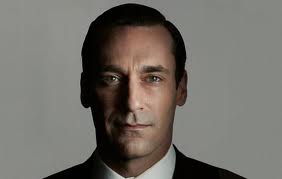
Mad Men Finale: Subtlety Whispers Greatness

Nelle Engoron offered her review of the season finale of Mad Men for Salon.com (link below.) For the last 4 seasons Matthew Weiner’s 1960’s drama has become one of the most recognized and award winning dramas in television history, winning the Emmy Award for Best Drama in each of its first four years. With each season the show has developed storylines and characters that have superseded the stylization that was the driving factor in the program’s initial rise to popularity. While the reviews of the season and finale were somewhat mixed, the general vibe was that it underwhelmed. While I agree with most of the observations offered by Nelle Engoron, I disagree that the show or season was lackluster and it was just Engoron’s described “weariness” that made the season and finale amazing television. Yes the show did not offer a dramatic cliff hanger of past seasons and other series, a tradition started by the shooting of JR Ewing on the series Dallas, the reboot of which premiered ironically this week, but this is the true hallmark and tradition of Mad Men, going against tradition. It is the subtlety of Weiner’s writing that gives the series its edge as it commands the serious viewer to parse each conversation, action, facial expression, and of course the limited use of music that concludes each episode. In Mad Men, EVERYTHING has meaning.

I believe Nelle Engoron’s summation of the closing montage offers wonderful insight into the state of each character, especially the symbolism of the closing song, “You Only Live Twice” for Don Draper. Yes he has already had two lives personally and professionally, and with his season closing glance in a seedy bar, we anticipate the ultimate decline that is inevitable. The only thing I would add to Engoron’s analysis concerns the closing look at Peggy Olson who, after leaving Sterling Cooper Draper Pryce in a previous episode, is at last taking the next step up the corporate ladder as a single woman in an industry ruled by men who when push comes to shove, as was demonstrated earlier in the season, don’t mind scraping the bottom of the moral barrel. Peggy, working with another firm and given the responsibility to help a tobacco company develop a cigarette marketed to women, (I am guessing Virginia Slims) pulls back the curtain and looks out of the hotel window while on her first business trip only to see two dogs doing what stray dogs often do. While Engoron’s interpretation was that this shot, at best, symbolized the sleaze of the advertising business that is behind the curtain, I thought it also spoke to the nature of what Peggy was being asked to do, develop a new product which will produce needless suffering and misery.

While this season, save for the ultra-dramatic and shocking suicide of Lane Pryce in the next to last episode and the surprising move of Peggy away from S.C.D.P., was generally considered slow if not conventional by Mad Men standards, it symbolized very well the year in which it was set. 1966 was considered by most to be the dividing line between the charmed early 1960’s and the tumultuous closing years of the decade. While generally pedestrian, 1966 began to show signs of what was to come. So it was with this season’s Mad Men. We don’t know what year the next season will be set in, but I would guess 1968 and or 69, in what i believe will be the final season. I am looking forward already to where Weiner will take the show, the characters, and us as we move back into the churning waters of America at the close of the 1960s.

http://www.salon.com/2012/06/11/mad_men_a_wearying_season_finale/singleton/

Posted in Film Shots, Scattershooting | Tagged , , , , , , , | Leave a comment

Olympic Fever: Catch It 2

As long as I can remember I have enjoyed watching the Olympics.  I have a few memories of the 1968 Olympics from Mexico City, especially Bob Beamon’s crushing of the long jump record by several feet and establishing a record that stood for over two decades. As a 10 year old I remember being transfixed with the entire world when the Israeli athletes were taken hostage and murdered.  I was watching live when Jim McKay told everyone, “they’re all gone.”  I shuttered then and I still get goose bumps when I see replays of that horrible event.  As with every Olympiad since 1972, I will pray this year the only controversies will be faux pas, bad calls and claims of biased judging.

One of the reasons I enjoy the Olympics are the wonderful performances and backstories of the athletes.  Anyone who saw the 4X100 Men’s swimming relay 4 years ago in Beijing still remembers the amazing comeback and .07 of a second victory by the USA team which allowed Michael Phelps to win a record 8 gold medals.  In every Olympics there are athletes with amazing stories of overcoming injuries or other obstacles in life and getting to the highest stage.

The other reason I am an Olympic watcher is for the variety of sports many of which I hardly ever see, and a few I have never even heard of.  Has anyone heard of Olympic handball? It was first introduced in 1936, then dropped and not reinstated until 1972.  While I watched my share of Wide World of Sports as a kid, I don’t remember having seen that sport, which looks like water polo played on a basketball court, sans water of course.  It was not until I found it during a previous Olympics that I was able to enjoy this wild and crazy sport.  I have seen cycling in the Olympics and occasionally between games, but I had never watched much BMX cycling, the “high flying, extreme, they’ve got to be crazy,” cycling till it was added to the Olympics in 2008.  I don’t know much about it, but I will watch it.  I also did not realize that hockey, aka field hockey, was the oldest known sport utilizing a ball and a stick.  They say it goes back to when shepherds used their crooks and hit rocks out in the fields. I guess the shepherds deemed not good enough to be hockey shepherds invented golf so they would have something to do with their crooks and rocks.  Who remembers that trampoline is an Olympic sport?  The cynic in me wonders how they will televise it through those blue safety nets that I see around neighborhood trampolines, and I assume the participants had a waiver signed by their parents so they could jump on the trampolines. Yet if I come across it, I will watch it.  When I was a kid we had a ping pong table in our living room, before we could afford real furniture.  While we had some pretty wild games, they couldn’t of course hold a candle to the amazing contests that will be coming out of London.  I can’t wait to see if “roundhouse” has been added to the ping pong, excuse me, Table Tennis events, but regardless I will watch it if I can catch it.

While some of these sports may be easy pickings for late night comedians or early Sunday morning preachers, what is really impressive is the dedication all the athletes have in preparing themselves and becoming the best in the world in their respective sports.  Whether it is gymnastics or any of the lesser known sports, the competitors have spent thousands of hours practicing and practicing.  Parents and or coaches have spent similar amounts of time driving, teaching, pushing and comforting.  While each contestant was blessed with certain abilities in their sport, it was only dedication and disciplined practice that got them to London this summer.  As children of God, we have been blessed by being created in the image and likeness of God.  Think about that, God’s image and likeness is a part of us, not unlike the skills and abilities of Olympic athletes.  However unlike the athletes, God’s likeness and image is in everyone.  Unlike athletes these gifts do not get better or stronger with training and discipline, but what does happen is our ability to recognize God’s image and likeness in us and others is enhanced the more time we spend with God in prayer, worship, and service.  Trust me, the amazing things the athletes are able to do when training is accompanied by talent pales in comparison to the amazing changes in life, and indeed the world, that occur when God’s image and likeness in us is accompanied by disciplined study, worship and prayer and other spiritual disciplines. While I cannot hope to succeed in athletic endeavors, the discipline and dedication of the athletes can and will inspire me to be more disciplined to all areas of my life including, and most importantly, my discipleship.

Posted in Scattershooting | Tagged , , , | Leave a comment