When All Else Fails, Read the Amendment

aa111

Upon entering the conversation of guns, I know I do so at great peril as emotions run hot on both sides of the issue. I grew up with guns in my home, though I was never a hunter. I had extended family who did hunt and had guns in their homes to which I was exposed to throughout my childhood, and I have enjoyed occasional opportunities to shoot at targets. I suppose I have thought that persons had a right to own guns for protection and hunting, but it was never something I have sought to do. Like many, I must admit that the string of mass shootings have called me to question the legality of assault weapons and large capacity ammunition clips. The above said, I believe I look at the issue from a somewhat dispassionate point for view and offer the following thoughts, not on whether gun control legislation should be enacted, but whether the second amendment offers constitutional protection.

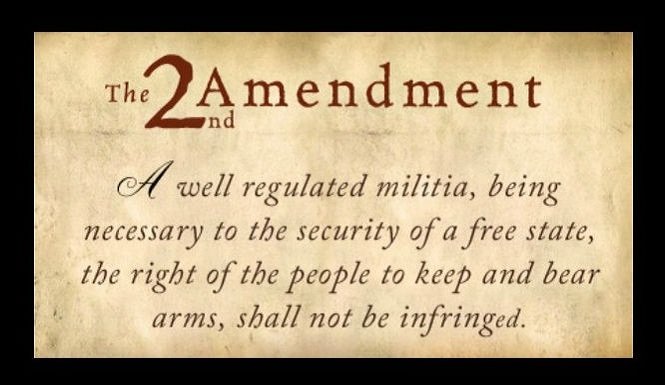
A well regulated militia being necessary to the security of a free state, the right of the people to keep and bear arms shall not be infringed.

While I am not a lawyer I am one that is used to using language, vocabulary and syntax, to exegete meaning from text, in my case scripture. With this training I am confused as to the claims of those who cite this amendment as the source of rights citizens have to unfettered ownership to firearms. My question is how can an amendment that recognizes and specifies the need for regulation and control of arms, “a well regulated militia” be the source of a right of that disallows any control of gun ownership?

I also am confused as to how the Supreme Court in the 2008 Heller Decision interpreted that the second amendment applies to individuals to have guns for personal safety and or hunting. As stated the amendment says the need for un-infringed bearing of arms is for the protection of the state by militias, and such right is given to “the people.” “The” as used in the amendment seems to be used as a determiner of the noun “people” generically, rather than specifically, meaning the amendment gives the collective citizenry the right to bear arms as part of a militia, with militia defined as a body of citizen, non-professional, soldiers called out in times of emergencies.

Had the amendment been intended to apply to individuals in any and all circumstances, it would have said the right of “persons,” or “individuals,” or just “people,” to bear arms shall not be infringed, with no other stipulations. The fact that the purpose of the entire amendment is to defend the state via a well regulated citizen militia also points away from the amendment’s intention to give constitutionally protected rights to individuals to own and bear arms.

As stated in the second amendment, the only people guaranteed the right to own and bear arms are people who are members of a well-organized, i.e. and structured, militia who use those arms in the protection of the state. Since the amendment does not prohibit others from owning and bearing arms, they are allowed to do so unless the State or United States prohibits or limits such ownership through laws or other regulation.

Again, these comments are not addressing whether federal, state, or local governments should control ownership and possession of guns or ammunition, but just whether the second amendment prohibits regulation of firearms or ammunition.
These are just my thoughts as I read the amendment. I would certainly be interested in hearing other ideas on how or why the second amendment can or should be interpreted in other ways.
Posted in Scattershooting | Tagged , , , , , , | 10 Comments

Sermon Series: “Under New Management”

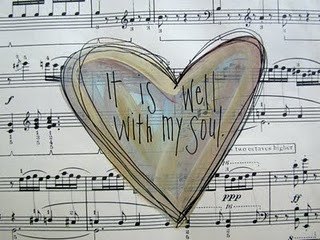
it is well 2

Sermon: “Holy, Wholly Owned” AKA O For a Thousand Tongues to Sing, It is Well With My Soul

Posted in Sermons | Tagged , , , , , , , , , , , , , , | Leave a comment

Time to Shut “Faith-Gate”….Again!

faith gate 2While I don’t normally respond to posts and tweets of others, after the recent, well publicized “Tweet “of a popular Evangelical pastor denying President Obama’s Christian faith, I felt compelled to update and share an article I wrote in 2009.

As a clergy person who ministers to people throughout the political spectrum, I very rarely comment on political issues or formally express political opinions. With The recent talk and speculation throughout the country and media regarding the authenticity of President Obama’s Christian profession this issue has breached into the area of faith and I believe comment is not only appropriate but mandated. Whether questioning President Obama’s faith because of suspicions he may have been, or “really is,” Muslim, or President George W Bush’s faith being an exercise in political expedience rather than faithful relationship with God, one is participating in an activity that is contra to faithful living.

It should seem obvious to persons of faith and scriptural literacy that we are not to judge the faith of others as only God can judge what is in a person’s heart and behind their profession. Scripture plainly teaches us that we are not to judge others in areas of faith, Matthew 7:1-5, Luke 6:37. In the tenth chapter of John, Jesus states that such judgement is for him and him alone. Jesus is the shepherd. Jesus is the gatekeeper. Jesus is indeed the gate by which all enter into faith and relationship through God. We simply are not qualified to know if one’s profession of faith in, and commitment to, Christ is genuine. Paul states this fact applies even to himself in First Corinthians 4:4. It is God who judges and determines the genuineness of faith. Taking on such a task is above the faith-grade of anyone but God.

Not only is judging another person’s faith impossible and scripturally incorrect, to engage in such behavior, especially in relation to persons who convert from other faiths, undermines New Testament teaching. Such speculation and judgment calls into question the very purpose of the Church which is to witness the Gospel of Jesus Christ, make and baptize disciples from all nations in the name of our Lord and Savior.

Some have challenged the President’s Christian “credentials” because his father was Islamic and that he may have been a Muslim at one time. Some believe and have stated that even if he was not officially a practicing Muslim; the connection with his father makes him Muslim by blood if not spirit. What do these challenges say about the power, or lack thereof, of the Holy Spirit in the conversion process? Is blood stronger than the Holy Spirit? Does God not have the ability to change people’s beliefs? The reality is that it was common for members of the early church, empowered by the Spirit, to break from the faith of their families, the when they accepted Christ and became members of a new family of faith in Christ.

While there is no evidence that the President is Muslim there is much evidence of his Christianity including his baptism, church membership and attendance, and certainly the baptism of his two daughters. But, let’s say for the moment that he had been an active follower and participant of the Muslim faith. What does it say about the nature and efficacy of evangelism, converting the unchurched to Christ, if one’s profession of Christian faith is viewed with any degree of suspicion because one has converted from another faith? The effect of such hesitancy to recognize one’s profession results in not truly accepting the convert as a member of the faith, and more importantly, the Body of Christ.

Again, my concern is not the politics of the “faith-gate” but the implications regarding faith that accompany the discussion, accusations, and even tepid defense of some against such attacks. The questioning and demanding proof of faith in Christ, or disproving prior membership in another faith, is an affront to Christ’s Commission to make disciples and calls into question the possibility of “true” conversion.

If conversion is possible then the argument is moot. If it is not then Christ’s central teaching and final commission to all disciples, to make disciples of ALL nations / faiths, baptizing ALL in the name of God the Father, Son, and Holy Spirit is fraudulent. While some Christians, including unfortunately some seminary trained pastors, accept this limited understanding of conversion as well as limited acceptance of others into the Kingdom of God, the Apostle Paul is not among their number.

The issue of the validity of profession from another faith has been asked and answered by Paul who argued on behalf of gentile converts against Jewish Christians who questioned the Gentiles’ culturally driven difference, conversion without the physical proof of circumcision. Paul declares in Galatians that in Christ there are no longer divisions such as Jew, Greek, slave or free. In today’s parlance that means in the Kingdom of God, there are no modifying labels such as Muslim-Christian, Jewish-Christian, or Christian-Christian. One is only designated as Christian and a disciple of Jesus Christ.

Hesitancy to recognize one’s profession of faith also challenges the efficacy of the sacrament of baptism. While participating in the sacrament, who am I to ask anyone, “did you really mean it and can you prove it when you said you accepted Christ as your Lord and Savior, and do you really renounce the forces of wickedness and sin in the world?” The fact is if we question the profession of one, we must question it of all. If we deny the validity of anyone’s conversion, we must deny the validity of everyone’s conversion, because if we go by evidence, everyone is found lacking as all remain fallen and sinful even after our baptism and profession of faith.

The reality is that all Christians are converts when we are baptized and confirmed. Whether one grew up a Muslim or a Methodist, whether one converts from Islam, Judaism, agnosticism, or just plain old sin, we have all been separated from God and are all only reunited with God through Christ by God’s grace. We are all saved and made one in Christ by Christ, and there is no reason to suspect or deny the genuineness of faith because of one’s background. To allow such thoughts or speculation to go unanswered weakens the Gospel as well the Body of Christ.

Posted in Scattershooting | Tagged , , , , , , , , , , , , , , , , , , , , | 7 Comments

Sermon Series: Under New Management

aa11

Sermon “About Face” AKA The Tazmanian Devilish Apostle

Scripture Acts 9:1-22 Saul’s Conversion


http://r.b5z.net/i/u/10092240/m/Sermon_130120.mp3

Posted in Sermons | Tagged , , , , , , , , , , , | Leave a comment

Sermon Series: Under New Management

Sermon Series: Under New Management

Sermon: Surrender AKA Who’s Our Playcaller?
Text Acts 8:26-40 Philip and the Ethiopian Eunuch

Posted in Sermons | Tagged , , , , , , , , , , , , | Leave a comment

“Les Miserables” Shows Who We Are and Who We Can Be

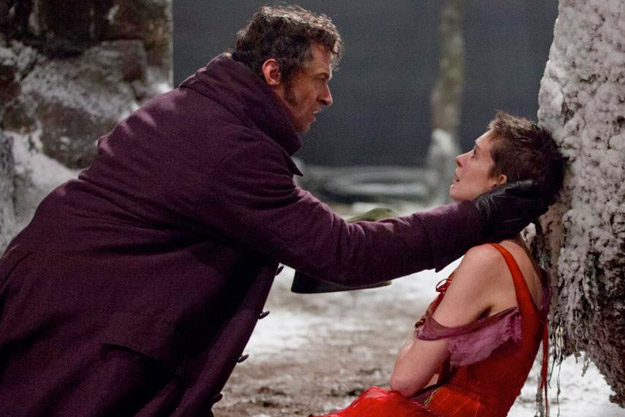
les miserablesGiven that “Les Miserables” is perhaps the most successful and popular stage musical of all time, and given the star quality of the cast, “LesMiserables” was one of the most anticipated films of 2012.  Also adding to the anticipation was the curiosity behind the challenge of inverting the production characteristics from the minimalist staging yet sweepingly grand music of the theater production to a film with epic staging and more intimate musical performances. Depending on the expectations of the viewer, the film either slightly disappoints or profoundly moves.  If one expects the film to present the same caliber or type of music and musical performances, the film will disappoint.  If one desires a greater focus on the story and development of the characters, and accepts a differing presentation of the music, one will be very satisfied and more than likely profoundly moved.

Director Tom Hooper’s gritty set design and shot selection highlight the suffering and poverty of “the people ,” the lower class who struggle daily to survive in 19th century Paris and throughout France.  Hooper’s decision to use the vocal performances as sung during the filming rather than the usual post production voice-overs gives the songs an intimacy that matches the photography and staging. The result is music that is significantly more personal and underplayed in comparison to the staged production, but music that better presents the circumstances of the time and characters. If the musical quality is of paramount concern the 10th and 25th anniversary concerts are a better choice.  If one is more interested in, or moved by, the story, this filmed version will more than satisfy fans of the Victor Hugo epic novel.

Taking the design and techniques used by Tom Hooper in mind, the performances are solid to outstanding.  Hugh Jackman’s Jean Valjean, the protagonist prisoner who is jailed 19 years for stealing a loaf of bread, is solid though not spectacular.  Unfortunately, Russell Crow’s Javert, the pharisaic policeman who devotes his life to capturing Jean Valjean after he breaks parole presents a formidable looking enforcer of all laws, but his singing does not convey that same power and authority.

Two other disappointments were the Thenardiers, the Master and Madame of the house, though this was due more to the presentation of the characters rather than the performances of Sacha Baron Cohen, and Helena Bonham Carter.  In the stage version these roles are the comedic elements that give a break to the drama and a momentary escape from the heaviness of the story and characters. This comedic element was downplayed significantly  in the film and the pacing and break in the drama it provided was missed later in the over two and a half hour film.

Amanda Seyfried’s Cossette, the daughter of Fantine and adopted daughter of Jean Valjean was solid though a bit of a caricature of 1930’s film star Jeanette McDonald. Samantha Barks, revising her role of Eponine from the London stage and the 25th Anniversary concert, was exceptional and has been somewhat overlooked.

The two performances that stood out were Anne Hathaway as Fantine, the long-suffering heroine and mother of Cosette, and Eddie Redmayne’s Marius, the son of a wealthy family who is a student leader of the revolution and love interest for Cosette. Marius’s “Empty Chairs at Empty Tables” is a haunting reflection of his friends killed at the barricade and his realization that his survivor wounds that will never fully heal.  Fantine’s “I Dreamed a Dream” is one of musical’s the two signature solos, with Valjean’s “Bring Him Home.” Hathaway’s gut wrenching performance of a the song that sings of a woman whose life dreams have become her living nightmare because of the world’s cruelty is one of the most powerfully moving performances ever presented on film.  Through Hathaway’s breathtaking acting and flawless singing, and Hooper’s tight shot selection and slum setting, the viewer truly feels Fantine’s helplessness and broken spirit and feels with her the reality of being one of the “Miserables,” miserable ones.

“Les Miserables” has long been one of the most overt and theologically ripe stories in literature, on Broadway, and now on film.  It is a story that conveys and portrays, through the life of Jean Valjean and others, the need for and impact of grace, forgiveness, regeneration, transformation, and resurrection.  Just when Valjean is at his breaking point, after 19 years in prison for trying to feed his sister’s children and his harsh post parole treatment at the hands of those on the outside whose crimes in exploiting others are much worse, though not illegal, than his, he receives the gift of grace by a Bishop who saves Valjean from going back to prison after he stole silver from a church.

This grace, given not earned, convinces Jean to live a new life, figuratively and literally.  In contrast is the view of Javert, who only knows of law and consequences, crime and punishment, and for whom grace and forgiveness have no place.  Whereas when Jean is extended grace and transforms, Javert, when given the same grace, forgiveness and chance for a new life, is unable to accept such.  It is his refusal to admit his need for grace and repentance that leads to his destruction.

The film ends with an even more powerfully and explicit presentation of the Gospel, the resurrection and the communion of the saints, than the powerful conclusion of the stage version.  Emotionally draining, “Les Miserables” the film shows the world at its worst, harshest and most cruel. But it also shows “the truth that once was spoken, that to love another person is to see the face of God,” and it is in seeing that face, in receiving and offering grace and forgiveness, that life is not only transformed but one receives resurrection to a new life, beyond the barricade of sin, suffering, and cruelty.

Posted in Faith Shots, Film Shots | Tagged , , , , , , , , , , , , , , , , , | 3 Comments

Extremely Close and Incredibly Profound

100511_extremely_loud_incredibly_close_tI wrote the following review to offer my thoughts and observations on the film, but also to speak to the ignorance of many professional and armature critics whose criticism of the lead character demonstrated a lack of understanding regarding children with special needs and autism in particular.  While I was angered by their comments, as a parent of a child with autism, I was also relieved for them that they spoke from the ignorance of not having a reason for relating to the behavior of Oskar and the spot on performance of Thomas Horn. I would suggest those who did not see the film or those who saw but did not relate to it watch it again with whatever little insight this review might offer.

Set in New York City during the painful days following the 9/11 attack, “Extremely Loud and Incredibly Close” opens a window to the struggle and pain the tragedy inflicted on a city and nation through the impact on a family of two who used to be a family of three.  One could say the Schell family dealt with the loss in a special way because they were a family with special needs, but the truth is each family who lost loved ones on 9/11, and all families who lose loved ones in unexpected or unexplainable ways, deal with the loss in their own unique ways.

The film is full of compelling performances, especially Thomas Horn who plays Oskar Schell, a preteen boy on the high functioning end of the Autism spectrum.  Oskar adored his father Thomas (Tom Hanks) who was a devoted father whose patience and creativity was helping Oskar overcome his fears and social challenges as well as channel his gifts and talents.  All that ended, or so it seemed, on 9/11 when Thomas was killed in one of the WTC towers.

 “Extremely Loud and Incredibly Close” is a film that requires extra attention and patience from viewers, but it pays off for those with eyes to see, ears to hear, and an open mind to think. That so many critics don’t have such eyes or ears is unsettling and telling. While the film has its flaws, it’s too long and in some places too slow, the harshest criticism was directed toward Oskar’s character. These reviews reflect a tremendous societal misunderstanding of persons on the high functioning end of the Autism spectrum.  As with any developmental disorder, each person has specific challenges, some of which are very apparent and others less noticeable.

Those who are higher functioning, where their condition is not as overt, are often judged to be weird, obnoxious, or rudely self-centered rather than persons who perceive and react to the world in a different way. The harsh criticisms of the Oskar, and Horn’s portrayal, reflect societal blindness of, and shine a light on, the challenges many with high function Autism face.  Horn’s portrayal is in fact spot on for a child who has Asperger’s.  Oskar refuses to accept the diagnosis of Asperger’s, describing the testing as “inconclusive” even though he has more than enough manifestations to warrant such a diagnosis.  Oskar’s reaction to the loss of his father in such an illogically unanswerable way is very plausible for a child who experiences the world strictly as black or white, where everything must be logical, and there is always an answer.  Thomas’s mystery adventure games, including the ultimate final challenge, reflect his determination to help Oskar address his social challenges and channel his obvious strengths and gifts in order to succeed in a world that will unfairly judge him and exceed the limitations much of society will place upon him.

“Extremely Loud and Incredibly Close” also has something to show and say to the Church, if it has eyes to see and ears to hear.  With the explosion of developmentally delayed children, youth, and soon, as these children age, an abundance of developmentally challenged adults, churches must use creative ways to teach and engage persons who interact with the world in unconventional ways.

As Thomas used unconventional, experiential ways to reach, engage, and equip Oskar, so churches must make the effort to find ways to engage persons who experience the world differently.  Such imagination and openness to new ways of teaching and proclaiming the Gospel to developmentally delayed children would also serve churches well in finding effective ways to reach those who could be described as developmentally delayed in their faith life and relationship with God and for whom traditional ways of reaching, teaching, and worshipping are often not effective. Given declines in church membership and involvement across the board, such “developmental faith delay” could be as epidemic as Autism and other developmental disorders, and the Church should follow the example of Oskar’s father Thomas in finding ways to truly reach those who perceive God and faith in different ways.

Theologically, the film reflects Paul’s teaching in Romans 8 of God working for good in all things, even the evil that was 9/11, as well as echoing  the voice of Isaiah, “by his wounds, we are healed.” Many of the film’s characters receive healing through the suffering of Thomas, whose life was lost, and Oskar, whose suffering, struggles, and determination to understand that which could not be understood, led others to healing, wholeness and reconciliation.  Unlike the film’s title, these lessons and perspectives in life and faith are rarely loud or incredibly obvious, but they are around us if we, as Oskar, have eyes to see and ears to hear.

Posted in Faith Shots, Film Shots | Tagged , , , , , , , , , , , , , , , , , , , , | Leave a comment

“Where Have You Gone Gerald Ford?”

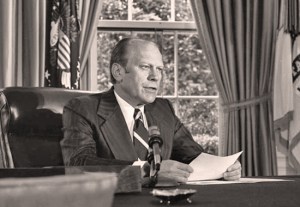
In the 19ford_nixon68 song “Mrs. Robinson,” Paul Simon asks and declares “Where have you gone Joe DiMaggio? Our nation turns its lonely eyes to you.” The next line follows with Mrs. Robinson’s reply, “Joltin Joe” has left and gone away…” In the craziness that was the 1960’s Simon was wondering where the heroes of the past had gone. On the one week anniversary of the shooting in Newtown Connecticut, amid discussions regarding the silence of Republican Congressional leaders to that evil act , I asked a similar question, “where have you gone Gerald Ford?” As with “Joltin Joe,” Gerald has left and gone away.

I was reminded of the former President and Republican House leader, because his party and the caucus he once led lacks a leader with his courage and conviction. As the only man ever to rise to the Presidency via the resignation of his predecessor, and as Ford also followed the only Vice President to resign, he became President without having won a national election. One month after becoming President, one of the first decisions Ford made as President was to offer President Nixon a pardon for any crimes he committed or “may have committed” as President, relating to the Watergate scandal that brought down his presidency.

President Ford said he offered the pardon because he saw it as the only way for the country to move forward and beyond the “national nightmare” and constitutional crisis that was the Watergate scandal. Ford’s decision was controversial as many saw it as a part of a deal he made with Nixon prior to being nominated to take over as Vice President following Spiro Agnew’s resignation, or part of a deal Nixon made with him before he resigned as President. Others criticized Ford claiming the pardon kept the full truth behind the Watergate scandal, and other possible instances of Nixon abusing his power, from being revealed.

Two years after the pardon, Gerald Ford lost one of the closest Presidential elections up to that time to Jimmy Carter. Many believe the pardon played a major role in his 1976 defeat. Ford later agreed that it did have an impact and probably cost him the election. Despite the fact that this decision played a major if not primary role in his defeat, President Ford said he would have done it again, as he still believed it was the right thing to do and was in the best interests of the country. The John F Kennedy Library Foundation awarded President Ford the 2001 Profile in Courage Award, in part for his showing courage in making the decision to offer the pardon.

The day the NRA held their “press conference” to address the Connecticut shooting,  former Republican Congressman, and NRA member Joe Scarborough stated on his show “Morning Joe,” that he had been asking, even pleading, for Republican House leaders to come on the show to address the shooting and conversations about legislation to ban assault weapons and high-capacity ammunition clips. Despite his repeated invitations and requests, no House leaders would appear until after the NRA had their press conference regarding the shooting and potential legislation.

One Republican representative who was on the show to discuss another issue repeatedly “danced a little side step” in refusing to directly answer the question put to him regarding potential assault weapon legislation.  What struck me as most disheartening was not necessarily the opinions of the congressional leaders, but the lack of courage to speak about the issue prior the NRA.  In their silence one can see House Republicans doing the political calculus of popular outrage over the shooting and calls for one of the steps to address the violent gun culture to be legislation banning assault weapons and high-capacity ammunition, vs. the money and primary endorsement power of the NRA in future elections.

While I have my opinion on the issue it was the deference given to the lobbying organization that bothered me most. The Speaker of the House of Representatives, the second most important elected official in the nation, and other leaders in the House of Representatives, elected and given the responsibility and privilege of leadership in the government of the United States were waiting on a lobbying body to address an issue before they would go on record.

Where Gerald Ford acted in a way that he thought was best for the nation above what was best for his political career and re-election, not one Republican congressional leader or member was willing to even talk about an event that had deeply wounded the spirit of the nation and a potential legislative remedy. Such inaction is the political equivalent of the three talented servants in Jesus’s parable who were given responsibility and money to use and better the estate of their master.

As told in the Gospel of Matthew, two of the three servants used their abilities, improved the estate, and lived up to the faith and trust placed in them.  One was afraid of possible consequences of failure and did nothing.  Upon the Master’s return the two who acted were rewarded and praised.  The one who did nothing, was chastised and thrown out, not because he did not make a profit, but because he did not honor the wisdom and trust placed in him by the master.  While the audience of the parable as offered in Matthew were disciples of Christ individually and the Church collectively, it applies as well to elected leadership as they have to have been given trust and power.  In return, too many have failed to act upon this responsibility because of the fear they would lose this very same position.  Or, put another way, they see the position as a privilege, not the service.

May American elected leaders find a true servants calling and  live up to and for the trust place upon and in them.

Posted in Faith Shots, Scattershooting | Tagged , , , , , , , , , , , , , , , , , , , | 2 Comments

Take a moment, refresh your nerve.

Dennis Aubrey's avatar

They seek splendor; who would touch them must stun them;
The nerve that is dying needs thunder to rouse it.

William Everson, San Joaquin (1939)

About 12 years ago I was part of a Los Angeles venture capital funding event called “Herring on Hollywood”, where Red Herring Magazine featured a number of companies that would “change the face of Hollywood”. Altamira Group, which I founded, was one of those. It was the classic VC hustle, mixing people seeking funds and venture capitalists seeking companies in which to invest. A small number of companies were selected to make presentations to the general audience. At one point, a young guy with a spiky haircut and baggy jeans came on stage and described his company, which in retrospect I remember only being about distributing video content on the web. But his extraordinary hyperbole was wrapped in the guise of “gangsta” lingo. He used…

View original post 487 more words

Posted in Scattershooting | Leave a comment

Sermon: The Empire Strikes Back/A New Hope

This is the hopesermon that was for the 3rd Sunday in Advent, the Sunday following the Newtown CT school shooting.  The Scripture was Matthew 2:7-23, the story of Joseph being directed to take Jesus to Exile in Egypt before the massacre of male children in Bethlehem by King Herod

http://r.b5z.net/i/u/10092240/m/Sermon_121216.mp3

Posted in Faith Shots, Film Shots, Sermons | Tagged , , , , , , , , , , , , , , , , , , , , , , , , | Leave a comment